
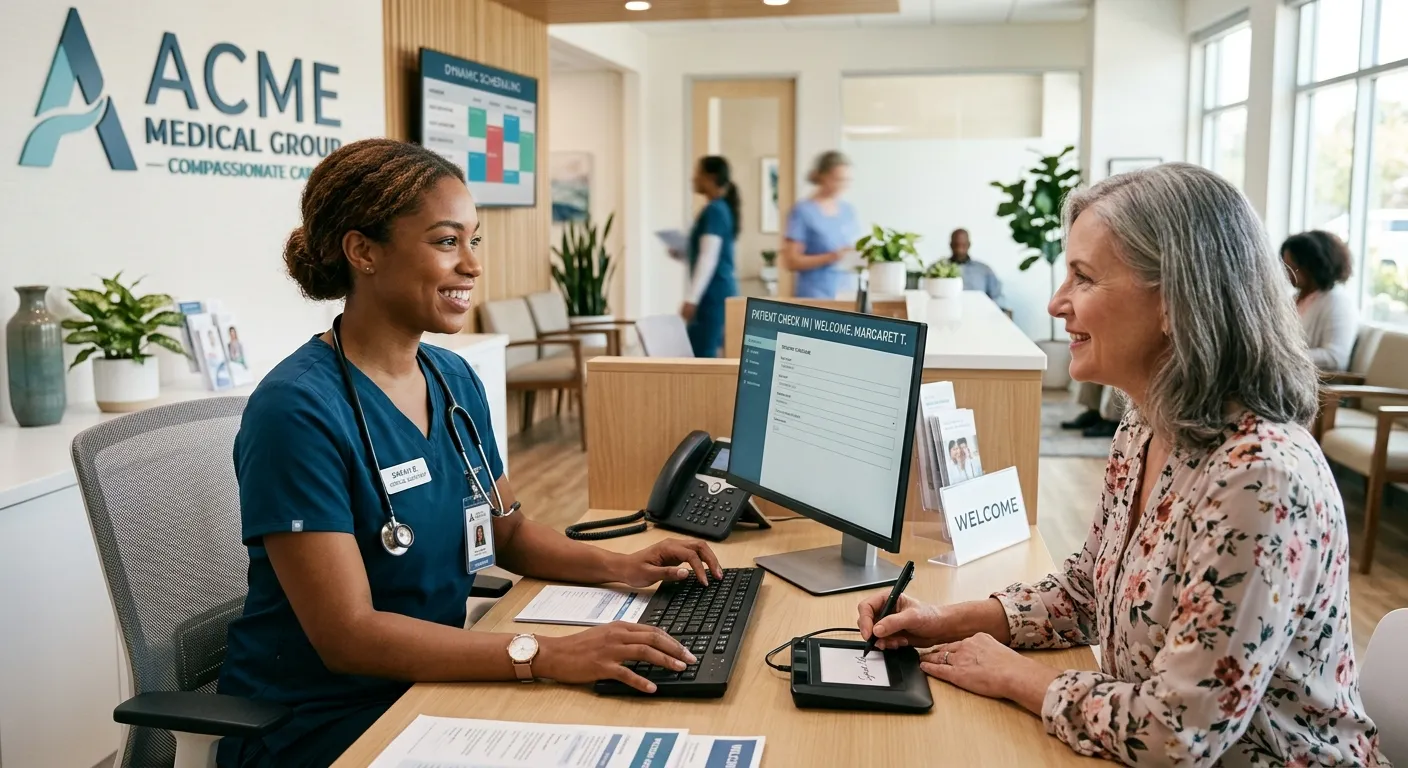
The Essential Front Desk Medical Assistant: Your Gateway to Patient Care Excellence
Discover the pivotal role, required skills, and proven hiring strategies to secure the best Front Desk Medical Assistant talent for your healthcare team in 2026 and beyond.
Mastering the Front Desk Role: A Multi-Category Overview
The Front Desk Medical Assistant is the first point of contact, the administrative heartbeat, and a critical component of patient satisfaction. Understanding this role from every angle is key to effective hiring and management.
The Central Hub of Healthcare Operations
A Front Desk Medical Assistant operates at the critical intersection of patient care, administrative efficiency, and clinical support. Far more than a receptionist, this professional manages patient flow, handles sensitive data, processes insurance, and often performs basic clinical tasks like taking vitals. Their performance directly impacts revenue cycles, patient retention, and overall clinic reputation. Inefficiency at this front-of-house position can lead to patient frustration, scheduling backlogs, and financial leakage. For employers, finding the right candidate is not just about filling a seat; it's about installing the operational linchpin of your practice. This is why a strategic approach to looking for staff is non-negotiable.
The role demands a unique blend of soft skills (empathy, communication) and hard skills (EHR proficiency, medical coding). Unlike more transient roles like casual labourer positions, a Front Desk Medical Assistant is typically a longer-term investment in your practice's core team. They build relationships with regular patients and become a familiar, trusted face, which is invaluable for community-based healthcare settings.
Core Benefits of a Top-Tier Front Desk Medical Assistant
Enhanced Patient Satisfaction & Loyalty
A warm, efficient, and knowledgeable first impression sets the tone for the entire patient experience. Skilled assistants reduce wait-time anxiety, handle concerns empathetically, and build trust, directly leading to higher patient retention and positive online reviews.
Optimized Clinical Workflow & Efficiency
By managing schedules adeptly, prepping charts, and ensuring all paperwork and insurance checks are complete, they free up clinicians to focus on medicine. This seamless flow minimizes downtime, maximizes appointment capacity, and reduces physician burnout.
Improved Financial Performance
Accuracy in coding, billing, and insurance verification is directly tied to cash flow. A proficient assistant reduces claim denials, ensures timely co-pay collection, and minimizes missed revenue from no-shows through effective reminder systems and scheduling management.
Strict Compliance & Risk Mitigation
They are the first line of defense in protecting patient privacy (HIPAA). Proper handling of PHI, secure check-in processes, and meticulous record-keeping safeguard the practice from costly legal penalties and reputational damage associated with compliance breaches.
Versatile Clinical Support
Many Front Desk Medical Assistants are cross-trained for basic clinical duties—taking vitals, rooming patients, preparing instruments. This flexibility allows for dynamic staffing, especially during peak times or when clinical MAs are assisting with procedures, creating a more resilient team.
Strong Team Morale & Cohesion
A competent, proactive front desk professional reduces stress for the entire clinical team. When nurses and doctors aren't fielding administrative questions or dealing with scheduling chaos, they can collaborate more effectively, leading to a happier, more productive workplace.
Crafting the Perfect Job Description to Attract Elite Talent
Your job description is your first and most critical marketing tool. A generic post will attract generic candidates. To hire a Front Desk Medical Assistant who excels, your description must be compelling, precise, and reflective of your practice's culture.
Essential Components of a Winning Job Ad:
- Clear, Engaging Title: Use"Front Desk Medical Assistant" as the base, but add specifics. E.g.,"Front Desk Medical Assistant - Fast-Paced Cardiology Practice" or"Pediatric Front Desk MA with Bilingual Spanish."
- Impact-Oriented Summary: Start not with duties, but with the impact of the role."Join our team as the welcoming face and operational engine of our family medicine clinic, where you'll play a direct role in delivering exceptional patient care from the first hello."
- Detailed Responsibilities: Go beyond"answer phones and schedule appointments." Specify EHR systems used, types of insurance processed, and any clinical duties expected (e.g.,"perform preliminary vitals and document in Epic").
- Non-Negotiable Qualifications: Distinguish between"required" (e.g., CMA/RMA certification, 2+ years experience, HIPAA knowledge) and"preferred" (e.g., experience with specific software, bilingual ability).
- Culture & Benefits: Sell your practice. Mention team culture, professional development opportunities, benefits package, and work-life balance. This is as important as the salary range.
Remember, the best candidates have options. They are also likely browsing resources like our find jobs portal. Your description must stand out by speaking to their desire for a meaningful, stable, and growth-oriented position, distinct from more short-term gigs like festive temp jobs.
The Interview Process: Identifying the True Patient-Care Professional
Resumes list skills; interviews reveal character. Structuring a multi-stage interview process is essential to vetting both the technical competency and the cultural fit of a Front Desk Medical Assistant candidate.
Stage 1: The Screening Call
This 15-20 minute call verifies basic qualifications, availability, and salary expectations. Key questions should assess communication clarity and phone etiquette—critical for the role. Ask about their reason for leaving their last position and what they're looking for in a new team.
Stage 2: The Practical Skills Assessment
Before or during the main interview, include a hands-on component. This could be a mock scenario in your EHR (using dummy data), a test on medical terminology, or a sample insurance form to complete. This objectively measures the hard skills they claim to possess.
Behavioral Interview Questions That Work:
- "Describe a time you dealt with a difficult or upset patient. What was the situation and how did you resolve it?" (Tests empathy, de-escalation, and problem-solving.)
- "Tell me about a mistake you made in a previous administrative role. How did you discover it and what did you do to correct it?" (Tests accountability, attention to detail, and integrity.)
- "How do you prioritize your tasks when the phone is ringing, a patient is at the desk, and a doctor needs a chart urgently?" (Tests multi-tasking, prioritization, and composure under pressure.)
- "What does 'patient confidentiality' mean to you in your daily work?" (Tests fundamental HIPAA understanding and professional ethics.)
For more on structuring effective interviews, see our employer resources.
Incorporating a peer interview with a current clinical MA or nurse can provide invaluable insight into team fit. The goal is to build a holistic picture of the candidate, ensuring they can not only perform the tasks but also thrive in your specific environment. This rigorous approach mirrors the care taken in hiring for other specialized, patient-facing roles, such as an Immediate Start Nursery Nurse.
Seamless Onboarding: Turning a New Hire into a Long-Term Asset
Hiring the right Front Desk Medical Assistant is only half the battle. A structured, supportive onboarding process is what transforms a promising new employee into a confident, independent, and loyal team member. A poor onboarding experience is a primary reason for early turnover.
Foundation & Immersion
- • Comprehensive clinic tour and team introductions.
- • Deep dive into HIPAA policies and compliance training.
- • Review of practice mission, values, and patient demographics.
- • Basic system logins and shadowing of the departing MA or trainer.
Skill Application & Practice
- • Hands-on training with the EHR using dummy patient data.
- • Role-playing for common scenarios (check-in, phone calls, billing questions).
- • Gradual assumption of real tasks with close supervision and feedback.
- • Introduction to specific insurance protocols and billing software.
Independence & Integration
- • Managing full front-desk responsibilities with scheduled check-ins.
- • Involvement in team meetings and contribution to process ideas.
- • Setting 90-day performance goals and discussing career path opportunities.
- • Formal performance review at the 90-day mark.
Critical Onboarding Insight:
Assign a"buddy" or mentor—an experienced MA or nurse who is not their direct supervisor. This gives the new hire a safe person to ask"silly" questions, accelerates social integration, and provides an additional source of support, dramatically increasing retention and job satisfaction in those crucial first months.
Frequently Asked Questions: Front Desk Medical Assistant Hiring
Salaries vary significantly based on location, practice specialty, experience, and certifications. As of 2026, in the UK, entry-level positions may start around £20,000-£24,000 annually. Experienced and certified MAs in high-demand areas or specialized clinics (e.g., dermatology, surgery) can earn £26,000-£32,000 or more. It's crucial to research local market rates. Offering competitive pay is the first step; complementing it with a positive work environment and benefits is what attracts the best talent, as opposed to those just looking for work anywhere.
Absolutely. Temp or contract hiring is an excellent strategy for covering maternity leaves, seasonal influxes (e.g., flu season), or while conducting a search for a permanent hire. Many staffing agencies specialize in healthcare placements and can provide vetted, qualified temporary Front Desk Medical Assistants. This model offers flexibility and allows for a"try before you buy" arrangement, which can be a lower-risk path to a permanent hire. The principles of flexible staffing are becoming universal, applicable from healthcare front desks to logistics hubs offering warehouse temp work.
The most costly mistake is prioritizing technical skills over interpersonal skills and cultural fit. You can train someone on a new software system, but you cannot easily train innate empathy, patience, or a collaborative spirit. A candidate who is slightly less experienced but exhibits outstanding customer service, problem-solving attitude, and alignment with your practice's values will often outperform a technically proficient but rigid or negative individual. A thorough interview process that includes behavioral questions and team interaction is essential to avoid this pitfall.
For a strictly administrative front desk role, certification may be"preferred" rather than"required." However, it becomes highly important if the role includes any clinical duties (e.g., taking vitals, performing EKGs). Certification demonstrates a standardized level of medical knowledge, professionalism, and commitment to the field. It can also be a marker for higher competency and may justify a higher salary. Weigh the specific duties of your role. If it's a hybrid role, certification is a strong asset. If it's purely administrative, equivalent experience and stellar soft skills may suffice.
A multi-pronged approach works best: 1) Healthcare-Specific Job Boards (e.g., HealthJobsUK, BMJ Careers). 2) General Job Boards with strong local reach. 3) Staffing Agencies that specialize in medical/clinical placements – they pre-vet candidates, saving you immense time. 4) Local Community College/VA Career Centers with medical assistant programs. 5) Professional Networking on LinkedIn and local healthcare association forums. For a streamlined, professional hiring experience, consider starting your search by posting your role on a dedicated platform. You can post a job here to access a targeted network of healthcare job seekers.
Ready to Hire Your Ideal Front Desk Medical Assistant?
Stop letting front-desk vacancies disrupt your patient care and clinic efficiency. Access a curated pool of qualified, vetted healthcare administrative professionals ready to contribute to your team's success.
Whether you need a permanent cornerstone for your team or flexible temporary cover, the right candidate is waiting. Transform your front desk from a bottleneck into a beacon of patient care excellence today.