Your Complete Guide to Nursing Home Receptionist Jobs: Roles, Skills & Hiring
Discover the vital role of a nursing home receptionist, the skills needed to excel, and how to hire or find the perfect position in today's competitive healthcare market.
Explore Nursing Home Receptionist Careers
Use the tabs below to navigate between key aspects of the role, from daily duties to career advancement.
The Heart of the Home: Core Responsibilities
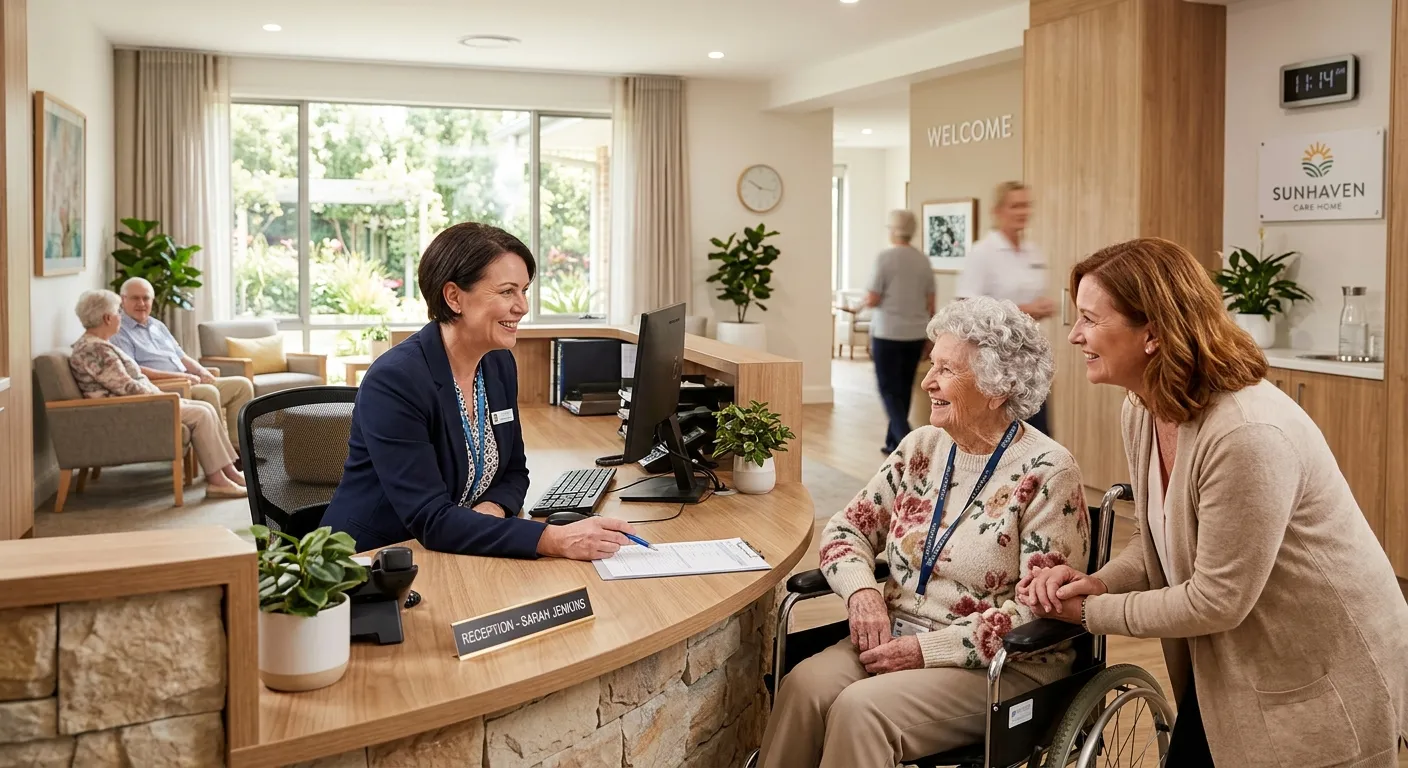
A nursing home receptionist is far more than a gatekeeper; they are the first point of contact for residents, families, medical professionals, and vendors. Their role sets the tone for the entire facility's environment.
- Visitor Management & Communication: Greeting all visitors warmly, managing sign-in/out logs for security, and directing them appropriately. This requires impeccable interpersonal skills and a calm demeanor, especially when dealing with concerned family members.
- Administrative Hub: Handling a high volume of phone calls, emails, and postal correspondence. This includes scheduling appointments for residents, managing staff rotas, and coordinating with external healthcare providers.
- Resident Support: Assisting residents with non-medical requests, such as arranging transportation, liaising with activities coordinators, or simply providing a friendly chat—a crucial aspect of emotional support.
- Records & Compliance: Maintaining confidential resident records, ensuring data protection compliance (like GDPR), and processing sensitive documentation. Accuracy and discretion are non-negotiable.
- Coordination with Clinical Staff: Serving as a vital communication link between the front desk and nursing teams, relaying messages and updates efficiently to ensure seamless care.
Understanding this multifaceted role is the first step, whether you're looking for staff to fill this position or seeking the job yourself. It's a role that demands both hard administrative skills and deep soft skills.
The Skill Set for Success
Excelling in Nursing Home Receptionist Jobs requires a unique blend of technical proficiency and human-centric abilities. Here’s what top employers look for:
Technical & Administrative Skills
- Proficiency in office software (MS Office, Google Workspace)
- Experience with healthcare databases or PMS (Patient Management Systems)
- Accurate data entry and record-keeping
- Multi-line phone system operation
- Basic accounting for handling payments or invoices
Soft Skills & Personal Attributes
- Empathy & Patience: Essential for interacting with elderly residents and stressed families.
- Communication: Clear, compassionate, and professional verbal/written skills.
- Problem-Solving: Ability to handle unexpected situations calmly.
- Multi-tasking & Organization: Juggling phones, visitors, and admin simultaneously.
- Discretion & Integrity: Handling confidential information responsibly.
Developing these skills can be a journey. For more general advice on skill-building, resources like our guide on modern talent sourcing often touch on the attributes valued across industries, including healthcare.
Navigating the Market: Hiring and Finding Jobs
The demand for skilled receptionists in care settings is steady. Whether you're an employer needing to fill a critical front-desk role or a job seeker, here's your actionable guide.
For Employers: How to Hire the Best
A bad hire at the reception desk can impact resident satisfaction and operational flow. Follow these steps:
- Craft a Precise Job Description: Go beyond listing duties. Highlight the culture of your home, the importance of the role in the care team, and the specific software used.
- Utilize Specialized Job Boards: Post your vacancy on healthcare-specific sites and general platforms. The most efficient way to start is to post your nursing home receptionist job here to reach qualified candidates quickly.
- Structure Behavioral Interviews: Ask scenario-based questions ("How would you handle a distressed family member?"). Consider using insights from videos like our employer resources on effective interviewing.
- Check References Thoroughly: Prioritize references from previous healthcare or high-pressure customer service roles.
For Job Seekers: Landing the Role
Your job search should be as organized as the role you desire. Start by exploring active job listings to see what's available in your area.
- Tailor Your CV: Emphasize relevant experience, even if not in healthcare. Customer service, admin, and soft skills are transferable. For tips, watch on crafting the perfect application.
- Prepare for Healthcare-Specific Questions: Be ready to discuss confidentiality, your approach to vulnerable adults, and working in a regulated environment.
- Showcase Stability & Empathy: Employers value longevity and genuine compassion. Highlight any volunteer work or personal experiences that demonstrate these traits.
- Consider Flexible Models: Explore if remote receptionist roles or hybrid models could be an entry point into the healthcare admin field.
The Evolving Landscape: Technology & Trends
The role of the nursing home receptionist is not immune to technological advancement. While the human touch remains irreplaceable, efficiency is being enhanced by new tools.
Pro-Tip: Embrace, Don't Fear, Technology
AI and automated systems are becoming aids, not replacements. An AI receptionist can handle after-hours calls, appointment reminders, and frequently asked questions, freeing up the human receptionist for more complex, empathetic interactions during core hours. Understanding this synergy will make you a more valuable candidate or a more strategic employer.
Other trends include a greater focus on digital health records, requiring receptionists to be adept with new software, and the growth of larger care groups, which may offer career progression into supervisory or regional admin roles. Staying adaptable is key.
Why Nursing Home Receptionist Roles Are Critical
The Human Connection
You are the friendly, consistent face that residents and families rely on. This role provides profound job satisfaction through direct human impact, offering stability and emotional rewards rarely found in standard admin jobs.
Career Pathway Potential
Starting as a receptionist can be a springboard into healthcare administration, management, or specialized coordinator roles within the social care sector. It offers a unique insight into the operational and caring sides of the business.
Stability & Demand
With an ageing population, the care sector offers remarkable job security. The need for skilled, compassionate front-desk professionals in nursing homes is consistently high, providing a recession-resilient career choice.
A Deep Dive into Qualifications & Day-to-Day Life
Required Qualifications & Training
While there is no single mandatory national qualification for a nursing home receptionist in the UK, employers seek a combination of education, experience, and personal attributes.
Typical Requirements:
- Education: GCSEs (or equivalent) in English and Maths are often a minimum. A Level 2 or 3 Diploma in Business Administration or Customer Service is highly advantageous.
- Experience: Previous reception, customer service, or administrative experience is usually required. Experience in a healthcare setting (even a GP surgery or dental practice) is a significant plus.
- Checks: An enhanced DBS (Disclosure and Barring Service) check is mandatory for anyone working in a care home environment.
- Training: Once hired, induction training will cover Safeguarding of Vulnerable Adults, Health & Safety, Infection Control, and specific home policies.
Standing Out from the Crowd:
To become a top candidate, consider voluntary certifications like a First Aid at Work certificate or short courses in dementia awareness. Demonstrating this proactive commitment to care can be decisive. Similarly, employers looking to attract the best talent should highlight support for ongoing professional development.
Cross-Industry Insight:
Just as precision and calm under pressure are valued in a nursing home receptionist, they are equally critical in roles like Grill Chef Jobs in a busy kitchen. Both positions are central hubs requiring organization, timely communication, and the ability to manage multiple"orders" or requests simultaneously. Understanding the transferable skills between seemingly different sectors can open up new hiring pools or career avenues.
Master the Interview Process
Whether you're a candidate preparing for questions or an employer refining your hiring technique, expert advice is invaluable. This video provides a comprehensive look at professional interviewing from both sides of the table.
Key Takeaway: Structuring interviews with clear, behavior-based questions helps you identify candidates who not only have the skills but also the temperament for the high-stakes, compassionate environment of a nursing home.
Salary Expectations & Career Progression
Salaries for nursing home receptionists vary based on location, home size (private vs. group), and experience. As a guide:
| Experience Level | Approx. Annual Salary Range | Typical Responsibilities |
|---|---|---|
| Entry-Level / Junior | £18,000 - £21,000 | Basic phone/reception duties, mail handling, shadowing senior staff. |
| Experienced Receptionist | £21,000 - £25,000 | Full front-desk management, resident admin, family liaison, some supervision. |
| Senior / Lead Receptionist / Admin Manager | £25,000 - £30,000+ | Team leadership, complex admin systems, reporting, training new staff, budget liaison. |
Progression often involves moving into broader administration management within the home or the wider care group. Some receptionists branch into activities coordination, family liaison specialist roles, or training and development. For those exploring flexible work options in other fields, resources like finding casual labourer roles showcase the variety of temporary and entry-point positions available across sectors.
Frequently Asked Questions
Quick answers to common questions about Nursing Home Receptionist Jobs.
Balancing emotional demands with administrative efficiency. You may be dealing with a grieving family one moment and need to accurately process a stack of medication orders the next. The role requires the ability to compartmentalize while maintaining consistent compassion. Strong personal resilience and organizational systems are key to managing this challenge successfully.
Absolutely. Nursing homes operate 24/7, and many offer a variety of shifts including mornings, evenings, weekends, and part-time hours. This can be ideal for students, parents, or those seeking a better work-life balance. Some larger homes also hire for bank (zero-hours) receptionist roles to cover holidays and sickness. For a wide range of flexible opportunities, always check our job finder portal.
While highly beneficial and often preferred, it is not always a strict requirement. Transferable skills from high-pressure customer service roles (e.g., in hospitality, retail, or corporate reception) are very valuable. What matters most is demonstrating empathy, discretion, a willingness to learn healthcare-specific protocols, and passing the enhanced DBS check. Employers often provide thorough induction training to bridge any healthcare knowledge gaps.
Speed depends on your recruitment strategy. Using a specialized platform can dramatically cut time-to-hire. By posting your job with us, your vacancy is instantly promoted to an active pool of job seekers, including those specifically looking for roles in care and administration. For urgent needs, you can also explore temporary staffing solutions while you conduct your permanent search. The key is to act swiftly with a clear, appealing job advert to attract quality applicants from day one.
Ready to Start Your Journey?
Whether you're seeking to fill a vital front-desk role in your care home or you're a compassionate professional looking for a rewarding career, the next step is clear. Take action today to connect talent with opportunity.
Need help with your search? Explore more resources for employers or job seekers.