
Unlock Scalable Excellence: Your Strategic Guide to a Premier Packaging Staff Agency
In today's fast-paced market, securing reliable, skilled packaging talent is not just an operational need—it's a critical competitive edge. Discover how a specialized Packaging Staff Agency transforms hiring from a cost center into a strategic asset for growth, flexibility, and resilience.
Hire Packaging Staff Today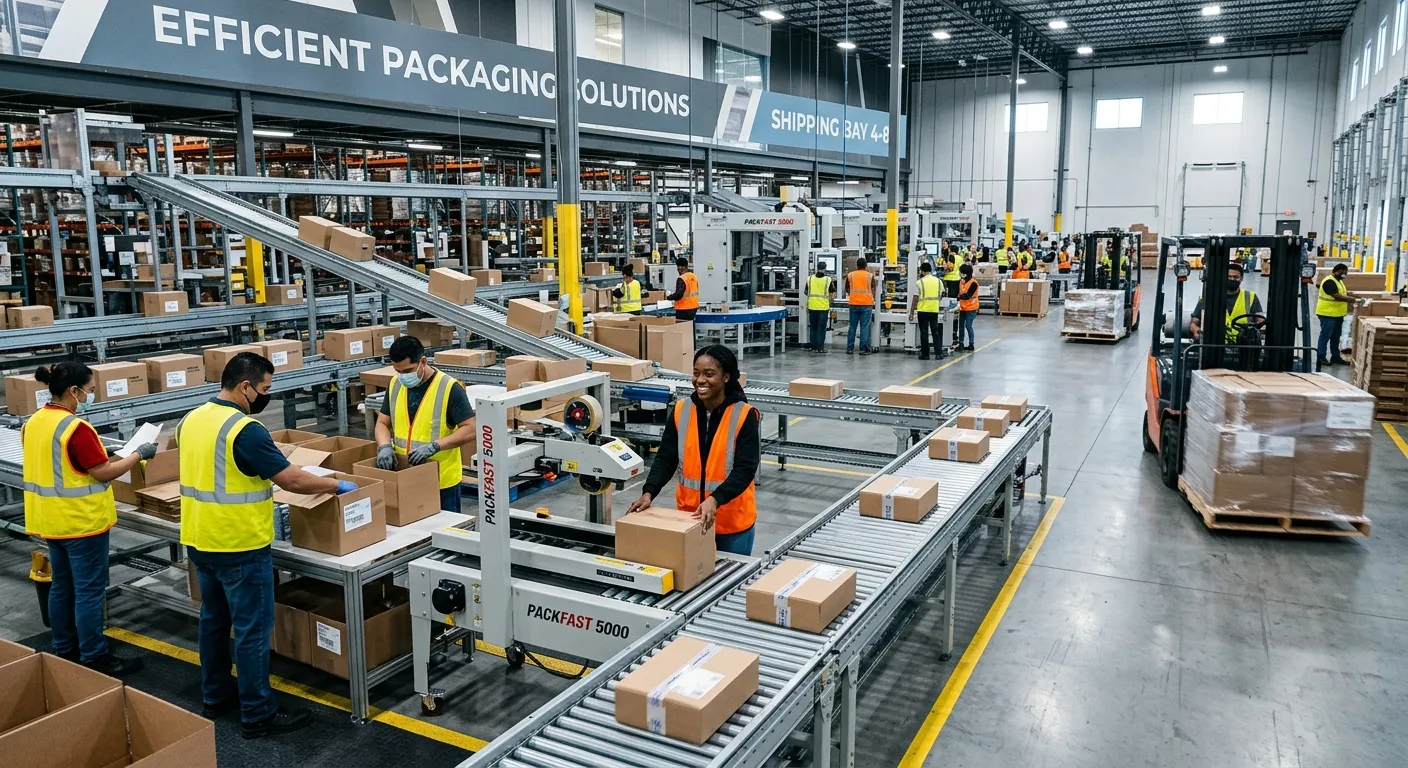
Navigating Packaging Staffing Solutions
Why a Specialized Agency is Non-Negotiable
A generic staffing solution cannot address the unique demands of the packaging sector. A dedicated Packaging Staff Agency possesses deep industry knowledge, from understanding the intricacies of food-grade packaging standards and automated line operations to the physical demands of manual palletizing. This specialization ensures candidates are not only available but are pre-vetted for the specific skills, safety certifications, and pace required in environments ranging from pharmaceutical clean rooms to bustling e-commerce fulfillment centers.
Unlike generalist agencies, a partner like Putney Staffing Agency focuses on building a talent pool ready to handle seasonal spikes, urgent orders, and specialized projects. This approach is detailed further in our Ultimate Guide to Modern Talent Sourcing, which explores advanced strategies for building resilient, on-demand workforces.
Tangible Advantages for Your Business
- Reduced Time-to-Hire: Fill critical gaps within 24-48 hours, minimizing production downtime. Learn the mechanics of rapid scaling in our video guide: .
- Mitigated Compliance Risk: The agency manages payroll, taxes, workers' compensation, and right-to-work checks, shielding your business from legal and financial pitfalls.
- Flexibility & Scalability: Seamlessly adjust your workforce size for seasonal demand, new client contracts, or promotional surges without the burden of permanent overhead.
A Streamlined, Results-Driven Approach
The process begins with a deep-dive consultation to understand your specific line requirements, culture, and peak periods. The agency then taps into its pre-screened talent database and active recruitment channels to present qualified candidates. This is followed by managed onboarding, ongoing performance supervision, and seamless invoicing. For a comprehensive look at structuring such partnerships, explore our resource on Managed Services Beispiele.
Why Partner with a Packaging Staffing Specialist?
Discover the multifaceted value a dedicated agency brings beyond just filling a shift.
Rapid Response & Urgent Hiring
When a machine breaks down or a last-minute order comes in, you need staff immediately. Specialized agencies maintain a pool of vetted, on-call workers ready to deploy, often within hours. This eliminates the catastrophic cost of an understaffed line, a topic we explore in depth in .
Request Urgent Staff →Skill-Specific Talent Pools
From operators for automated shrink-wrap machines to quality control inspectors familiar with ISO standards, a true specialist agency recruits for specific competencies. This ensures higher productivity from day one and reduces the training burden on your permanent team, allowing you to focus on core operations detailed in our Ultimate 2026 MSP Hiring Playbook.
Full Compliance & Risk Management
Navigating employment law, health and safety regulations (like HACCP in food packaging), and tax obligations is complex. A reputable Packaging Staff Agency acts as the employer of record, assuming these liabilities. This proactive risk management protects your brand and bottom line, a crucial consideration for any business looking for staff in a regulated environment.
The Real Cost Analysis: Agency vs. Direct Hire
Many businesses view agency fees as an extra expense, but this is a critical miscalculation. A true cost analysis reveals the hidden savings.
Pro-Tip:
Calculate the Total Cost of Ownership (TCO) for a hire. Include recruitment advertising time, manager hours spent interviewing, onboarding costs, training materials, and the productivity ramp-up period. For temporary roles, the agency's fee often represents a lower TCO. Watch our breakdown: .
For instance, hiring a casual labourer directly involves significant administrative overhead. An agency consolidates this into a simple, predictable line item, freeing your HR team to focus on strategic initiatives.
Hidden Costs of Direct Hiring (Permanent & Temp)
- Recruitment Marketing: Job board fees, sponsored ads, and branding campaigns.
- Managerial Time: Sourcing, screening, interviewing, and negotiating can consume 30+ hours per hire.
- Onboarding & Training: Formal training programs, safety inductions, and system access setup.
- Compliance & Payroll: Employer NI contributions, pension auto-enrolment, and ongoing legal updates.
The Strategic Power of Temp-to-Perm in Packaging
The temp-to-perm model is one of the most powerful tools offered by a Putney Staffing Agency. It functions as an extended, hands-on interview where you evaluate a worker's skills, attitude, and team fit in your actual environment before making a permanent commitment.
This drastically reduces the risk of a bad hire—a mistake that can cost thousands in severance, re-hiring, and lost productivity. It's a"try before you buy" approach that benefits both employer and employee. For the worker, it's a chance to prove their value and secure a stable position, a journey explored in .
Expert Insight:
"We see a 70% higher retention rate for roles that transition from temp-to-perm compared to direct hires. The mutual assessment period builds stronger commitment from both sides." – This insight aligns with data in our employer resources.
Frequently Asked Questions: Packaging Staff Agency
Get clear, actionable answers to the most common questions businesses have.
Fees are typically a percentage markup on the worker's hourly pay rate, which covers the agency's costs for recruitment, payroll, compliance, and profit. This markup varies based on role specialization, contract length, and volume. Crucially, this single fee replaces all the hidden costs of direct hiring. For a transparent discussion on managing staffing budgets, see our guide on employer costs and related video .
A specialized agency with a deep talent pool can often provide vetted candidates within 4-8 hours for standard roles, and staff on-site within 24 hours. This requires clear communication of your needs. For a proven strategy on ultra-fast hiring, we detail the process in .
Yes, this is where specialization is key. A true Packaging Staff Agency will have access to candidates with specific certifications (e.g., COSHH awareness, cleanroom training, IATA certification for dangerous goods) and experience with relevant machinery and protocols. They conduct rigorous vetting to ensure compliance with industry-specific regulations.
One of the primary benefits of using an agency is the removal of performance risk. You simply notify your agency contact, and they will arrange for a replacement worker, often within the same shift or the next day. There are no difficult termination procedures or employment tribunals for you to manage. The agency handles the entire process.
Ready to Transform Your Packaging Operations?
Stop letting staffing challenges constrain your growth, damage your service levels, or increase your operational risk. Partner with a specialist who understands the precise demands of your industry.
Speak with a packaging staffing specialist today and receive a complimentary audit of your current workforce strategy.
Beyond Generic Labour: The Packaging Roles a Specialist Agency Should Cover
Packaging is not one job. It is a connected chain of tasks, machines, quality checks, and compliance controls. A strong agency partner should understand each role deeply and be able to place candidates who can operate safely, efficiently, and consistently within your workflow.
Warehouse Packers & Order Pickers
These roles are often the backbone of e-commerce and distribution packaging. Candidates should understand SKU accuracy, pick-to-light or RF scanning systems, poly bagging, carton filling, tape sealing, pallet building, and label application. A specialist agency should screen for reliability, speed, and attention to detail, not just physical stamina.
Best fit for: online retailers, 3PL warehouses, retail distribution centres, promotional fulfilment.
Packaging Line Operators
Line operators manage the rhythm of production. They feed materials, monitor machine performance, remove jams, perform basic changeovers, and maintain output targets. In food, beverage, cosmetics, and pharmaceutical environments, they must also follow hygiene protocols and document batch or lot information accurately.
Best fit for: automated filling lines, cartoning machines, case packers, shrink wrap stations.
Quality Control Inspectors
Quality roles protect brand reputation. Inspectors should know how to check seals, label alignment, print codes, product damage, weight variations, metal detection rejects, and visual standards. They must understand when to stop a line, quarantine suspect stock, and escalate issues without causing unnecessary downtime.
Best fit for: food plants, pharma packaging, electronics, premium consumer goods.
Labelling & Coding Specialists
Labelling errors can trigger recalls, customer complaints, or regulatory penalties. Staff should understand artwork approval, date and batch coding, GS1 barcode placement, allergen statements, country-of-origin requirements, and line clearance procedures. A specialist agency should look for candidates who can work with precision under repetitive conditions.
Best fit for: food manufacturing, pharmaceuticals, cosmetics, retail private label.
Machine Operators & Set-Up Technicians
More advanced packaging roles require experience with flow wrappers, palletizers, strapping machines, vacuum sealers, tray sealers, cartoners, and case packers. Operators should understand changeover routines, basic troubleshooting, safety guards, lockout/tagout procedures, and how to maintain throughput without compromising quality.
Best fit for: high-volume production sites, contract manufacturers, industrial packaging.
Shift Supervisors & Team Leads
When you hire temporary packaging staff, supervision becomes more important, not less. A good agency can provide team leaders who manage attendance, performance, safety briefings, task allocation, and escalation. This is especially valuable during peak periods, night shifts, or when deploying multiple workers into one area.
Best fit for: seasonal peaks, new production lines, urgent client orders, remote sites.
Industry-Specific Packaging Staffing Playbooks
The right staffing model changes depending on the sector. Below are practical playbooks for common packaging environments.
Food packaging requires more than speed. Workers must understand allergen control, personal hygiene, handwashing routines, hairnets, gloves, aprons, temperature-sensitive handling, and traceability. Cross-contamination risk means your staffing partner should screen for candidates who can follow strict SOPs without constant supervision.
For bakeries, ready meals, dairy, meat, and beverage sites, a hybrid approach often works best: permanent supervisors for quality and safety, temporary packers for volume spikes, and agency-provided line leads when multiple shifts are affected.
- Key risk: Labelling errors, allergen mix-ups, and poor hygiene discipline.
- Agency solution: Pre-inducted workers, HACCP awareness screening, and shift supervision.
- Best roles: Line operators, packers, quality inspectors, labelling staff.
E-commerce packaging is driven by order accuracy, throughput, and customer experience. Workers handle pick lists, packing stations, void fill, fragile item protection, returns packaging, and carrier labelling. During peak periods, the challenge is not only hiring more people, but maintaining quality when volumes double or triple overnight.
A specialist agency should help you create a flexible workforce model: a permanent core team for complex SKUs and returns, temporary staff for high-volume standard orders, and supervisors who can monitor accuracy and pace in real time.
- Key risk: Wrong item, wrong address, poor packaging, damaged goods.
- Agency solution: Accuracy-focused screening, performance dashboards, rapid replacement.
- Best roles: Pickers, packers, returns processors, quality checkers, team leaders.
Regulated environments demand discipline, documentation, and attention to detail. Workers may need cleanroom awareness, gowning procedures, batch record support, serialization handling, and strict segregation of rejected materials. In cosmetics, packaging presentation is part of the product, so workers should understand visual quality standards.
For these sectors, the agency should not simply supply “available labour.” It should supply trained, compliant, and reliable staff who can operate within validated processes while maintaining throughput.
- Key risk: Batch errors, contamination, incomplete records, presentation defects.
- Agency solution: Skills-based recruitment, compliance briefings, supervisor oversight.
- Best roles: Cleanroom operators, packers, inspectors, documentation support staff.
Industrial packaging often involves larger products, heavier materials, crates, drums, strapping, shrink wrapping, palletizing, and warehouse-to-yard movement. The risks are physical and operational. Workers need strong safety awareness, manual handling competence, and confidence around machinery or forklift traffic.
Agencies serving this sector should prioritize candidates with warehouse, manufacturing, or construction-adjacent experience. They should also support you with shift patterns that reduce fatigue and maintain productivity across long production runs.
- Key risk: Injury, damaged goods, poor load security, machine interaction errors.
- Agency solution: Safety-led screening, PPE compliance, experienced team leaders.
- Best roles: Palletizers, strappers, packers, machine feeders, warehouse operatives.
Practical Case Studies: How Specialist Packaging Staffing Changes Outcomes
Case Study: UK Food Manufacturer
Scaling Through Christmas Without Losing Quality
A regional bakery and ready-meal producer faced a 40% volume increase during the festive season. Their permanent team was already working extended hours, and the HR department could not recruit fast enough. The biggest concern was not just output, but food safety, allergen controls, and last-minute order accuracy.
The agency supplied a structured temporary workforce: experienced packers, line operators, and two shift supervisors. Workers were pre-screened for hygiene discipline, punctuality, and ability to follow SOPs. Induction was staggered so production did not stop, and supervisors were briefed on allergen zones and line clearance requirements.
96%
Shift Fill Rate
0
Food Safety Incidents
14%
Faster Dispatch
6
Temp-to-Perm Conversions
The result was a smoother peak season and a stronger pipeline of permanent hires, because the temporary workers had already proven themselves on the line.
Case Study: E-commerce Beauty Brand
Launching a New Product Line with Flexible Packaging Labour
An online beauty brand planned a major product launch that was expected to triple order volume for eight weeks. The team lacked enough packers and quality inspectors, while management worried about damaged products, incorrect inserts, and slow dispatch.
The staffing partner created a flexible workforce plan based on daily order forecasts. Temporary packers were assigned to standard orders, while more experienced staff handled fragile items, gift sets, and returns. A shared performance dashboard tracked accuracy, throughput, and absence, allowing supervisors to adjust staffing before bottlenecks occurred.
22 hrs
Average Deployment Time
92%
Order Accuracy
35%
Reduced Overtime
80%
Repeat Assignment Rate
The launch met delivery expectations while maintaining brand presentation, and the flexible team became the backbone of future promotional events.
The Quality & Safety Framework a Packaging Agency Should Provide
Many businesses assume that training is entirely their responsibility once temporary staff arrive on site. In reality, a specialist agency should reduce risk before the first shift begins. That means screening not only for experience, but for behaviour, reliability, and compliance awareness.
A strong agency should also support you with clear communication around PPE, shift expectations, site rules, incident reporting, and escalation. When workers understand the “why” behind safety and quality, they are more likely to follow procedures consistently, even when production pressure increases.
What to ask your agency:
“How do you verify that a candidate can follow SOPs, not just perform the task?” This question reveals whether they are a recruiter or a genuine packaging staffing partner.
Essential Agency Controls
- Right-to-work checks: Verified before placement, with records available for audit.
- Safety induction support: Site-specific rules, PPE, manual handling, and emergency procedures.
- Hygiene awareness: Especially important in food, beverage, cosmetics, and pharmaceutical settings.
- Performance monitoring: Attendance, productivity, quality, and behaviour tracked throughout the assignment.
- Replacement guarantee: Clear process for removing or replacing underperforming staff quickly.
- Incident reporting: Structured escalation for injuries, near misses, contamination, or line stoppages.
How to Measure Packaging Staffing Performance
If you cannot measure the agency’s impact, you cannot improve it. Use these KPIs to review whether your staffing partner is creating real operational value.
95%+
Shift Fill Rate
The percentage of requested shifts successfully covered. Low fill rates often indicate weak candidate pools or poor communication.
<24 hrs
Time to Deploy
For urgent vacancies, speed matters. A strong agency should consistently place qualified staff within one working day.
10%
Unplanned Absence
Track how often temporary staff fail to appear. High absence suggests poor screening, weak engagement, or inadequate shift planning.
80%+
Repeat Assignment Rate
If the same workers are requested again, it is a strong sign of quality, reliability, and good cultural fit.
90%+
Quality Accuracy
Measure errors such as wrong labels, damaged goods, missing inserts, or failed quality checks.
30 days
Productivity Ramp-Up
Track how quickly new workers reach expected output. A specialist agency should shorten this period through better screening.
60%+
Temp-to-Perm Conversion
For permanent vacancies, conversion shows whether the agency is identifying long-term talent, not just filling gaps.
100%
Compliance Records
All workers should have complete documentation before deployment, protecting your site during audits.
Building a Resilient Hybrid Packaging Workforce
The most successful packaging operations rarely rely on one type of labour. They combine permanent staff, temporary workers, and project specialists to create a workforce that is stable, flexible, and cost-efficient.
Permanent Core Team
Permanent staff should own critical processes: line supervision, quality assurance, machine setup, training, and compliance. They provide continuity and protect your culture.
- Experienced supervisors
- Quality inspectors
- Key machine operators
- Trainers and team leads
Flexible Temporary Pool
Temporary staff absorb volume spikes, seasonal demand, sick cover, and urgent client orders. The goal is to build a familiar pool of workers who can step in quickly without disrupting quality.
- Repeat packers and pickers
- Peak-season line support
- Short-notice vacancies
- Temp-to-perm candidates
Project Specialists
For launches, rebranding, audits, new machinery, or cleanroom upgrades, you may need short-term specialists. These workers can provide focused expertise without long-term payroll commitment.
- Line changeover support
- Audit preparation staff
- New product packaging teams
- Temporary compliance supervisors
10-Point Checklist Before Choosing a Packaging Staff Agency
Use this checklist during your evaluation to avoid agencies that only send CVs and miss the operational reality of packaging.
-
1
Do they understand your machinery? Ask about experience with flow wrappers, cartoners, palletizers, label applicators, and shrink tunnels.
-
2
Can they supply supervisors? Temporary workers need structure, especially during peaks and night shifts.
-
3
Are candidates screened for reliability? Attendance and punctuality matter as much as packaging experience.
-
4
Do they know your compliance requirements? Ask about HACCP, GMP, COSHH, allergen control, or cleanroom protocols as relevant.
-
5
Can they scale quickly? A strong partner should cover 5, 50, or 200 workers depending on demand.
-
6
Is pricing transparent? You should understand hourly rates, markups, overtime rules, and invoice structure.
-
7
Do they replace poor performers quickly? Ask for their guarantee and response time.
-
8
Do they support temp-to-perm? This reduces hiring risk and builds a stronger permanent team.
-
9
Can they provide reporting? Weekly data on fill rates, absence, and productivity is essential.
-
10
Are they proactive? The best agencies anticipate seasonal peaks and suggest workforce plans before you ask.
Strategic takeaway: If an agency cannot answer these questions with confidence, they may be a labour supplier, not a packaging staffing partner. The right agency should behave like an extension of your operations team.
The Future of Packaging Staffing: What Businesses Should Prepare For
Automation Creates New Skill Requirements
As packaging lines become more automated, workers are no longer just packing boxes. They need to monitor systems, respond to alerts, handle minor faults, and maintain output quality. The next generation of packaging staff will be more technical, more data-aware, and more focused on exception management.
This means agencies should recruit for adaptability, not just physical ability. Candidates who can learn new machines quickly will be far more valuable than those who only know one repetitive task.
Skills Passports and Digital Verification
The future of compliant staffing will rely more on verified skills records. Workers may carry digital evidence of hygiene training, machine experience, safety certifications, and site inductions. This allows faster placement while reducing the burden on employers to recheck everything manually.
Businesses should ask their staffing partners how they verify skills today and how they plan to track them over time. Transparency here protects both production quality and audit readiness.
Data-Driven Workforce Planning
Packaging staffing is becoming more analytical. Forecasting order volume, identifying peak days, and matching shift patterns to production schedules can dramatically reduce overtime and last-minute hiring.
The best agencies will use data to recommend staffing levels before demand spikes. If your agency only reacts to vacancies, you are missing a major opportunity to improve efficiency.
Worker Experience as a Retention Strategy
Packaging roles can be physically and mentally demanding. Clear communication, fair scheduling, respectful supervision, and reliable payment are no longer “nice to have.” They are essential to building a repeat talent pool.
Agencies that invest in worker experience tend to deliver better attendance, stronger engagement, and higher productivity. For employers, this means fewer disruptions and a more stable packaging operation.
How to Turn Packaging Staffing into a Competitive Advantage
The difference between a reactive hire and a strategic staffing partner is how quickly your operation can adapt, grow, and protect its reputation. Use these steps to make packaging staffing a business strength, not a recurring headache.
Map Your Packaging Workflow First
Before requesting staff, identify where bottlenecks occur. Is it picking, sealing, labelling, quality checks, or palletizing? When you understand the constraint, you can hire for impact instead of simply adding more people to the floor.
Build a Preferred Supplier Talent Pool
Ask your agency to create a named list of workers who have already performed well in your environment. Repeat hires reduce training time, improve consistency, and help you maintain quality during urgent demand spikes.
Standardize Your Onboarding Brief
A simple onboarding pack can save hours. Include your site layout, PPE rules, quality standards, escalation contacts, shift expectations, and common packaging errors to avoid. Share it with the agency so every worker arrives prepared.
Use Temporary Staff as a Talent Filter
Temporary assignments give you a low-risk way to assess long-term potential. Track attendance, accuracy, teamwork, and adaptability. The workers who perform best can become permanent hires, saving you time and recruitment costs.
Review Performance Monthly, Not Annually
Packaging operations change quickly. Monthly reviews of fill rate, absence, productivity, and quality issues help you correct problems early and strengthen the agency relationship.
Why Specialist Packaging Staffing Protects Your Brand
Packaging is the point where your product meets the customer. A mislabelled carton, damaged outer, poor seal, or wrong insert can turn a satisfied buyer into a complaint. Specialist staffing helps protect that final impression by placing people who understand precision, pace, and process discipline.
When you combine skilled workers, clear supervision, compliance controls, and flexible scaling, packaging stops being a fragile part of your operation and becomes a reliable driver of customer trust.
The Business Impact of Getting It Right
- Lower customer complaints: Better accuracy and presentation.
- Faster order turnaround: More consistent shift coverage.
- Stronger audit readiness: Better compliance and documentation.
- Reduced supervisor stress: Workers arrive prepared and accountable.
- More scalable growth: You can handle demand without permanent overhiring.
Build a Packaging Workforce That Moves as Fast as Your Business
Whether you need urgent line cover, seasonal scaling, quality-focused inspectors, or a long-term temp-to-perm pipeline, the right staffing partner can turn packaging from a bottleneck into a strength.
Request a staffing review today and receive a practical plan for filling urgent packaging vacancies while protecting quality, compliance, and productivity.