
The Ultimate Guide to Temporary Manufacturing Staffing: Hire Staff Today & Scale Your Operations
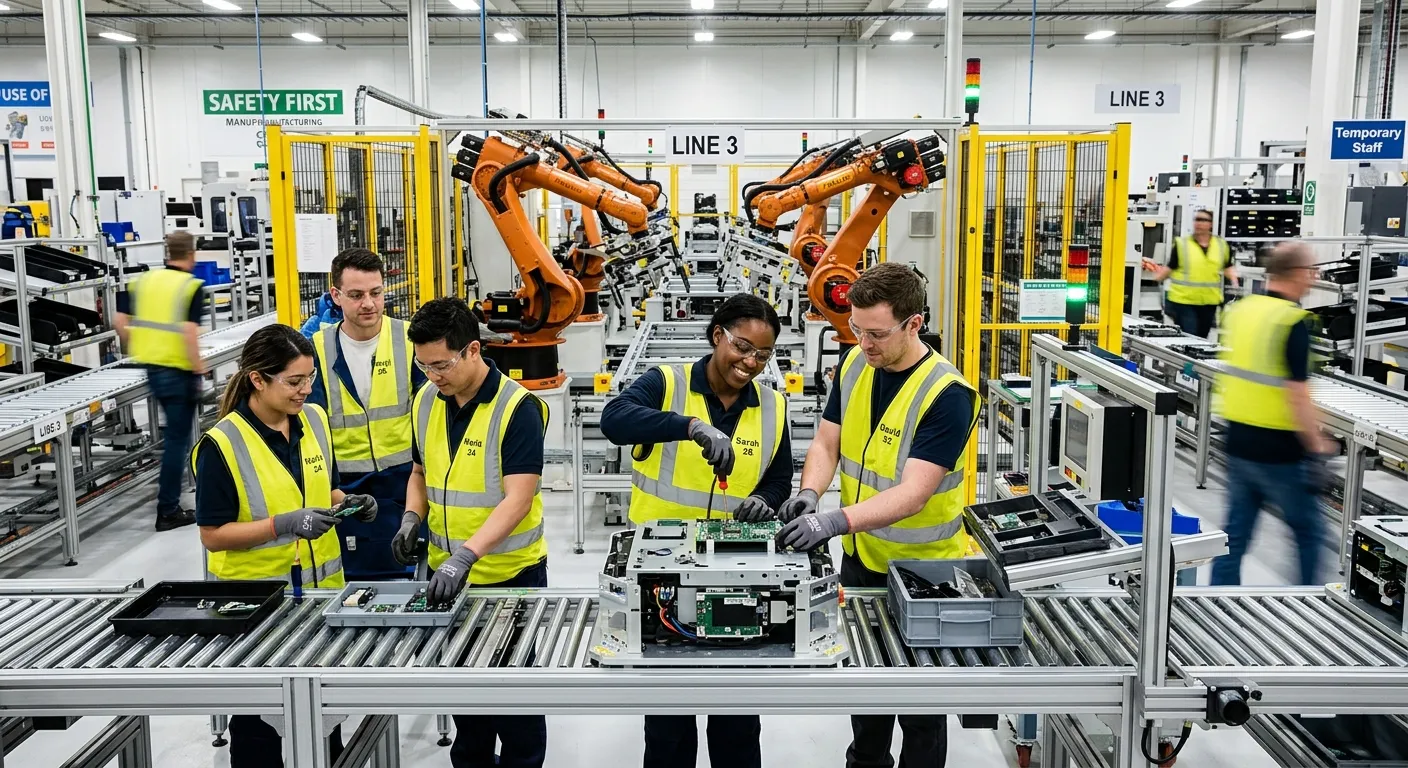
Navigate production peaks, cover unexpected absences, and drive innovation with agile, skilled temporary manufacturing staffing solutions. Discover the strategies to build a resilient workforce.
Hire Temporary Manufacturing Staff NowMastering Flexible Manufacturing Workforces
Temporary manufacturing staffing is not just about filling gaps; it's a strategic lever for operational excellence. Explore the core facets of building a dynamic production team.
The Strategic Imperative of Temporary Staffing
In today's volatile market, the ability to scale your workforce up or down is a critical competitive advantage. Temporary manufacturing staffing provides the agility to respond to sudden increases in orders, new product launches, or seasonal demand spikes without the long-term financial commitment of permanent hires.
This model also serves as a powerful "try before you buy" talent pipeline. Many companies use temporary assignments to evaluate a worker's skills, work ethic, and cultural fit before extending a permanent offer. For insights on building a robust talent pipeline, explore our Ultimate Guide to Strategic Talent Sourcing.
Key Benefits of Agile Manufacturing Staffing
Cost Control & Flexibility
Convert fixed labour costs into variable ones. Pay only for the hours worked, with no obligations for benefits, pensions, or severance. This model is ideal for project-based work or managing uncertain demand cycles.
Access to Specialized Skills
Tap into a vast network of pre-screened talent with niche skills—from welding and PLC programming to lean manufacturing expertise—without lengthy recruitment campaigns. It's a cornerstone of effective strategic staffing.
Reduced Time-to-Hire
Fill critical vacancies within 24-48 hours. A dedicated agency handles sourcing, vetting, and onboarding, allowing your HR team to focus on strategic initiatives. This is especially valuable for immediate start requirements.
Mitigated Risk & Compliance
The staffing agency assumes employer liability for temporary workers, managing payroll, taxes, insurance (Employer's Liability, Public Liability), and ensuring right-to-work checks are completed, shielding your business from legal complexities.
Boosted Productivity & Morale
Prevent burnout in your core team by bringing in support during peak periods. This maintains production schedules and shows permanent employees their well-being is valued, leading to higher engagement and retention.
A Strategic Talent Pipeline
Use temporary assignments as extended interviews. When a permanent position opens, you have a pool of proven, trained individuals who already understand your systems and culture, streamlining your permanent hiring process as detailed in our guide on the Benefits of Working with Hire Now.
Implementing a Successful Temporary Staffing Strategy
To fully leverage temporary manufacturing staffing, a structured approach is essential. It's more than just making a call; it's about integration and management.
Step-by-Step Integration Plan
-
1
Forecast & Identify Needs
Analyze production schedules, upcoming projects, and historical absenteeism data to predict where and when you'll need supplemental labour.
-
2
Partner with a Specialized Agency
Choose a partner with a proven track record in manufacturing, like HireNow, which understands the nuances of casual labour and skilled technical roles. They should offer robust vetting, including skills testing and safety certification checks.
-
3
Streamlined Onboarding & Orientation
Develop a rapid onboarding checklist: site safety inductions, PPE provision, access badges, and introductions to line supervisors. Consistency here is key to immediate productivity.
-
4
On-site Management & Communication
Assign a dedicated point of contact from your team to manage temporary staff. Clear daily briefings and integrated communication prevent them from feeling like outsiders and boost performance.
-
5
Performance Feedback & Evaluation
Provide real-time feedback to the agency. Rate workers on reliability, skill, and teamwork. This data refines future placements and helps identify candidates for permanent roles.
Expert Insight: The Future of Manufacturing Staffing
The convergence of AI, data analytics, and the gig economy is transforming temporary manufacturing staffing. Predictive analytics can now forecast staffing needs with incredible accuracy, while digital platforms enable faster matching of skills to specific machine operations or tasks.
Furthermore, the rise of hybrid roles—where basic technical skills are combined with digital literacy—is creating new categories of temporary workers. For a forward-looking perspective, our Ultimate Guide to Modern Talent Sourcing explores these emerging trends in depth.
Temporary Manufacturing Staffing FAQs
Get clear, actionable answers to the most common questions about leveraging flexible manufacturing labour.
Ready to Optimize Your Manufacturing Workforce?
Stop letting staffing shortages disrupt your production lines and profitability. Partner with HireNow to access a curated network of reliable, skilled temporary manufacturing staff. From general labour to specialized technicians, we deliver talent that gets the job done.
Need talent in other sectors? We also specialize in remote receptionist roles and recruitment jobs in key industrial hubs.
Case Study: Scaling for a Seasonal Product Launch
To understand the tangible impact of a strategic temporary staffing plan, let's examine a real-world application. This case study details how a mid-sized consumer electronics manufacturer successfully navigated a critical, time-sensitive production surge.
The Challenge: A 60-Day Window to Meet Holiday Demand
"CircuitFlow Ltd." secured a last-minute, high-volume contract with a major retailer for a new smart home device. Their permanent workforce of 150 could not meet the required output. They needed to scale their assembly and packaging lines by 40% for an eight-week period, requiring an additional 60 workers with specific skills in micro-assembly, quality testing, and anti-static packaging protocols.
The internal HR team estimated a traditional hiring campaign would take 6-8 weeks—the entire length of the project. They faced a critical bottleneck that threatened contractual penalties and lost market opportunity.
Project Snapshot
- Industry:Consumer Electronics
- Need:60 Temporary Staff
- Timeline:8-Week Project
- Key Roles:Assembly Techs, QC Inspectors
- Result:Output Increased by 42%
The Strategic Solution & Implementation
CircuitFlow partnered with a specialized manufacturing staffing agency. The solution was built on a four-pillar approach:
1. Rapid, Skills-Based Mobilization
The agency deployed its pre-vetted talent pool. Candidates underwent a secondary, project-specific skills assessment simulating the delicate assembly task. 55 workers were placed within 72 hours, with the remaining 5 (specialized QC roles) within one week.
2. Integrated Onboarding"Boot Camp"
Before Day 1, temps attended a half-day, off-site orientation covering CircuitFlow's culture, product criticality, and electrostatic discharge (ESD) safety. This was followed by a 2-hour on-site induction, slashing the typical ramp-up time by over 60%.
Measurable Outcomes & ROI
| Metric | Target | Actual Result | Impact |
|---|---|---|---|
| Time-to-Productivity | 5-7 Days | 2.5 Days | Faster output, lower training burden on supervisors. |
| Production Output Increase | 40% | 42% | Contract fulfilled one week ahead of schedule. |
| Quality Reject Rate | < 1.5% | 0.8% | Temps, with focused training, exceeded quality expectations. |
| Cost vs. Permanent Hire | N/A | 35% Savings | Savings on recruitment ads, HR admin, benefits, and severance. |
The Takeaway: The temporary workforce was not a"plug-and-play" labour source but a strategically integrated extension of the team. Four high-performing temporary staff were offered permanent positions at project end, seamlessly filling existing vacancies. This approach mirrors the strategic value found in specialized sectors like remote receptionist staffing, where precise skill-matching drives operational success.
Navigating Challenges: Mitigating Common Risks in Temporary Staffing
While the benefits are substantial, a proactive strategy must also account for potential pitfalls. Understanding these challenges allows you to partner with your agency to preemptively solve them.
Challenge 1: Cultural & Knowledge Silos
Temporary workers can feel isolated, lacking context about the broader production goals. This can lead to a transactional mindset, where they focus only on their immediate task without understanding its impact on downstream quality or efficiency.
Mitigation Strategy:
- Include Temps in Team Huddles: Even a 5-minute daily briefing connects their work to the day's target.
- Assign a"Buddy": A permanent employee can provide informal guidance and answer on-the-floor questions.
- Visual Management: Ensure performance boards and quality metrics are visible to all, demonstrating how each role contributes.
Challenge 2: Inconsistent Skill Verification
A resume claiming"CNC operating experience" can range from basic button-pushing to advanced programming and troubleshooting. A mismatch between claimed and actual skill slows down the line and creates safety risks.
Mitigation Strategy:
- Demand Practical Assessments: Require your staffing partner to conduct hands-on or simulation-based tests for technical roles.
- Provide Clear Skill-Level Specifications: Differentiate between"Operator,""Setter," and"Programmer" when requesting talent.
- Implement a Short Probation Shift: For critical roles, use the first 4 hours as a practical evaluation before confirming the booking.
The Technology Edge: Leveraging Platforms for Better Management
Modern Vendor Management Systems (VMS) and staffing agency portals transform temporary workforce management from an administrative headache into a strategic dashboard. These platforms allow you to:
- Submit Requests in Seconds: Use templated job descriptions for recurring needs.
- Track Candidate Status in Real-Time: See when a worker is assigned, confirmed, and has checked in on-site.
- Automate Timesheet Approval & Billing: Digital verification streamlines payroll and eliminates disputes.
- Access Performance Analytics: Rate workers post-assignment; the system uses this data to improve future matches.
This level of integration and data visibility is what separates a tactical fix from a strategic HR partnership. It ensures your temporary staffing function is scalable, auditable, and continuously improving.
Figure: A modern VMS dashboard providing real-time insights into temporary workforce metrics.
Beyond the Factory Floor: Supporting Roles in Manufacturing
A manufacturing operation's success relies on a symphony of functions. Temporary staffing strategically extends to these critical support roles, ensuring core production isn't hampered by administrative or logistical shortfalls.
Logistics & Inventory Coordination
Peak production strains supply chains. Temporary logistics coordinators or inventory clerks can manage inbound material receipts, cycle counts, and outbound shipping documentation, preventing line stoppages due to part shortages.
Temporary Roles: Shipping/Receiving Clerks, Inventory Analysts, Dispatch Coordinators.
Administrative & Frontline Support
Covering for absent administrative staff is crucial. A temporary receptionist or HR administrator can manage visitor logs, new temp onboarding paperwork, and employee inquiries, keeping the office running smoothly. This is equally vital in specialized settings, akin to finding a qualified vet receptionist for a busy clinic.
Temporary Roles: Receptionists, Data Entry Clerks, HR Assistants.
Specialized Maintenance & Calibration
Planned maintenance shutdowns or unexpected equipment failures require niche expertise you may not need year-round. Temporary contract technicians—specializing in HVAC, industrial electrical, or precision calibration—can execute these projects efficiently without the cost of a full-time specialist.
Temporary Roles: HVAC Technicians, Metrology Calibration Techs, Project-Based Electricians.
Your Next Step: Building a Tailored Staffing Plan
The journey from reactive hiring to strategic workforce agility begins with an assessment. Before contacting a partner, internal alignment is key.
Internal Checklist for Department Heads:
- Map your production calendar for the next 12 months. Identify all predictable peaks and valleys.
- Audit current team skills. What specialized tasks have only one or two"go-to" people? (A key single point of failure risk).
- Calculate the true cost of a production line stoppage per hour. This quantifies the value of rapid staffing.
- Designate an internal"Talent Lead" to be the single point of contact for the staffing agency.
Questions to Ask a Potential Staffing Partner:
- What is your specific vetting process for [e.g., forklift drivers / solder technicians]? Can we review the assessment criteria?
- What is your average time-to-fill for a standard assembly role in our geographic area?
- What technology platform do you use for communication, scheduling, and reporting?
- Can you provide case studies or references from similar manufacturing clients?
By combining internal preparedness with a expert partner, you transform temporary manufacturing staffing from a cost centre into a demonstrable driver of resilience, growth, and competitive advantage.