
Mastering Maintenance Technician Hiring: The 2026 Strategic Playbook
Discover the proven frameworks, expert insights, and actionable steps to attract, assess, and secure top-tier maintenance talent in a competitive market. This comprehensive guide, informed by industry leaders like Derby Manufacturing, is your blueprint for building a resilient, skilled workforce.
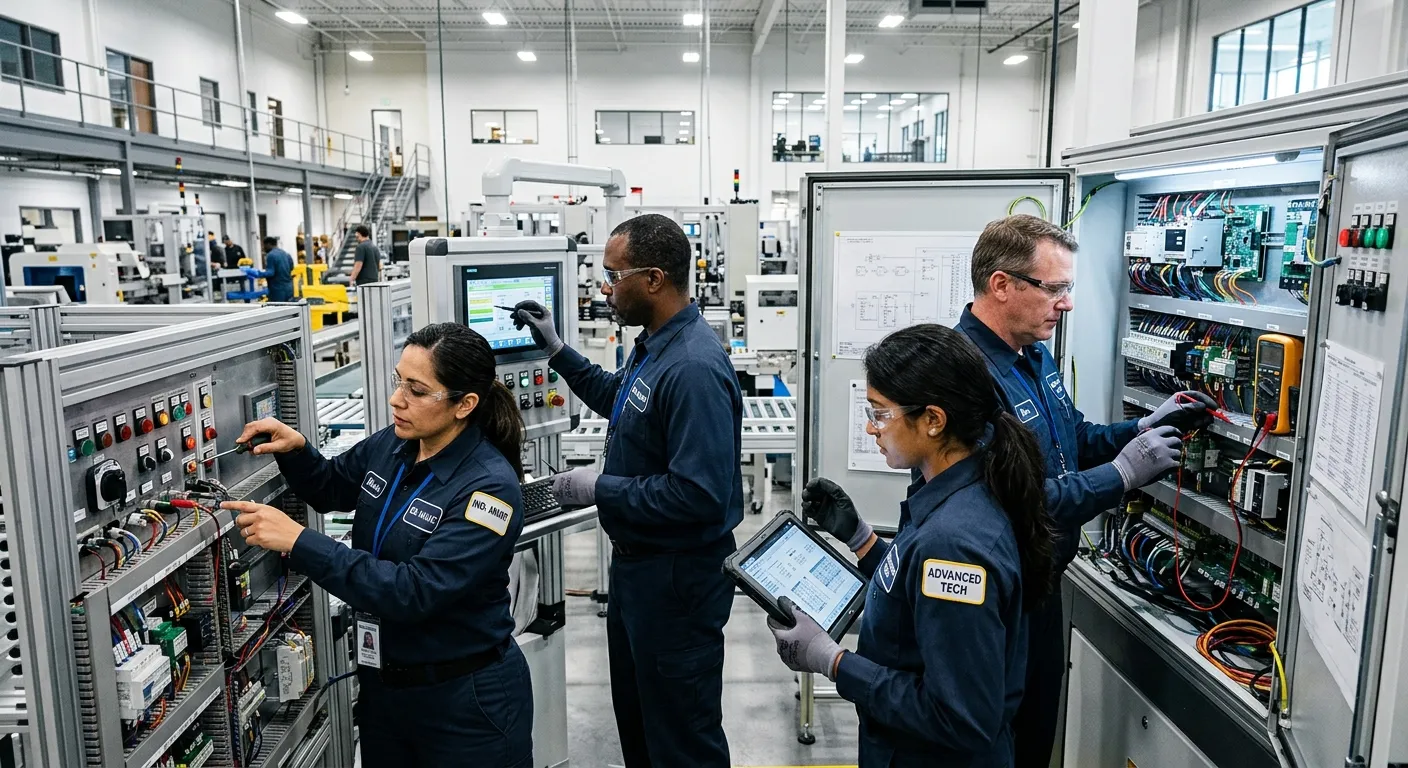
Your Comprehensive Maintenance Hiring Roadmap
Navigate the complexities of Maintenance Technician Hiring through our focused strategic lenses. Select a category to explore in-depth.
Future-Proof Your Workforce Plan
Effective Maintenance Technician Hiring begins long before a vacancy is posted. It requires aligning your talent needs with long-term operational goals. Companies like Derby Manufacturing excel by forecasting skill gaps 18-24 months in advance, integrating predictive maintenance data with workforce planning.
Consider the total cost of a bad hire—downtime, rework, safety incidents—which can far exceed the recruitment fee. Strategic planning involves budgeting not just for salary, but for continuous training, certification renewals, and investment in the tools that empower technicians.
Access the Full 2026 Hiring PlaybookDefining the Modern Maintenance Role
The role of a maintenance technician has evolved from reactive fixer to proactive systems analyst. Your job description must reflect this. Beyond mechanical aptitude, highlight needs for PLC troubleshooting, IoT sensor literacy, and data interpretation skills.
- Technical Core: HVAC, electrical, mechanical systems, welding, CNC machinery.
- Digital Fluency: CMMS software, diagnostic tablets, basic networking.
- Soft Skills Imperative: Root-cause analysis, communication for cross-departmental collaboration, documentation rigor.
Pro-Tip:
Structure your job ads like a"challenge statement." Instead of just listing duties, describe a recent complex problem your team solved. This attracts problem-solvers.
Why Strategic Maintenance Hiring is a Business Imperative
Investing in a rigorous Maintenance Technician Hiring process delivers measurable ROI across your operation.
Maximised Uptime & Asset Life
A skilled technician doesn't just fix breaks; they prevent them. Proactive maintenance driven by expert hires can increase overall equipment effectiveness (OEE) by 15-25%, directly impacting your bottom line and protecting capital investment.
Enhanced Safety & Compliance
Properly maintained equipment is safe equipment. Competent technicians ensure machinery meets all health, safety, and environmental regulations, mitigating the risk of costly accidents, fines, and reputational damage. This is a core focus for responsible firms like Derby Manufacturing.
Operational Cost Reduction
Strategic hiring eliminates the cycle of emergency repairs and costly external contractors. A well-staffed, skilled maintenance department optimizes spare part inventory, reduces energy waste through calibrated machinery, and extends the lifecycle of assets, delivering sustained operational savings.
Crafting the Irresistible Maintenance Technician Offer
In today's market, salary is just the entry ticket. To win top talent, your entire employment proposition must be compelling. This is especially true when competing for candidates who may also be considering roles found through resources like Looking For Work.
Competitive Compensation & Tangible Benefits
Benchmark salaries not just locally, but against similar industries. Include clear shift differentials for unsocial hours. Beyond base pay, consider:
- Sign-on bonuses for critical skill sets (e.g., PLC programming, industrial robotics).
- Comprehensive health insurance and robust pension contributions.
- Tool allowances or company-provided high-quality toolkits.
- Overtime policies that are transparent and rewarding.
The Non-Financial Differentiators
These elements often tip the scale for discerning technicians:
Investment in Growth
Annual budget for external training courses, certifications (e.g., CompEx, 18th Edition), and conference attendance.
Modern Work Environment
Clean, organized workshops with up-to-date equipment and robust digital CMMS systems. Showcase this in your hiring process.
By presenting a holistic package that values the technician's long-term development and daily work experience, you transition from a company that hires to a destination for talent. For employers seeking to refine their overall proposition, our Employer hub offers further strategic resources.
Quick-Start Hiring Checklist
Use this actionable list to accelerate your next Maintenance Technician Hiring campaign.
- Audit current team skills & forecast future gaps.
- Craft a compelling, skills-focused job description.
- Utilize niche sourcing channels and referral programs.
- Design a practical skills assessment.
- Prepare a competitive offer & structured onboarding plan.
Maintenance Technician Hiring: Frequently Asked Questions
Expert answers to the most common challenges in recruiting technical talent.
Problem-solving methodology and systematic thinking. Technical skills can be trained, but an innate, logical approach to diagnostics is gold-standard. Look for candidates who can articulate a clear process: observation, hypothesis, testing, and verification. This skill minimizes downtime and prevents recurring issues. For roles requiring rapid adaptation, such as in logistics, similar principles apply—see our guide on Immediate Stock Replenisher Jobs for parallel insights.
Leverage your agility as an advantage. While large firms have scale, smaller to mid-sized businesses often offer greater variety of work, faster decision-making, and more visible impact. Emphasize these in your employer branding:
- Diverse Responsibility: Technicians may work across multiple systems, not just one specialized machine.
- Direct Influence: Ideas for process improvement are heard and implemented quickly.
- Culture & Community: A closer-knit team where everyone's contribution is recognized.
Sometimes, partnering with a specialized agency that understands your niche can level the playing field in Maintenance Technician Hiring.
Absolutely, with a targeted approach. A marine engineer, aircraft mechanic, or facilities manager from a data centre may possess transferable core competencies in hydraulics, electrical systems, or rigorous preventative maintenance protocols. The key is to assess their fundamental mechanical and electrical principles, safety mindset, and learning agility. A robust onboarding program is crucial to bridge specific industry knowledge gaps. This cross-industry sourcing is a pillar of modern talent strategy, as detailed in our Ultimate Guide to Modern Talent Sourcing.
Aim for 2-4 weeks from first interview to offer. Efficiency is critical, as top technicians are often off the market in 10 days. Streamline internal approvals, consolidate interview stages where possible, and provide prompt feedback. For truly urgent needs, a specialized recruitment partner can often present pre-vetted candidates within 24-72 hours, a service model that's transformative for many businesses—learn more about this in our analysis of Managed Services Beispiele. Drawn-out processes result in losing your first-choice candidate to a more decisive competitor.
Transform Your Maintenance Operations Today
Stop struggling with downtime and reactive repairs. A strategic approach to Maintenance Technician Hiring is your pathway to operational excellence, reliability, and growth. Whether you need one specialist or are planning to scale your entire technical workforce, the time to act is now.
Need immediate, expert guidance? Our specialist consultants are ready to help you design and execute a winning hiring strategy.
2026 Market Intelligence: Where Maintenance Technician Hiring Demand Is Growing
To hire effectively, you need more than a job ad—you need market awareness. In 2026, employers competing for technical talent are not only asking for mechanical and electrical competence; they are also screening for digital confidence, safety discipline, and the ability to work with automated systems. A successful Maintenance Technician Hiring strategy therefore starts with understanding which skill combinations are scarce, which roles move fastest, and which retention levers matter most.
Below is a practical snapshot of the talent landscape for industrial maintenance roles. Use it to benchmark your job descriptions, salary bands, and interview priorities before you open a vacancy.
| Role Cluster | High-Demand Skills | Hiring Pressure | Retention Signal |
|---|---|---|---|
| Multi-Skilled Industrial Technician | PLC fault-finding, VFDs, pneumatics, hydraulics, CMMS use | High | Needs a visible progression route |
| Electrical Maintenance Specialist | Motor controls, instrumentation, 18th Edition, isolation procedures | Very high | Shift premiums and safety trust matter |
| Mechanical Reliability Technician | Vibration analysis, thermography, root-cause analysis, PM planning | Moderate to high | Values ownership of asset performance |
| Automation & Robotics Technician | Robot cells, vision systems, safety PLCs, HMI troubleshooting | Emerging | Stays longer with training investment |
Case Study: How a Derby-Based Manufacturer Reduced Downtime by 31%
A mid-sized contract manufacturer with three high-speed packaging lines was experiencing repeated unplanned stoppages. The maintenance team was competent but stretched thin. Every breakdown pulled senior technicians into reactive firefighting, while contractors were called in for tasks that could have been handled internally. The result was rising overtime, inconsistent root-cause analysis, and a growing sense that the maintenance function was always behind the production schedule.
The leadership team reframed its Maintenance Technician Hiring approach around three changes:
- Skills mapping before recruitment: They audited every technician’s strengths across electrical, mechanical, automation, and CMMS use. This revealed that the team was strong on mechanical repairs but weak on PLC diagnosis and data-driven PM planning.
- Practical assessments in the hiring process: Candidates were asked to interpret a machine diagram, explain a lockout/tagout sequence, and walk through a fault simulation. This filtered out applicants who could talk confidently but lacked structured diagnostic thinking.
- Temp-to-perm onboarding: Two new technicians were first engaged through a flexible staffing arrangement. This allowed the business to evaluate reliability, communication, and fit under real production pressure before committing to permanent employment.
Within six months, the manufacturer had rebuilt its maintenance rhythm. The new hires were paired with senior mentors, trained on the site’s CMMS, and given clear ownership of asset reliability targets. The most important change was cultural: technicians began reporting near-misses and suggesting PM improvements rather than simply waiting for breakdowns.
“We were not just hiring bodies. We were hiring diagnostic thinkers. Once we assessed how candidates approached a fault, our downtime improved more than we expected.”
Maintenance Operations Lead, Derby-Based Manufacturer
Measurable Outcomes
-
31%
Reduction in Unplanned Downtime
Achieved through better root-cause analysis and scheduled PM ownership.
-
18%
Drop in Emergency Contractor Spend
Internal capability improved first-time fix rates on recurring faults.
-
90d
Retention Focus
Structured mentoring and realistic job previews reduced early attrition risk.
Build a Structured Interview Scorecard That Predicts On-the-Job Success
One of the biggest mistakes in Maintenance Technician Hiring is relying on a manager’s gut feeling. Technical roles require evidence. A simple scorecard keeps interviews fair, consistent, and focused on the behaviours that actually reduce downtime, improve safety, and strengthen team performance.
| Assessment Area | What to Look For | Warning Signs |
|---|---|---|
| Systematic Troubleshooting | Clear steps: isolate, inspect, hypothesise, test, verify, document | Jumps to part replacement without diagnosis |
| Safety & Compliance | Understands LOTO, permits, risk assessment, and escalation | Treats safety as paperwork rather than behaviour |
| Digital Readiness | Comfortable with CMMS, diagnostic apps, PDF manuals, or tablets | Resists data capture or avoids system updates |
| Communication | Explains faults to operators and managers without blame | Cannot describe a past repair clearly |
| Initiative | Suggests improvements to PM schedules, spares, or procedures | Only reacts to assigned work orders |
Ask Scenario-Based Questions
Instead of asking, “Are you good at fault-finding?”, give candidates a realistic situation:
- “A conveyor trips twice a shift but resets immediately. What is your first action?”
- “An operator says the machine feels different after your repair. How do you respond?”
- “A critical pump fails, and the spare part is not available. What do you do next?”
Use a Realistic Job Preview
Candidates perform better when they know what the job truly involves. During the hiring process, show them:
- A typical work order queue
- The shift pattern and escalation process
- How downtime is recorded and reviewed
- What “good” looks like in your maintenance culture
This reduces mismatched expectations and increases confidence for both sides.
Alternative Talent Pools That Can Strengthen Your Maintenance Hiring
If your direct applicant pipeline is thin, widening your sourcing strategy does not mean lowering standards. It means recognising transferable skill sets and building a training bridge around them.
Apprentices & Trainees
Use apprenticeships to grow future multi-skilled technicians. Pair them with experienced mentors and rotate them across electrical, mechanical, and reliability tasks.
Veterans & Service Leavers
Military engineers and vehicle technicians often bring strong discipline, safety awareness, and mechanical aptitude. Provide clear onboarding for industry-specific equipment.
Facilities to Manufacturing
Building services engineers can be excellent candidates if they understand pumps, controls, motors, and planned maintenance. Focus on transferable systems knowledge.
Returners & Career Changers
Candidates returning after a career break or moving from adjacent sectors can bring motivation and maturity. Support them with refresher training and buddy systems.