
Cracking the Maintenance Worker Dot Code: Your 2026 Guide to Hiring & Workforce Optimization
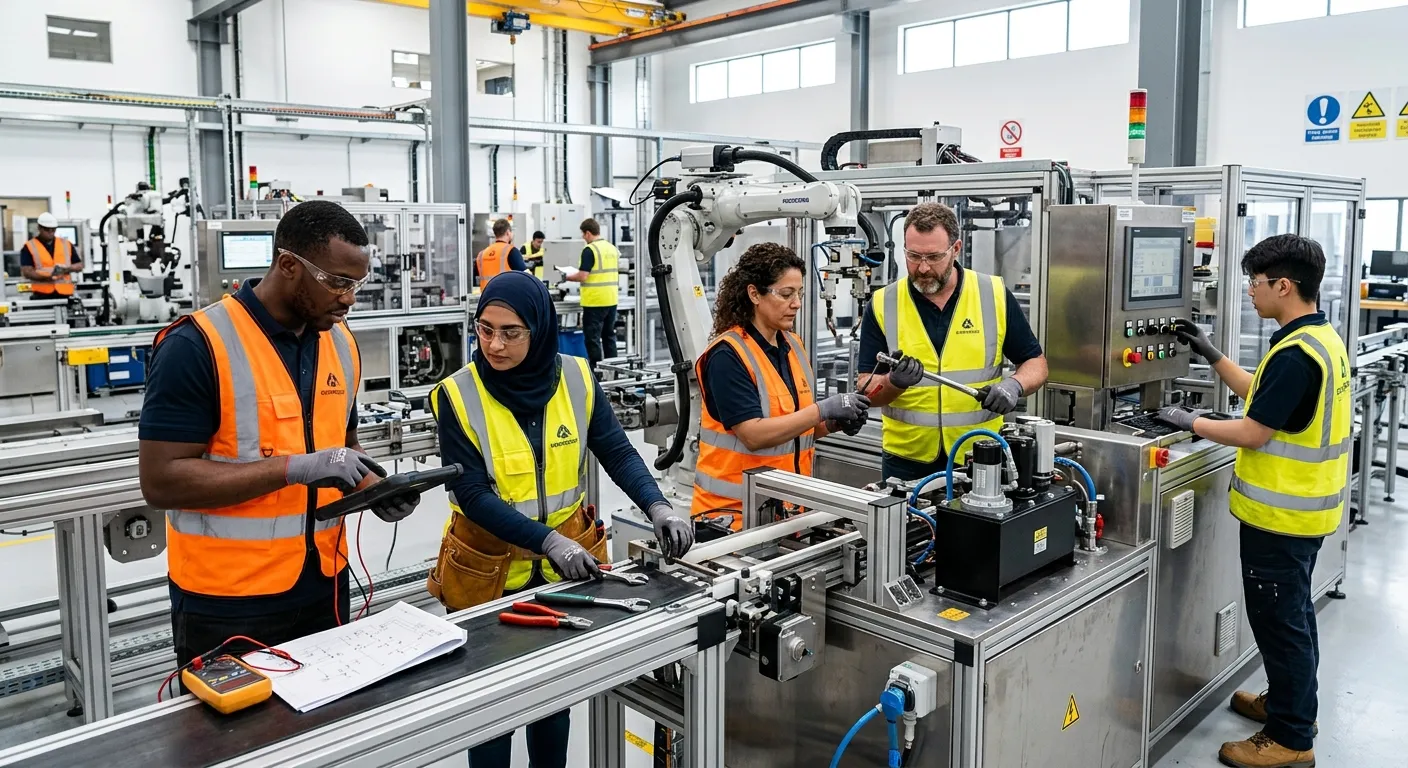
In today's fast-paced industrial and commercial landscape, understanding the 'Maintenance Worker Dot Code' is the difference between operational excellence and costly downtime. This comprehensive guide deciphers the modern hiring matrix, from evaluating technical skills to leveraging platforms like HireNow for securing top-tier talent, including specialized roles like Maintenance Engineer Hiring Cebu.
Post Your Maintenance Job & Hire NowDecoding the Maintenance Workforce Matrix
The Essential Skill Set
The 'Maintenance Worker Dot Code' refers to the intricate web of skills, certifications, and soft competencies that define a top-tier technician. Beyond wrench-turning, it encompasses predictive diagnostics, IoT system literacy, and compliance knowledge. For businesses looking for staff, identifying candidates who possess this holistic code is paramount. This includes understanding electrical schematics, HVAC systems, PLC programming, and crucially, a safety-first mindset certified by programs like OSHA or its regional equivalents.
Specialized roles, such as a Maintenance Engineer Hiring Cebu initiative, require an additional layer of understanding regarding local regulations, climate-specific building maintenance, and potentially, multilingual communication skills to manage diverse teams effectively.
Strategic Talent Acquisition
Modern hiring transcends traditional job boards. It's about proactive talent sourcing, utilizing AI-driven platforms, and understanding the gig economy's role in flexible staffing. Platforms like HireNow allow employers to post urgent roles, such as an Urgent Maintenance Technician Job in Burnley, and connect with pre-vetted professionals immediately. This aligns with the principles outlined in our Ultimate Guide to Modern Talent Sourcing, which emphasizes speed and precision.
The hiring process must now include assessments for problem-solving under pressure, adaptability to new technologies, and cultural fit within a hybrid or on-site work environment.
The Future of Maintenance Work
The industry is shifting towards predictive and condition-based maintenance, powered by AI and machine learning. This means the 'dot code' for workers now includes data analysis fundamentals and comfort with CMMS (Computerized Maintenance Management Systems). Furthermore, the rise of sustainable practices demands knowledge of energy-efficient systems and green compliance. The workforce is also becoming more globalized, with remote diagnostics support and international standards harmonization creating opportunities for roles like those based in Cebu to serve broader APAC regions.
Why Mastering the Maintenance Code is Non-Negotiable
Minimize Costly Downtime
A worker who understands the full maintenance code can predict failures, perform proactive repairs, and keep operations running smoothly. The financial impact of unplanned downtime can dwarf the investment in skilled labor.
Ensure Compliance & Safety
Regulations are complex and ever-evolving. Skilled maintenance personnel ensure all equipment and practices meet OSHA, EPA, and local standards, protecting your business from litigation and creating a safe environment.
Boost Asset Longevity & ROI
Proper maintenance extends the operational life of capital-intensive equipment. Workers adept in the latest techniques ensure you get maximum return on investment from your machinery and infrastructure.
Access a Flexible Talent Pool
Understanding the code allows you to effectively tap into both permanent and temporary talent markets. Whether you need a Casual Labourer for a short-term project or a full-time engineer, knowing the required skill matrix is key.
Adapt to Technological Integration
The modern maintenance worker is tech-savvy. Hiring individuals fluent in the 'dot code' means they can seamlessly work with IoT sensors, AR-assisted repair guides, and digital work orders, future-proofing your operations.
Optimize Operational Budgets
Efficient maintenance reduces emergency repair costs, energy waste, and premature capital expenditure. A skilled team directly contributes to healthier bottom lines and more predictable financial planning.
A Step-by-Step Guide to Hiring Your Maintenance Dream Team
Translating the theoretical 'Maintenance Worker Dot Code' into a practical hiring process requires a structured approach. Whether you're filling a permanent role or seeking temporary support for a project, the principles remain the same: define, source, assess, and onboard.
Pro-Tip: Leverage Specialized Job Boards
Generic job boards flood you with unqualified applicants. Use platforms dedicated to skilled trades and technical roles. For example, posting a role for Maintenance Engineer Hiring Cebu on a localized platform like HireNow attracts candidates who are specifically searching for such opportunities, increasing the quality of your applicant pool dramatically.
Begin by deconstructing the 'dot code' into a detailed job description. List hard skills (e.g., HVAC certification, welding expertise), soft skills (problem-solving, communication), and tool proficiency. Then, utilize a multi-channel sourcing strategy. This includes your company career page, specialized agencies, and high-visibility posts on hiring platforms to attract both active and passive candidates. For immediate needs, similar to an Immediate Stock Replenisher Jobs posting, clarity on start dates and pay is crucial to attract top talent quickly.
The 5-Pillar Assessment Framework
-
1
Technical Knowledge Test
Use scenario-based questions and practical tests to evaluate core trade knowledge and safety protocols.
-
2
Behavioral Interview
Assess past behavior in crisis situations, teamwork, and adherence to procedures using the STAR method.
-
3
Tool & Tech Familiarity
Verify hands-on experience with specific tools, software (CMMS), and diagnostic equipment relevant to your operation.
-
4
Certification & Credential Verification
Meticulously check all claimed licenses, safety certifications, and training records for authenticity.
-
5
Cultural & Value Alignment
Ensure the candidate's work ethic, communication style, and safety mindset align with your company's core values.
The Global Talent Equation: A Case Study in Maintenance Engineer Hiring Cebu
The Cebu Advantage
The Philippines, and Cebu specifically, has emerged as a hub for highly skilled, English-speaking engineering talent. For companies looking to build or augment their maintenance teams, tapping into this market requires understanding the local 'dot code.' This includes familiarity with tropical climate-specific maintenance challenges, strong educational foundations in engineering, and a workforce known for its technical proficiency and strong work ethic.
Navigating the Hiring Process
Successful Maintenance Engineer Hiring Cebu involves partnering with local recruitment agencies, understanding visa and compensation norms, and conducting remote assessments effectively. Platforms that facilitate cross-border hiring are invaluable. The process mirrors best practices for any specialized hire but requires additional attention to cultural integration and remote onboarding if the role supports international operations.
Integration & Management
Once hired, integrating a Cebu-based engineer into a global team requires clear communication protocols, investment in collaborative technology, and periodic on-site visits or exchange programs. The payoff is access to a cost-effective, highly skilled talent pool that can operate across time zones, providing near-24/7 maintenance support for critical infrastructure.
Expert Insight:
"The globalization of maintenance talent isn't just about cost savings; it's about accessing niche skills and creating resilient, round-the-clock support systems. A well-integrated team in Cebu can become the backbone of your APAC operations, provided you invest in the right tools and management framework." – Senior Hiring Director, HireNow.
Frequently Asked Questions: Maintenance Worker Dot Code
The"Maintenance Worker Dot Code" is a metaphorical term for the complex and interconnected matrix of skills, certifications, experience, and soft skills required of a modern maintenance professional. It's not a single standard but a dynamic framework that includes technical prowess (electrical, mechanical, HVAC), digital literacy (CMMS, IoT basics), safety certification (OSHA, etc.), problem-solving ability, and communication skills. Cracking this code means finding a candidate whose competencies connect all the necessary"dots" for your specific operational needs.
Remote verification is crucial, especially for roles like Maintenance Engineer Hiring Cebu. Utilize video interview platforms to conduct live scenario questions. Ask candidates to walk you through a complex repair they performed using diagrams or photos. Use secure online testing services for technical knowledge quizzes. Request digital portfolios of their work, including before/after photos of projects, and always conduct thorough reference checks with previous supervisors, focusing on specific technical challenges they overcame.
While both are vital, their 'dot codes' differ. A technician typically focuses on hands-on execution: troubleshooting, repairing, and performing preventative maintenance on equipment. Their code emphasizes tool skills, manual dexterity, and procedural knowledge. A maintenance engineer often operates at a higher level, involved in designing maintenance programs, analyzing failure data, specifying new equipment, and managing complex projects. Their code includes more advanced analytical skills, project management, and sometimes a formal engineering degree. Understanding this distinction is key when looking for staff to fill a specific gap in your team.
Absolutely, and it's a strategic move for many businesses. Temporary workers are ideal for covering peak workloads, special projects, maternity leaves, or while you conduct a search for a permanent hire. The key is to source them from reputable agencies that specialize in skilled trades and rigorously vet their candidates' 'dot code.' For urgent needs, similar to an Urgent Maintenance Technician Job in Burnley, a temp-to-perm arrangement can be an excellent way to evaluate a worker's fit before making a long-term commitment.
Key red flags include: Vague answers about safety procedures – safety must be second nature. Inability to explain a past repair in detail – suggests a lack of deep understanding. Unwillingness to provide references or verify certifications. Disparaging remarks about past employers or teams – indicates potential teamwork issues. No questions about your equipment or maintenance processes – shows a lack of curiosity and engagement. Always trust your instincts and verify every claim made in the interview.
Decode Your Talent Needs Today
Stop letting operational gaps and hiring guesswork slow you down. Whether you're building a local team or exploring global talent like Maintenance Engineer Hiring Cebu, the right partner simplifies the code.
For maintenance professionals looking for work, browse thousands of opportunities on our Find Jobs portal and connect with employers who value your unique skill set.
Beyond the Basics: Specialized Maintenance Roles Decoded
The 'Maintenance Worker Dot Code' branches into specialized sub-fields, each with its own nuanced skill matrix. Understanding these specializations allows for hyper-targeted hiring and project staffing.
Predictive Maintenance (PdM) Technician
This role is at the forefront of the Industry 4.0 revolution. The 'dot code' here shifts dramatically from reactive repair to data-driven prediction. Essential skills include:
- Data Analytics Fundamentals: Ability to interpret vibration analysis, thermography, ultrasonic testing, and oil analysis data.
- CMMS & IoT Platform Mastery: Proficiency in platforms like Fiix, UpKeep, or SAP PM to schedule PdM tasks and track asset health.
- Sensor Literacy: Understanding how to install, calibrate, and troubleshoot condition-monitoring sensors.
Hiring for this role often requires a hybrid candidate—part traditional mechanic, part data analyst. Look for certifications in vibration analysis (ISO CAT-I or II) or thermography.
Facilities Maintenance Manager
This leadership role requires a 'dot code' that connects technical knowledge with business acumen. It's less about turning a wrench and more about optimizing an entire ecosystem.
- Vendor & Contract Management: Negotiating and overseeing contracts for specialized services (elevator, fire suppression).
- Budgeting & Lifecycle Cost Analysis: Planning CAPEX/OPEX budgets and justifying new equipment purchases.
- Regulatory Compliance Mastery: Deep knowledge of ADA, fire codes, local building ordinances, and sustainability standards like LEED.
- Soft Skills Supremacy: Leadership, cross-departmental communication, and crisis management are non-negotiable.
For such strategic hires, the assessment must include scenario-based leadership exercises and presentations on past budget or project management successes.
Case Study: Implementing the Dot Code Framework in a Manufacturing Plant
The Challenge
A mid-sized automotive parts manufacturer in the Midwest was experiencing a 22% increase in unplanned downtime over two quarters. Their reactive maintenance culture and a high turnover rate among technicians had created critical knowledge gaps. Their hiring process was based on resume keywords and a single interview, failing to assess the holistic 'dot code.'
The Solution: A 4-Month Transformation
Phase 1: Audit & Redefinition
The plant manager worked with an industrial consultant to map the precise 'dot code' for their critical roles: Multi-Skilled Technician and PLC Specialist. They moved beyond generic requirements to specific needs like"experience with Allen-Bradley ControlLogix PLC troubleshooting" and"certification in robotic arm preventative maintenance."
Phase II: Revamped Sourcing & Assessment
They partnered with HireNow to create targeted job ads and used its assessment tools to administer a practical, online technical quiz. The interview process was restructured around the 5-Pillar Framework, including a hands-on, timed fault-finding exercise on a decommissioned production line.
Phase III: Upskilling & Retention
For existing staff, they launched a"Decode Your Career" upskilling program, offering paid certifications in predictive maintenance technologies. This internal development closed skill gaps and dramatically improved retention by showing investment in employees.
The Results
Within 9 months, unplanned downtime was reduced by 35%. The quality of new hires improved significantly, with a 90% pass rate on 6-month performance reviews. The plant also reported a 40% reduction in time-to-fill for open maintenance roles, as recruiters now had a clear, actionable 'dot code' to target. The framework turned maintenance from a cost center into a strategic asset.
The Digital Toolkit: Essential Software in the Modern Maintenance Code
Fluency with specific digital tools is now a core 'dot' in the maintenance matrix. A candidate's proficiency here is as critical as their wrench set.
| Software Category | Key Platforms | Required Proficiency Level | Why It's a Non-Negotiable 'Dot' |
|---|---|---|---|
| CMMS / EAM | IBM Maximo, Infor EAM, UpKeep, Fiix | Intermediate to Advanced | Centralizes all maintenance operations. Inability to use it means poor work order compliance, lost asset history, and failed audits. |
| Building Automation (BAS/BMS) | Siemens Desigo, Johnson Controls Metasys, Honeywell Enterprise Buildings Integrator | System-Specific | Controls HVAC, lighting, security. Technicians must diagnose issues within the BAS interface to avoid unnecessary physical checks, saving hours per call. |
| PLC Programming & HMI | Rockwell Studio 5000, Siemens TIA Portal, Ignition SCADA | Basic Read/Diagnostic to Advanced | Even if not programming, technicians must read ladder logic to trace faults. For engineer roles, creating HMI screens or modifying logic is essential. |
| Mobile Workforce Apps | Zebra Work Cloud, ServiceMax, proprietary CMMS apps | Basic to Intermediate | Enables real-time work order updates, parts scanning, and digital sign-offs. Critical for accountability, efficiency, and paperless operations. |
During interviews, ask candidates to describe their workflow within a CMMS or to walk you through diagnosing a hypothetical alarm on a BAS screen. Their comfort level reveals not just technical skill, but their adaptability to your existing digital ecosystem—a crucial component of the modern maintenance worker's DNA.
Ready to Decode Your Next Hire?
The 'Maintenance Worker Dot Code' is complex, but your hiring process doesn't have to be. Transform your talent acquisition from a guessing game into a precise science.
Your Action Plan
- 1. Conduct a Skills Audit: Map the exact 'dot code' for your critical maintenance roles against your current operational challenges.
- 2. Modernize Your Job Descriptions: Move beyond generic lists. Describe the interconnected skills (technical, digital, soft) that define success in the role.
- 3. Implement Structured Assessments: Adopt the 5-Pillar Framework or build your own to evaluate every component of the code.
- 4. Leverage Specialized Platforms: Use targeted job boards like HireNow to reach candidates who are already fluent in the specific 'dot code' you need.
The future of operational resilience is built by those who can not only read the maintenance worker dot code but also hire the people who bring it to life.