Future-Proof Hiring: Advanced Candidate Screening Strategies for 2026
Discover the data-driven, AI-enhanced, and human-centric methodologies you need to hire employees efficiently and build a resilient workforce.
Optimize Your Hiring Process TodayThe Evolving Landscape of Talent Acquisition
As we approach 2026, the competition to find talent intensifies. Traditional resume-sifting and gut-feeling interviews are becoming obsolete, replaced by sophisticated, multi-layered candidate screening strategies. These strategies are no longer just about filling a vacancy; they are a core business function integral to agility, innovation, and market competitiveness. The future belongs to organizations that can swiftly and accurately identify not just skilled individuals, but adaptable, culturally aligned, and future-ready professionals. This shift demands a blend of cutting-edge technology and refined human judgment—a synergy that defines modern HR solutions.
Whether you manage hiring in-house or leverage recruitment outsourcing, understanding these evolving paradigms is non-negotiable. The cost of a mis-hire in 2026 extends far beyond salary; it impacts team morale, project timelines, and your employer brand. This comprehensive guide will dissect the most effective screening methodologies, from AI-powered analytics to competency-based assessments, providing you with a actionable blueprint to refine your process, reduce time-to-hire, and secure the best hire employees for your organization's future.
Multi-Category Screening Overview
Leveraging AI and Automation
Technology is the cornerstone of scalable candidate screening strategies for 2026. AI-powered tools now go beyond keyword matching; they analyze language patterns for cultural fit, predict role success based on historical data, and conduct preliminary video interview analysis for engagement and communication cues. Automated skills-testing platforms can assess both hard and soft skills in a standardized format before a human recruiter even gets involved, dramatically increasing efficiency.
Pro-Tip:
Use AI as a filter, not a final judge. Always pair algorithmic shortlisting with human review to counteract unconscious bias that can be coded into AI systems and to catch exceptional candidates who might not fit a standard mold.
For businesses needing immediate scale, partnering with a specialist agency that employs these technologies can be transformative. Explore our guide on strategic talent sourcing to understand the full tech stack available.
The Irreplaceable Human Touch
While technology handles volume, human intuition assesses potential, motivation, and nuanced interpersonal skills. Structured behavioral interviews, focused on past experiences and future scenarios, are paramount. Techniques like situational judgment tests (SJTs) and role-play exercises within interviews provide deep insight into a candidate's problem-solving approach and adaptability—key traits for 2026's dynamic work environments.
This human-centric approach is vital for roles requiring high levels of collaboration, leadership, or customer interaction. It ensures your process to hire employees captures the whole person, not just their digital profile.
Ensuring Ethical and Legal Integrity
As screening tools become more powerful, regulatory scrutiny intensifies. Strategies for 2026 must be built on a foundation of fairness, transparency, and compliance with evolving data privacy laws (like GDPR) and anti-discrimination legislation. This means audit trails for AI decisions, clear communication with candidates about how their data is used, and diverse hiring panels to mitigate bias.
Implementing these principles not only protects your organization legally but also enhances your employer brand, making you a more attractive destination for top-tier talent sourcing.
Key Benefits of Modern Screening Strategies
Radically Reduced Time-to-Hire
Automated screening and scoring cut through application piles in hours, not days. This speed is critical for securing passive talent and filling urgent roles, such as the immediate start positions many businesses rely on for project-based work.
Improved Quality of Hire & Retention
Data-driven assessments predict job performance and cultural fit more accurately. This leads to hires who contribute faster and stay longer, reducing costly turnover. This is a core benefit of working with specialized partners who have refined these predictive models.
Enhanced Candidate Experience
Streamlined, transparent processes respect the candidate's time. Quick feedback and engaging interactions (like interactive job previews) boost your employer brand, making you a magnet for the best hire employees in a competitive market.
Implementing a Tiered Screening Funnel for 2026
An effective strategy is not a single step but a funnel, with each tier designed to assess specific criteria and narrow the field efficiently while gathering richer data.
Tier 1: Automated Pre-Screening & Skill Validation
The first gate uses technology to handle volume. This includes:
- Intelligent ATS Filters: Beyond keywords, look for tools that parse for project impact, initiative, and quantified results.
- On-Demand Skills Testing: For technical roles (e.g., developers, data analysts) or key soft skills (e.g., communication, critical thinking), deploy standardized tests immediately after application. This provides an objective benchmark.
- Asynchronous Video Interviews: Candidates answer pre-recorded questions. AI can analyze for language proficiency and communication clarity, while recruiters review for presentation and content at their convenience.
This tier is perfect for high-volume recruitment, such as when you need to find staff for seasonal peaks or large-scale projects.
Case Study: Tech Screening in Action
A mid-sized e-commerce firm used an automated coding challenge and personality assessment for developer roles. The 30-minute challenge screened out 60% of applicants who lacked core skills, while the personality data helped predict team fit.
The result? The hiring manager's interview time was focused only on the top 40% of technically proficient, culturally aligned candidates, cutting the hiring cycle by 50% and improving 6-month retention by 30%.
Tier其所 2: Competency & Behavioral Deep-Dive
Candidates who pass the tech gate move to human-led, competency-based evaluation. This involves structured interviews focused on specific, pre-defined competencies required for the role and your organization's future.
- Structured Behavioral Interviews (STAR Method): Consistently ask all candidates about specific past Situations, Tasks, Actions, and Results related to key competencies.
- Role-Specific Simulations: For a marketing role, present a real campaign brief. For a customer service role, run a mock complaint call. These provide tangible evidence of skill beyond what's on a resume.
- Panel Interviews with Diverse Perspectives: Involve future peers, cross-functional partners, and junior team members to assess fit from multiple angles and reduce individual bias.
Tier 3: Culture Add & Strategic Alignment Assessment
The final tier assesses the candidate's potential for long-term impact. This goes beyond"culture fit" (which can reinforce homogeneity) to"culture add"—what unique perspective, skill, or experience does the candidate bring that your team lacks? This stage often involves:
Values Alignment Workshops
Interactive sessions where candidates work with potential teammates on a problem that reflects company values (e.g., innovation, integrity, collaboration).
Strategic"Future-Proofing" Interview
A conversation with senior leadership focused on the candidate's vision for the role in 2-3 years, their learning agility, and how they navigate ambiguity.
The Role of Specialized Staffing Partners
For many organizations, building and maintaining this sophisticated screening infrastructure in-house is a significant investment. This is where strategic recruitment outsourcing and staff augmentation models shine. Specialized agencies like HireNow act as an extension of your HR department, bringing dedicated expertise, advanced technology, and deep talent pools to the table.
They are particularly effective for:
- Niche Talent Pools: Accessing passive candidates in competitive fields like tech, finance, or specialized engineering.
- Volume Hiring: Efficiently managing high-volume recruitment for retail, logistics, or hospitality, such as finding immediate start talent in key hubs.
- Project-Based Staff augmentation: Quickly screening and onboarding skilled contractors for defined projects without long-term commitment.
Expert Insight:
"The most successful hiring managers in 2026 won't see agencies as a cost, but as a strategic capability multiplier. They free up internal teams to focus on onboarding, development, and retention, while the agency handles the heavy lifting of sourcing, screening, and compliance," notes a lead partner from our London strategic staffing team.
Frequently Asked Questions
The key is a"human-in-the-loop" model. Use AI to handle repetitive, high-volume tasks like resume parsing and initial skill test scoring. However, all algorithmic shortlists should be reviewed by a human recruiter trained in bias recognition. Regularly audit your AI tools for disparate impact, diversify the data they are trained on, and ensure final hiring decisions involve diverse human panels. AI is a powerful assistant, not an autonomous hiring manager.
While no single tool is a silver bullet, structured, competency-based interviews remain the most predictive and fair method for assessing candidates. When combined with role-specific work samples or simulations, they provide concrete evidence of a candidate's ability to perform. Technology's role is to ensure the best candidates reach this stage efficiently. For a deep dive on related sourcing tactics, see our Ultimate Guide to Modern Talent Sourcing.
Focus on the fundamentals first. Implement a simple, structured interview checklist based on 4-5 core competencies. Use free or low-cost skills testing platforms for critical roles. Most importantly, consider leveraging a flexible staffing partner. Outsourcing your recruitment function provides access to enterprise-grade screening tools and expertise without the upfront cost, allowing you to hire employees with the same rigor as larger competitors. It's a scalable HR solution that grows with you.
Probe for specific examples in their past where they had to learn a new technology, process, or skill quickly to solve a problem. Use scenario-based questions like,"Describe a time your project's goals changed mid-stream. How did you adjust?" Look for evidence of curiosity, self-directed learning (e.g., online courses, certifications), and a growth mindset in their responses. Assessments that measure cognitive flexibility and problem-solving under novel conditions can also be valuable tools.
Ready to Transform Your Candidate Screening?
Implementing these candidate screening strategies for 2026 will set your organization apart. Whether you need to fill a critical role now or build a long-term talent pipeline, the right approach and partner make all the difference.
Need immediate support? Explore our employer solutions or browse current talent profiles.
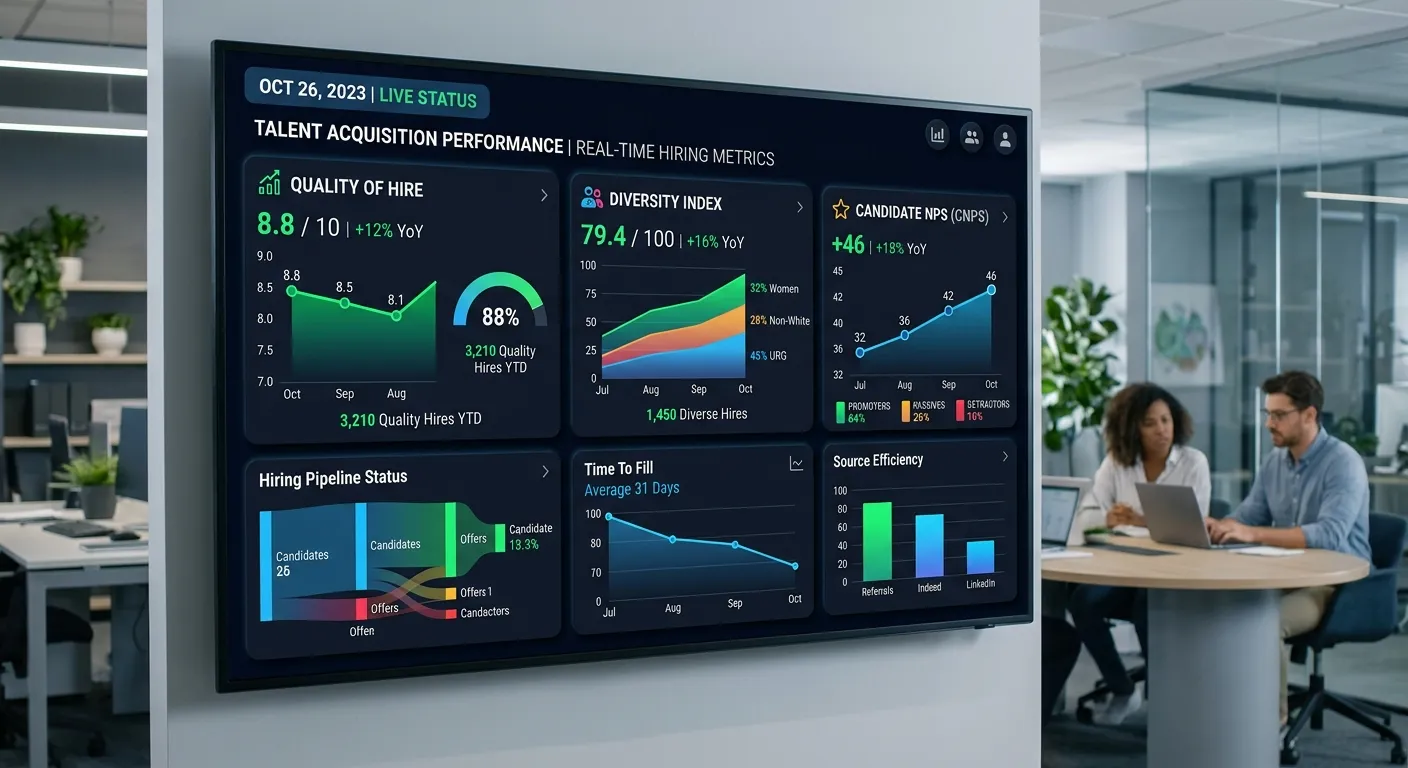
Quantifying Success: Metrics That Matter for 2026
Implementing advanced screening strategies requires investment. To justify and optimize this investment, you must measure outcomes with precision. Moving beyond vanity metrics like"time-to-fill," forward-thinking organizations in 2026 will track a balanced scorecard of leading and lagging indicators that directly correlate screening efficacy to business performance.
Performance & Quality Metrics
- Quality of Hire Score: A composite metric based on 6-month performance reviews, ramp-up time to full productivity, and manager satisfaction surveys.
- Early Turnover Rate (Sub-12 Months): The most direct indicator of a screening failure. A drop here is a strong signal your assessments are accurately predicting fit and satisfaction.
- Diversity of Hire Index: Measures representation improvements at each stage of the funnel (application, interview, offer) to ensure screening tools are broadening, not narrowing, your talent pool.
Efficiency & Experience Metrics
- Screening-to-Interview Yield: The percentage of candidates screened in who proceed to a hiring manager interview. A low yield indicates misaligned criteria or poor assessment tools.
- Candidate Net Promoter Score (NPS): Measures the candidate experience post-application, regardless of outcome. High NPS turns rejected candidates into brand advocates.
- Cost per Screening Stage: Allocates technology, personnel, and time costs to each tier of the funnel, identifying opportunities for automation or process improvement.
By tracking these metrics, you create a feedback loop that continuously refines your candidate screening strategies. For instance, if data shows candidates from a particular skills assessment have a 40% higher retention rate, you can weight that assessment more heavily in future screenings.
Calculating the Tangible ROI of Advanced Screening
The return on investment isn't abstract. Consider this simplified formula for a single hire:
ROI = (Cost of a Mis-hire Avoided + Value of Productivity Gains) - (Investment in Enhanced Screening)
Cost of a Mis-hire: Includes recruitment re-run costs, onboarding waste, lost productivity, severance, and impact on team morale. For a mid-level professional, this can easily exceed 1.5x annual salary.
Value of Productivity Gains: A hire who reaches full competence 30% faster due to better role-fit contributes more value sooner. Quantify this as a percentage of their salary over the ramp-up period.
Investment in Screening: The cost of new software licenses, assessment tools, and any incremental time from hiring teams or outsourced recruitment partners.
Example: If avoiding one $80k mis-hire saves $120k, and productivity gains add $15k in value, your total benefit is $135k. Subtract a $20k screening investment for a net positive ROI of $115k. This makes the business case irrefutable.
Engaging the Modern Candidate: Screening as an Experience
By 2026, top talent will have more choices than ever. Your screening process is not just an evaluation; it's a pivotal part of the candidate's journey and a direct reflection of your employer brand. Passive candidates, in particular, will disengage from lengthy, opaque, or tedious application processes. The winning strategy transforms screening from a hurdle into an engaging, informative, and respectful experience.
1. Micro-Engagement & Job Previews
Replace lengthy application forms with interactive previews. Allow candidates to explore a"day-in-the-life" simulation, hear from current team members in short video clips, or solve a small, realistic work problem. This builds engagement early and allows candidates to self-select for fit, improving your applicant pool quality.
2. Gamified Skill Assessments
For roles requiring problem-solving, logic, or creativity, gamified assessments are far more engaging than multiple-choice tests. They provide richer, more authentic data on a candidate's cognitive abilities and perseverance, while also boosting completion rates and positive sentiment.
3. Transparent & Communicative AI
If using AI for video interview analysis or resume screening, be transparent. Tell candidates how the technology is used, what it assesses, and how they can present their best selves. Provide clear, timely feedback at every stage, even if it's a rejection. Silence is a brand killer.
Case Study: From Black Box to Beacon
A global software company noticed a 70% drop-off rate in their traditional application process. They redesigned it: candidates first engaged with a 5-minute interactive product challenge relevant to the role. Upon completion, they received instant, constructive feedback on their approach and were then invited to formally apply.
Result: Application drop-off fell to 20%. The quality of applicants skyrocketed, as the challenge deterred unqualified candidates. Candidate NPS for the screening stage increased by 45 points. The company also sourced valuable product insights from the challenges completed by talented non-applicants, turning screening into a dual-purpose innovation funnel.
Beyond 2026: The Next Frontier in Candidate Screening
While the strategies outlined here will define 2026, the landscape will continue to evolve. Proactive organizations are already exploring these emerging concepts that will reshape screening in the latter half of the decade.
Decentralized Credentialing & Skill Wallets
Blockchain-based, verifiable digital credentials will replace traditional degrees and certificates. Candidates will own and share a"skill wallet" containing validated proof of competencies, project completions, and peer endorsements. Screening will shift from verifying claims to evaluating the richness and relevance of this portable, tamper-proof record.
Neuro-Inclusive Assessments
As understanding of neurodiversity deepens, one-size-fits-all assessments will be seen as exclusionary. Screening tools will adapt in real-time to a candidate's preferred cognitive style, offering different pathways to demonstrate the same competency (e.g., visual, textual, interactive). This not only promotes fairness but also uncovers talent missed by rigid, normative tests.
Predictive Culture Analytics
AI will move beyond predicting job performance to predicting team dynamics. By analyzing communication patterns, problem-solving approaches, and values alignment from screening interactions, tools will forecast how a candidate will influence psychological safety, innovation rates, and collaboration within a specific existing team, enabling true"team-fit" hiring.
Staying ahead of these trends requires not just technology, but a mindset of continuous experimentation and learning. The core principle remains: the goal of screening is to make human potential visible and measurable. The organizations that master this, whether through in-house innovation or strategic partnerships, will build the defining workforces of the next decade.