Secure Product Excellence: Partner with a Premier Quality Control Inspector Agency
In today's competitive market, product integrity is non-negotiable. A specialized Quality Control Inspector Agency provides the expert oversight, rigorous testing, and detailed reporting necessary to protect your brand reputation, ensure compliance, and drive customer loyalty. Discover how the right partnership transforms your quality assurance from a cost center into a strategic asset.
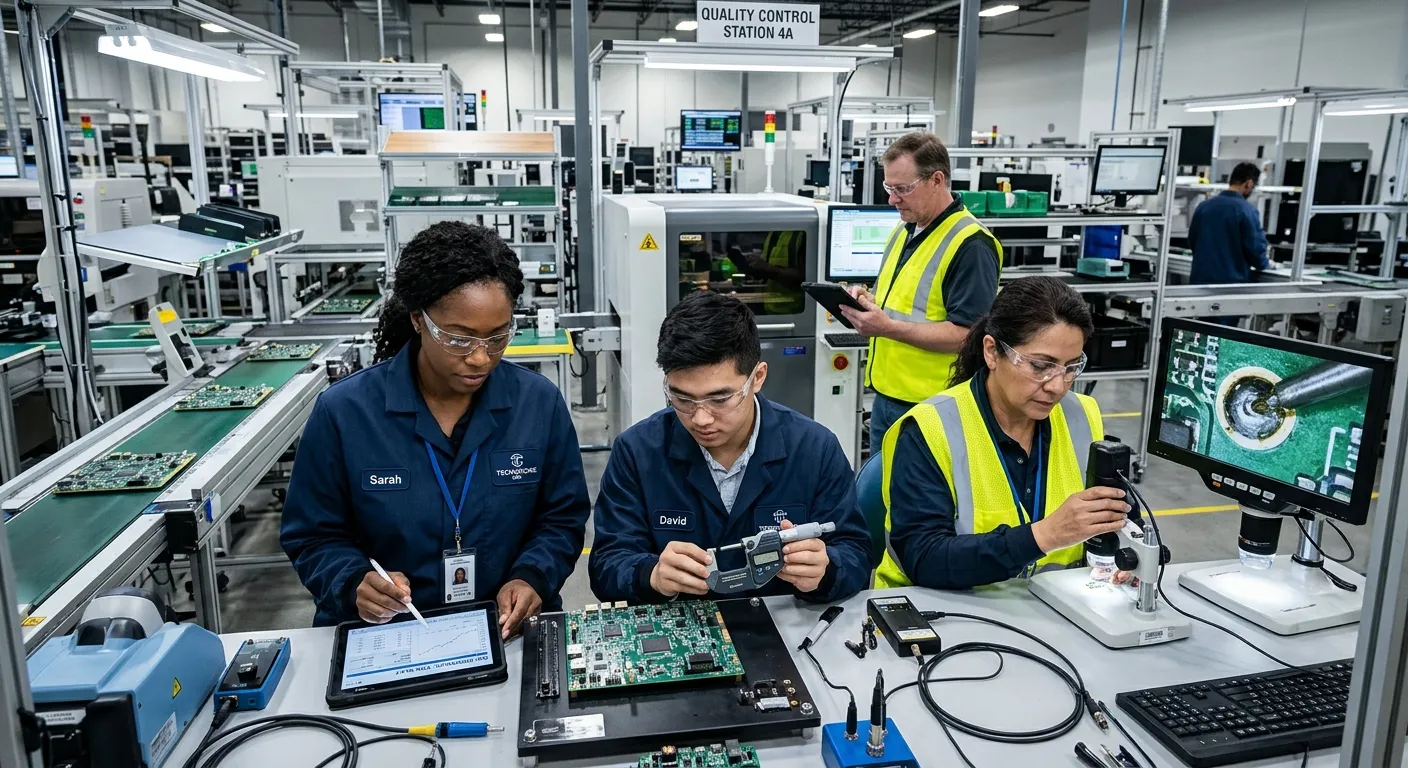
What Does a Quality Control Inspector Agency Do?
A top-tier agency acts as your external quality department, deploying skilled inspectors to verify every aspect of your production process. Their role is multifaceted, combining vigilance with technology.
Pre-Production Inspection: Laying the Foundation
This critical first step occurs before manufacturing begins. Inspectors from your chosen Quality Control Inspector Agency verify that all raw materials, components, and production plans meet your specifications. They check factory capacity, machinery calibration, and sample products to prevent costly errors from cascading through the entire production run. This proactive approach is a cornerstone of modern talent sourcing strategies, where the right expert, placed at the right point in the process, saves immense time and capital.
- Material Verification: Confirming grade, quantity, and compliance of all inputs.
- Process Audit: Reviewing production line setup and worker training protocols.
- Sample Approval: Rigorously testing pre-production samples against technical files.
During Production Inspection (DUPRO): Real-Time Vigilance
When 15-50% of units are completed, a DUPRO inspection provides a crucial mid-course correction. Inspectors assess assembly quality, workmanship, and functionality, identifying deviations before they become systemic. This is where the flexibility of a specialized agency shines—providing on-demand expertise exactly when you need it, much like accessing a pool of skilled casual labour for project-specific peaks.
Final Random Inspection (FRI): The Last Line of Defence
Conducted on 100% packed and ready-to-ship goods, FRI is your final gatekeeper. Using statistical sampling methods (like AQL), inspectors check for defects in packaging, labeling, appearance, and performance. A reliable agency ensures no sub-standard product reaches your customer, safeguarding your brand.
Loading Supervision: Ensuring Safe Transit
The inspector supervises the loading of containers, checking for proper handling, container condition, and that the correct quantity and products are loaded. This final step closes the loop on physical product control.
Key Benefits of Partnering with a Quality Control Inspector Agency
Objective Third-Party Verification
An external agency provides unbiased, objective assessments free from internal pressures or biases. This impartiality is invaluable for honest reporting and maintaining rigorous standards, especially when scaling operations or entering new markets.
Significant Cost Reduction
Preventing defective products from shipping avoids returns, replacements, warranty claims, and reputational damage. The cost of a single failed inspection is negligible compared to a product recall. This aligns with insights on the real cost of bad hiring, where upfront investment in quality prevents exponential downstream losses.
Regulatory & Safety Compliance
A professional agency stays current with complex, ever-changing local and international regulations (CE, UKCA, FDA, REACH, etc.). They ensure your products comply, mitigating legal risks and facilitating smooth market entry.
Enhanced Supply Chain Transparency
Detailed digital reports with photos and data provide complete visibility into your supply chain. This transparency is crucial for managing remote or overseas suppliers and is a key component of robust managed services that transform business operations.
Access to Specialized Expertise
You gain instant access to a pool of inspectors skilled in specific industries—electronics, textiles, food, pharmaceuticals, toys—without the long-term cost and commitment of full-time hires. This is the essence of agile, on-demand talent.
Continuous Improvement Driver
Agencies don't just find problems; they provide actionable data and trend analysis. This feedback loop empowers you to work with suppliers on root-cause analysis, fostering a culture of continuous improvement and higher quality over time.
Pro-Tip: Integrate Quality Control Early
The most cost-effective quality strategy is preventive. Engage your Quality Control Inspector Agency during the product design and supplier selection phase. Catching a design flaw or non-compliant material source before tooling begins can save hundreds of thousands in rework and delay costs. View quality inspectors as strategic partners, not just fault-finders.
How to Hire the Right Quality Control Inspector Agency
Selecting an agency is a critical decision. Look beyond price and consider these factors:
- 1 Industry Specialization: Does the agency have proven experience in your specific sector (e.g., medical devices vs. furniture)?
- 2 Geographical Coverage: Can they provide inspectors in your key manufacturing regions, whether in the UK, EU, Asia, or elsewhere?
- 3 Technology & Reporting: Do they offer real-time digital reports with photos, videos, and data analytics?
- 4 Accreditations: Look for ISO 9001 certification and membership in professional bodies like the Chartered Quality Institute (CQI).
Learn fast-track strategies for sourcing specialized staff, directly applicable to finding a top-tier inspection agency.
The Modern Inspector's Toolkit: Beyond the Clipboard
Today's leading Quality Control Inspector Agency equips its professionals with far more than a checklist. Technology integration is now paramount for speed, accuracy, and transparency.
Digital Reporting & Real-Time Data
Cloud-based platforms allow inspectors to upload findings—complete with geo-tagged photos, video clips, and measurement data—directly from the factory floor to a secure portal. Stakeholders worldwide can access real-time status updates, drastically reducing communication delays and enabling faster decision-making. This level of operational integration exemplifies how modern hiring playbooks emphasize tech-enabled roles.
- Automated report generation reduces human error.
- Historical data analytics identify recurring supplier issues.
- Digital signatures and timestamps enhance audit trails.
Essential Tech for 2026 Inspectors:
The Human Element: Skills Beyond Measurement
While technology is vital, the inspector's soft skills are irreplaceable. The best agencies recruit for:
Diplomatic Communication
Inspectors must deliver critical feedback to factory managers without causing defensive reactions, ensuring collaborative problem-solving.
Forensic Attention to Detail
The ability to spot subtle defects—a slight color mismatch, a barely audible rattle, a microscopic scratch—separates adequate inspectors from exceptional ones.
Technical Aptitude & Adaptability
They must quickly understand new products, complex specifications, and evolving technologies across different assignments.
Case Study: Preventing a Major Recall
A UK consumer electronics importer used a Quality Control Inspector Agency for a routine Final Random Inspection on a shipment of 10,000 Bluetooth speakers. The inspector, using a decibel meter and frequency analyzer as part of a enhanced audio check, discovered a batch-specific fault causing intermittent signal drop-out at high volumes—a defect missed by the factory's basic functionality test.
Result: The entire batch was held for rework. The estimated savings in avoided returns, customer service costs, and brand damage exceeded £250,000. The agency's specialized tooling and inspector expertise paid for itself hundreds of times over.
Frequently Asked Questions: Quality Control Inspector Agency
Costs are typically project-based, depending on inspection type, product complexity, location, and sample size. A simple Final Random Inspection might start from £300-£500, while a comprehensive multi-day Pre-Production Inspection with technical auditing will cost more. Crucially, it's an investment with a massive ROI—preventing a single bad batch can save tens of thousands. For a detailed breakdown of value versus cost, explore resources on the true cost of temporary workers, as the principle of proactive investment is similar.
Yes, many agencies offer long-term contracted or temp-to-perm placements. This is ideal for businesses with continuous production who need a permanent on-site presence but want to avoid the administrative burden of direct employment. The agency handles payroll, benefits, and performance management. This flexible model is a core service for businesses looking for staff in a scalable, risk-managed way.
The agency provides a detailed Failure Report specifying defects against agreed standards (like AQL levels). You then decide the next steps: order a re-inspection after the factory corrects the issues, negotiate a discount for the defective goods, or in severe cases, cancel the order. The agency provides the objective evidence needed to support these commercial decisions.
Leading agencies with broad networks can often schedule an inspection within 24-48 hours for urgent needs, especially in major industrial regions. This speed is a key advantage over building an internal team and is part of the broader shift towards agile, on-demand hiring solutions for employers.
Absolutely. Reputable agencies require inspectors to sign strict Non-Disclosure Agreements (NDAs) and have robust data security protocols in place. Your product specifications, inspection reports, and commercial information are treated with the utmost confidentiality.
Ready to Fortify Your Quality Standards?
Don't leave product integrity to chance. Partner with a vetted, professional Quality Control Inspector Agency to ensure consistency, compliance, and customer delight with every shipment.
Need guidance on crafting the perfect job specification? Access our ultimate hiring playbook for expert templates and strategies.
Navigating Industry-Specific Inspection Challenges
While the core principles of quality control are universal, the application varies dramatically across sectors. A premier Quality Control Inspector Agency tailors its approach, protocols, and inspector expertise to meet the unique regulatory and performance demands of your industry.
Pharmaceuticals & Medical Devices
Here, quality is literally a matter of life and death. Inspections focus on sterile environments, traceability (serialization), and compliance with Good Manufacturing Practice (GMP). Inspectors must verify complex documentation chains, cleanroom classifications, and the calibration of ultra-precise filling equipment. An agency specializing in this field provides inspectors trained in risk-based methodologies aligned with FDA 21 CFR Part 211 and EU Annex 1 regulations.
Key Focus: Audit trails, environmental monitoring data, material qualification, and packaging integrity to prevent contamination.
Electronics & IoT Consumer Goods
Inspections go beyond cosmetic checks to functional, performance, and safety testing. This includes PCB solder quality (IPC-A-610 standards), software version verification, wireless connectivity testing (Bluetooth, Wi-Fi), and battery safety compliance (UN 38.3). Agencies use specialized equipment like network analyzers, thermal imaging cameras, and drop-test rigs. The rise of IoT demands inspectors who can validate both hardware and basic firmware integration.
Key Focus: Electrostatic discharge (ESD) controls, radio frequency (RF) performance, waterproofing (IP ratings), and regulatory marks (CE, FCC).
Food & Beverage
Quality control is driven by hygiene, allergen control, and shelf-life stability. Inspectors audit Hazard Analysis Critical Control Point (HACCP) plans, check for pest contamination, verify cold chain logistics, and test for nutritional label accuracy. Sensory evaluation (taste, smell, appearance) is also crucial. An agency must understand local food safety authorities (like the UK's FSA) and global standards (BRCGS, IFS).
Key Focus: Packaging integrity for modified atmospheres, lot code accuracy, temperature logs, and supplier food fraud prevention.
Textiles & Apparel
Inspections focus on material composition, colorfastness, dimensional stability, and workmanship. Inspectors use tools like color spectrophotometers, pull testers for buttons and zippers, and pilling testers. They also verify compliance with sustainability and chemical regulations (OEKO-TEX, REACH). A key differentiator for agencies is their ability to manage inspections across complex, tiered supply chains from fabric mills to final assembly units.
Key Focus: Shade consistency across dye lots, seam strength, labeling compliance (fibre content, care instructions), and restricted substance testing.
Beyond Inspection: The Supplier Development Partnership
The most forward-thinking companies use their Quality Control Inspector Agency not just as a police force, but as a catalyst for supplier improvement. This strategic shift turns inspection costs into a value-added service that uplifts your entire supply chain.
Corrective Action Plan (CAP) Management
When defects are found, a premium agency doesn't just report them—they help formulate a root-cause analysis and a structured CAP. They can then follow up to verify implementation, closing the loop and preventing recurrence. This transforms a one-off inspection into a continuous improvement cycle.
Supplier Training & Workshops
Leading agencies offer training services for your suppliers on topics like international quality standards (AQL sampling), proper use of testing equipment, or specific regulatory updates. This knowledge transfer builds supplier capability, reducing future defect rates and fostering a more collaborative relationship.
Benchmarking & Performance Scoring
By aggregating anonymized data across clients (with permission), agencies can provide benchmark reports. How does your supplier's defect rate compare to the industry average for similar products? This data empowers you to make informed sourcing decisions and negotiate from a position of strength.
Case Study: From Problem Supplier to Preferred Partner
A mid-sized UK furniture retailer was experiencing a 30% rejection rate on upholstered goods from a new Vietnamese factory. Frustrated, they engaged a Quality Control Inspector Agency with a mandate for more than inspection.
The agency conducted a week-long diagnostic audit, identifying the core issues: poor foam density specification understanding and inconsistent seam stitching training. They provided the factory with simple visual guides and arranged a virtual workshop for line supervisors.
Result: Over six months, with quarterly follow-up audits and coaching, the rejection rate dropped to under 5%. The retailer secured higher-quality goods at a stable price, and the factory improved its reputation, winning more business. The agency's fee was covered multiple times over by the savings in wasted logistics and replacement costs.
Quality Control in the Age of Globalized Logistics
Managing quality across borders and complex shipping routes introduces additional layers of risk. A sophisticated agency integrates logistics oversight into its service portfolio, ensuring the integrity built at the factory isn't lost in transit.
Container Condition Checks
Inspectors verify that shipping containers are clean, dry, free of pests, and structurally sound before loading. They check for holes, previous cargo residues, or water damage that could compromise your goods. This is especially critical for hygroscopic products like furniture or sensitive electronics.
Cold Chain Verification
For perishables, pharmaceuticals, or certain chemicals, inspectors can place data loggers inside shipments. These devices record temperature and humidity throughout the journey, providing irrefutable proof that the cold chain was maintained. The agency analyzes the data and provides a compliance report upon receipt.
Pre-Shipment & Post-Shipment Reconciliation
Discrepancies between what was ordered, produced, and received are a major headache. Agencies offer reconciliation services: verifying packed quantities against packing lists at the factory and again at the destination port or warehouse. This minimizes commercial disputes and ensures you pay only for what you actually receive in good condition.
Real-World Scenario: The Mystery of the Damaged Shipment
A UK importer received a container of high-end kitchenware with widespread water damage. The supplier blamed shipping, the shipping line blamed the supplier's packaging. The importer's Quality Control Inspector Agency had conducted loading supervision, with timestamped photos showing a perfectly dry container and correctly stacked goods. They also had the container condition report from the depot. This evidence pinpointed responsibility to the shipping line's handling, leading to a successful insurance claim. Without the agency's documented oversight, the importer would have absorbed the loss.
