
The Strategic Guide to Derby Manufacturing: Excellence, Hiring & Growth
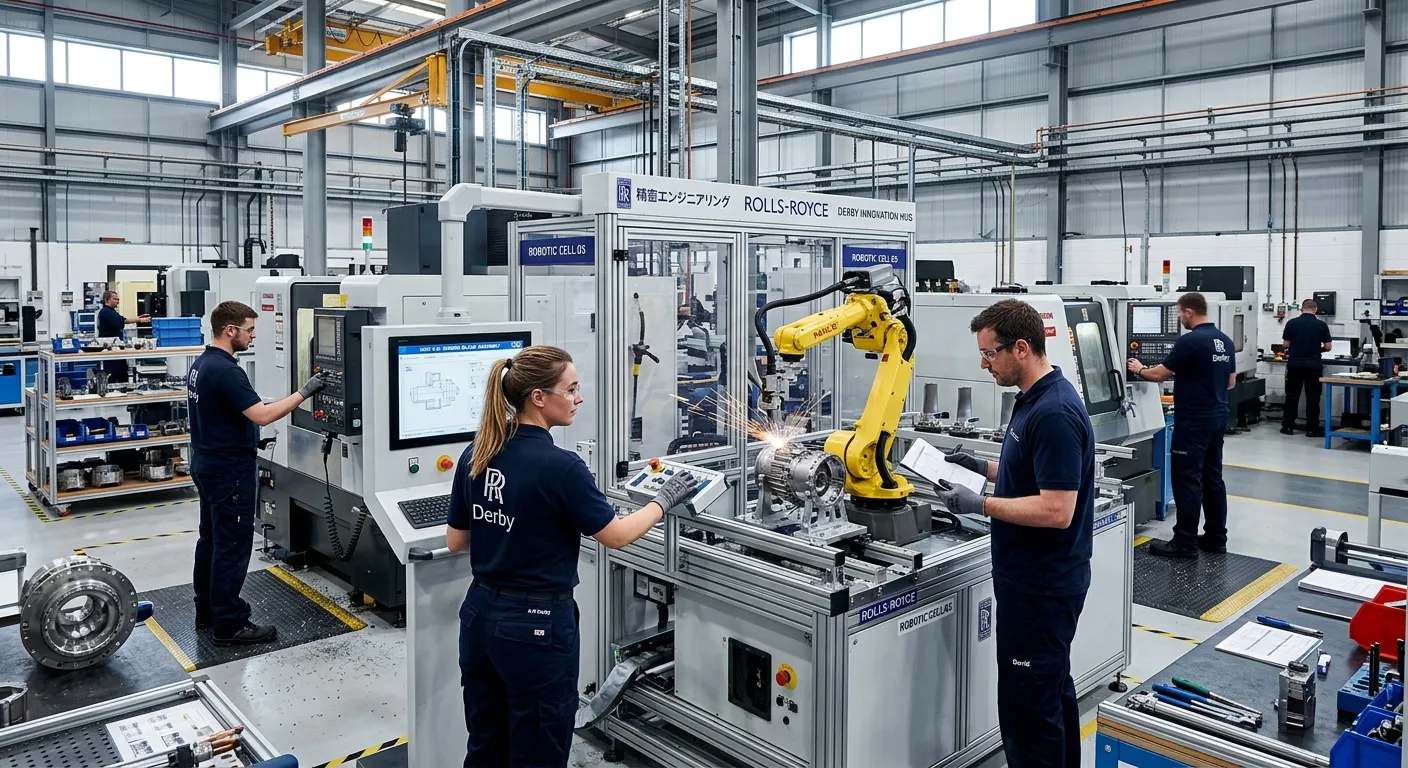
Derby's manufacturing sector is a powerhouse of UK industry. This comprehensive guide explores the ecosystem, the critical demand for skilled talent, and actionable strategies for companies looking to hire and thrive.
The Derby Manufacturing Landscape: A Multi-Category Overview
Understanding the diverse facets of Derby's industrial base is key to navigating its opportunities. Use the tabs below to explore the core sectors driving growth and employment.
A Global Hub for Precision
Derby is synonymous with aerospace excellence, home to global giants like Rolls-Royce. This sector demands unparalleled precision, rigorous quality control, and a workforce skilled in composite materials, turbine technology, and complex assembly. The supply chain is vast, creating opportunities for SMEs specializing in niche components and sub-assemblies.
For businesses in this sector, partnering with a specialist staffing provider is not a luxury but a necessity. Accessing talent with security clearances, specific CAD/CAM expertise, and experience in regulated environments requires a strategic approach, much like the methodologies outlined in our Ultimate Guide to Modern Talent Sourcing.
Driving the Future of Mobility
From traditional automotive manufacturing to the cutting-edge development of rail and transport systems, Derby's capabilities are evolving. The shift towards electric vehicles (EVs), lightweight materials, and autonomous systems is reshaping skill requirements. Companies need mechatronics engineers, battery technicians, and software integration specialists.
Flexible staffing models are crucial to manage project-based workloads and the transition to new technologies. A temp-to-perm strategy allows you to evaluate a technician's hands-on skills with new EV powertrains before making a permanent commitment, effectively reducing hiring risk.
Innovation at the Core
Beyond the big names, Derby thrives on a network of advanced engineering firms. These companies specialize in precision machining, toolmaking, industrial automation, and prototyping. They are the agile innovators, often working on contracts for larger OEMs and requiring a blend of traditional craftsmanship and digital fluency.
For these firms, operational efficiency is paramount. Many are turning to managed services for non-core functions, including recruitment. This allows leadership to focus on R&D and production while experts handle the complexities of Maintenance Technician Hiring and other critical talent acquisition.
Derby's manufacturing strength is ultimately its people. The talent landscape is characterised by a deep-rooted engineering culture, with generational knowledge passing through apprenticeships and technical colleges. However, a significant skills gap is emerging. The demand for digital engineers, data analysts, and robotics specialists far outpaces the current supply, creating intense competition for top-tier candidates.
Winning this war for talent requires more than just posting job ads. It demands a proactive talent pipeline, compelling employer branding that speaks to modern values, and competitive packages that extend beyond salary to include continuous upskilling. Employers must become educators, partnering with institutions and offering clear career progression paths.
The Derby Advantage: Location, Infrastructure & Investment
Derby's pre-eminence in manufacturing is no accident. It is the result of a powerful confluence of geographical, infrastructural, and strategic factors that create a fertile environment for industrial growth and stability.
A Connected Hub at the Heart of the UK
Derby's central location within the UK offers unparalleled logistical benefits. It sits at the crossroads of major motorway networks (M1, A38, A50), providing direct road links to the Midlands Engine, the North, and Southern ports. East Midlands Airport, a key national freight hub, is just a short drive away, facilitating rapid global supply chains for time-sensitive aerospace components and automotive parts.
The city's rail connectivity is equally robust, with dedicated freight lines supporting the heavy manufacturing and rail engineering sectors. This multimodal connectivity reduces lead times, lowers transportation costs, and enhances just-in-time (JIT) manufacturing capabilities—a critical advantage in today's competitive landscape.
- Supply Chain Synergy: Proximity to a dense network of Tier 1, 2, and 3 suppliers creates a resilient, collaborative ecosystem.
- Skills Basin Access: Draws from a wide regional talent pool, including Nottingham, Sheffield, and Leicester.
- Market Reach: Within a four-hour drive of over 90% of the UK’s manufacturing base and population centres.
Investment & Innovation: Fuelling the Future
University of Derby
Investment in the Institute of Innovation in Sustainable Engineering, focusing on digital manufacturing, smart materials, and net-zero research.
Infinity Park Derby
A state-of-the-art facility providing R&D space, collaboration zones, and business support for advanced manufacturing SMEs and start-ups.
Local Enterprise Partnership
Driving strategic growth with funding for skills programmes, infrastructure projects, and business innovation grants tailored to manufacturers.
Navigating the Talent Crisis: Strategic Hiring for Derby Manufacturers
The competition for skilled manufacturing professionals in Derby is fiercer than ever. Understanding the specific pain points is the first step toward developing a robust, future-proof talent acquisition strategy.
The Digital Skills Chasm
Modern manufacturing is a blend of physical and digital. The demand for professionals skilled in Industrial IoT (IIoT), Digital Twin technology, additive manufacturing (3D printing), and CNC programming with AI integration is skyrocketing. Traditional machinists and technicians without up-to-date digital fluency are increasingly mismatched with the roles available.
Strategic Solution: Upskilling & Partnership Hiring
Implement a"grow your own" strategy by partnering with the University of Derby and Derby College Group on tailored apprenticeship and degree apprenticeship programmes. Simultaneously, work with a specialist recruiter to access passive candidates from adjacent tech sectors (e.g., software, electronics) who can be cross-trained, bringing fresh perspectives to the factory floor.
The Demographic Cliff & Knowledge Drain
A significant portion of Derby's most experienced engineers and master craftspeople are approaching retirement. This exodus risks creating a"knowledge black hole," where critical tacit knowledge about processes, problem-solving, and legacy systems is lost forever. Simply hiring a new graduate cannot replace 30 years of nuanced experience.
Strategic Solution: Phased Retirement & Mentorship Programmes
Develop formal knowledge transfer programmes. Offer flexible, part-time roles to retiring experts to mentor new hires. Systematically document procedures and create a digital knowledge base. Utilise video capture of complex assembly techniques. This turns a risk into an opportunity to codify institutional wisdom and accelerate the development of junior staff.
Competing with the"Glamour" Sectors
Top engineering graduates are often lured by perceived"high-tech" roles in pure software, fintech, or green energy startups. Traditional manufacturing can struggle to rebrand itself as the innovative, clean, and tech-driven sector it truly is. The perception of outdated, greasy workshops persists, despite the reality of automated, data-rich, and sustainable modern facilities.
Strategic Solution: Modern Employer Branding & EVP
Craft a compelling Employee Value Proposition (EVP) that shouts about innovation. Showcase your Industry 4.0 technologies, sustainability initiatives (e.g., zero-waste-to-landfill, energy efficiency), and career pathways in social media campaigns and on your careers page. Highlight projects involving robotics, VR training, and cutting-edge R&D. Make the mission tangible—"We build the engines that connect the world" is more inspiring than"We machine metal parts."
Case Study: Precision Components Ltd. - Scaling with Strategic Staffing
How a Derby-based aerospace supplier overcame growth barriers by rethinking its talent strategy.
Faster time-to-hire for specialist roles
Reduction in early-stage turnover (first 6 months)
Estimated annual saving from reduced vacancy costs & training
The Situation
Precision Components Ltd. (PCL), a long-established SME supplying high-tolerance parts to major aerospace OEMs, won a landmark 5-year contract. This required a 40% increase in skilled production staff—CNC programmers, quality inspectors, and assembly technicians—within 12 months. Their internal HR team, already stretched, relied on traditional job boards and were inundated with unqualified applicants, missing project milestones and risking contractual penalties.
The Action
PCL partnered with a Derby-specialist manufacturing recruitment agency (like HireNow). The agency implemented a multi-pronged strategy:
- Market Mapping: They identified and engaged with passive candidates from competitor and adjacent companies within a 25-mile radius of Derby.
- Temp-to-Perm Pipeline: For critical but hard-to-fill roles, they placed candidates on a temporary contract with a view to permanent employment after a 3-month"on-the-job" assessment period, de-risking the hire for PCL.
- Skills-Based Assessment: They replaced generic interviews with practical, on-site assessments in a replica work environment, evaluating real-world problem-solving and technical skill.
The Result & Takeaways
PCL met its hiring target in 10 months, securing the contract's deliverables. The quality of hire improved dramatically, with new starters being productive in half the expected time. The partnership allowed PCL's management to focus entirely on operational execution.
Key Insight for Derby Manufacturers:
In a tight talent market, speed and precision in hiring are competitive advantages. Partnering with a specialist who understands the local Derby ecosystem, its unique skill sets, and salary benchmarks is not an expense—it's an investment in securing growth and protecting your operational capacity.
Future-Proofing Your Derby Operation: Key Trends to Embrace
To remain competitive, Derby manufacturers must look beyond today's challenges and anticipate the forces reshaping global industry. Proactive adaptation in these areas will define the market leaders of tomorrow.
Net-Zero & Sustainable Manufacturing
Decarbonisation is a regulatory and commercial imperative. This drives demand for skills in energy efficiency auditing, circular economy principles, and green materials sourcing. Derby's engineering prowess is pivoting to support offshore wind, hydrogen technology, and lightweighting for transport.
Hiring Implication: Seek sustainability engineers and process analysts.
Cobots & Advanced Automation
Collaborative robots (cobots) are becoming affordable for SMEs, working alongside humans on repetitive or precision tasks. This doesn't replace jobs but augments human capability, requiring a workforce skilled in programming, maintaining, and supervising robotic systems.
Hiring Implication: Upskill existing staff and hire mechatronics technicians.
The Data-Driven Factory
Sensors and IIoT generate vast data. The value lies in analytics for predictive maintenance, yield optimisation, and supply chain transparency. This creates a new layer of "white-coat" manufacturing roles focused on data science, machine learning, and operational technology (OT) security.
Hiring Implication: Compete for data analysts with manufacturing domain knowledge.
Supply Chain Resilience & Reshoring
Post-pandemic and geopolitical shifts are prompting companies to reshore or"friend-shore" critical supply chains. Derby's stable infrastructure and skilled base make it a prime beneficiary. This trend increases demand for versatile engineers and robust quality assurance professionals to ensure localised production meets global standards.
Hiring Implication: Focus on versatile, multi-skilled engineers and QA experts.
Actionable Next Steps for Business Leaders
- 1 Conduct a Skills Audit: Map your current workforce's capabilities against these future trends to identify critical gaps.
- 2 Forge Education Links: Develop a formal partnership with Derby College or the University of Derby to co-create curriculum and secure early access to graduates.
- 3 Evaluate Your Hiring Process: Is it slow, generic, and unattractive to top talent? Consider a specialist recruitment partner to streamline and professionalise it.
- 4 Benchmark Your EVP: Honestly assess your employer brand. Does it reflect a modern, innovative, and caring workplace? If not, start rebuilding it today.
Ready to Power Your Derby Manufacturing Growth?
Navigating the complex landscape of Derby's manufacturing sector requires a partner who understands its unique heartbeat. From the precision of aerospace to the innovation of advanced engineering, your talent strategy must be equally specialised.
Local Expertise
Deep-rooted knowledge of the Derby talent pool, salary norms, and sector-specific challenges.
Strategic Sourcing
We go beyond job boards to engage passive talent and build pipelines for your critical roles.
Risk Mitigation
Flexible hiring models and rigorous vetting to ensure every placement drives value and stability.
Building the Pipeline: Derby's Apprenticeship & Upskilling Ecosystem
The long-term solution to Derby's skills gap lies not just in hiring, but in cultivating talent from the ground up. The city boasts a robust and collaborative network of educational institutions, training providers, and government-backed initiatives designed to build the workforce of the future. For manufacturers, engaging with this ecosystem is a strategic imperative.
Core Educational Partners
University of Derby
Beyond its Institute of Innovation, the university offers degree apprenticeships in Manufacturing Engineering, Digital & Technology Solutions, and Embedded Electronic Systems. These programmes allow employees to earn a full degree while working, with costs covered by the Apprenticeship Levy. Their research partnerships offer manufacturers a direct line to cutting-edge academic thought.
Derby College Group (DCG)
A cornerstone for technical education, DCG delivers a vast array of apprenticeships from Level 2 (operatives) to Level 4 (technicians and supervisors). Their Industry Academy model, developed with local employers, ensures curriculum is directly aligned with real-world needs in areas like Advanced Machining, Composites, and Electrical Installation. Their Broomfield Hall campus features industry-standard workshops and robotics labs.
The Apprenticeship Levy: A Strategic Tool, Not Just a Tax
For companies with a payroll over £3 million, the Apprenticeship Levy represents a significant 0.5% investment. Too many Derby manufacturers treat this as a simple tax, failing to utilise the funds. Strategically deployed, it is a powerful engine for workforce development.
Upskill Existing Staff
Levy funds can upskill your current machinists into CNC programmers, train production supervisors in lean management (Level 5 Operations/Departmental Manager standard), or transition experienced engineers into digital roles through data analytics apprenticeships.
Create Leadership Pipelines
Develop future leaders with Chartered Manager or Engineering Leadership degree apprenticeships. This addresses the succession planning crisis and ensures management understands both the technical and commercial sides of the business.
Pro Tip: Levy funds expire after 24 months. Conduct an annual"Levy Audit" with your HR and finance teams to plan your apprenticeship strategy, ensuring you reclaim this investment into your own talent pipeline.
Specialist Training Providers & Niche Programmes
Beyond colleges and universities, Derby benefits from specialist centres addressing precise industry needs:
The Manufacturing Technology Centre (MTC) - Annesley
While located nearby, the MTC is a critical resource. It offers intensive short courses and R&D collaboration in additive manufacturing, robotics integration, and metrology. Their focus is on bridging the gap between research and commercial application.
Ideal for: Upskilling R&D teams.Make UK
The manufacturers' organisation provides tailored training, often delivered on-site, covering essential areas like health & safety compliance (IOSH/NEBOSH), quality management standards (ISO 9001:2015), and practical lean manufacturing tools.
Ideal for: Company-wide competency development.National College for Advanced Transport & Infrastructure (NCATI)
With a campus in Derby, NCATI is pivotal for the rail and transport sectors. It delivers higher-level skills in rail systems engineering, rolling stock design, and digital signalling, directly feeding the city's strong rail cluster.
Ideal for: Automotive & Rail sector talent.The Compensation Conundrum: Benchmarking Salaries in Derby's Manufacturing Sector
In a candidate-driven market, offering a competitive package is non-negotiable. However,"competitive" is a moving target. The following data, compiled from local market intelligence, provides a crucial benchmark for key roles in Derby. Remember, total compensation now extends far beyond base salary.
| Role | Experience Level | Average Base Salary (Derby) | Key Drivers & Market Notes |
|---|---|---|---|
| CNC Machinist/Programmer | 5+ years, multi-axis | £35,000 - £48,000 | Demand for Heidenhain or Siemens control expertise commands a 10-15% premium. Aerospace experience adds further value. |
| Quality Engineer | With AS9100/IRIS | £40,000 - £55,000 | Roles requiring statistical process control (SPC) and metrology lab management reach the upper bracket. |
| Maintenance Technician | Multi-skilled, electrical bias | £32,000 - £42,000 | Candidates with PLC programming (Siemens, Allen Bradley) and robotics experience are at a premium, often receiving multiple offers. |
| Design Engineer | SolidWorks/CATIA, 3-5 yrs | £38,000 - £52,000 | Aerospace or automotive composite design experience adds £5k+. Knowledge of simulation (FEA/CFD) is increasingly expected. |
| Manufacturing/Production Manager | Mid-sized facility | £50,000 - £70,000+ | Salaries are highly variable based on P&L responsibility and team size. Proven lean six sigma black belt achievements command top tier. |
Beyond the Paycheck: The Modern EVP in Derby
While salary gets candidates through the door, the broader Employee Value Proposition (EVP) secures their commitment. Derby's top talent now evaluates offers holistically.
- ✓ Flexible & Hybrid Working: Even in manufacturing, roles with a desk-based element (design, planning, quality) now expect 1-2 days remote working. Rigid 5-day on-site policies are a deterrent.
- ✓ Meaningful Progression Pathways: A clear, documented career lattice showing how a technician can become a team leader, then shift manager, then production manager is more valuable than vague promises.
- ✓ Investment in Wellbeing: On-site mental health first aiders, subsidised gym memberships, and private healthcare that includes family members signal a caring employer culture.
- ✓ Purpose & Sustainability: Highlighting your company's net-zero roadmap, community projects, or ethical supply chain aligns with the values of younger workers.
The Cost of Getting it Wrong
Underpaying against the market or offering a poor EVP has tangible costs beyond unfilled roles:
- Increased Counter-Offers: Your chosen candidate uses your offer to secure a raise from their current Derby employer, leaving you back at square one.
- High Early Turnover: A new hire leaves within 6 months due to a better offer, costing 1.5-2x their salary in recruitment, onboarding, and lost productivity.
- Reputational Damage: Word spreads on platforms like Glassdoor that your company underpays, making future hiring exponentially harder.
Navigating the Regulatory Framework: Compliance as a Competitive Edge
Derby's prominence in aerospace, defence, and safety-critical transport manufacturing means operating within some of the world's most stringent regulatory environments. Far from being a bureaucratic burden, robust compliance systems can be a powerful differentiator, assuring customers and attracting top-tier, meticulous talent.
Key Standards & Their Impact on Hiring
AS9100 (Aerospace) & IRIS (Rail)
These quality management standards mandate rigorous document control, traceability, and process validation. Hiring managers must seek candidates with direct experience in these environments. Interview questions should probe their understanding of First Article Inspection (FAI), Non-Conformance Reports (NCRs), and Corrective Action Preventive Action (CAPA) processes.
ITAR & UK Export Control
For defence contractors, International Traffic in Arms Regulations (ITAR) compliance is paramount. This affects hiring in two key ways: 1) Roles often require candidates to be UK nationals or hold specific security clearances (SC or DV), drastically narrowing the talent pool. 2) All recruitment communications and job descriptions for controlled roles must be carefully vetted to avoid unauthorized technical disclosures.
UKCA Marking & Product Safety
Post-Brexit, the UK Conformity Assessed (UKCA) mark has replaced CE marking for most goods. Manufacturers need professionals who understand the technical files, risk assessments, and conformity procedures. A hiring gap here can delay product launches and block market access.
Building a Compliance-Competent Workforce: A Three-Pillar Strategy
Targeted Recruitment
Work with recruiters who can pre-vet for specific regulatory experience. Use competency-based interviews with real-world scenarios:"Walk me through how you managed a major non-conformance from discovery to closure."
Continuous Internal Training
Compliance isn't static. Mandate annual refresher training for all staff on relevant standards. Empower your quality team to deliver short, focused"lunch and learn" sessions on common audit findings.
Cultural Embedding
Move beyond seeing compliance as the quality department's job. Recognise and reward employees who identify potential compliance issues. Frame it as"building the best, safest products" rather than"following rules."
A strong compliance culture reduces audit stress, minimizes risk of costly recalls or legal penalties, and is a powerful signal to OEM customers that your Derby operation is a reliable, long-term partner.
The Digital Workshop: Technology Adoption in Derby's Manufacturing Heartland
The transition to Industry 4.0 is not a future concept for Derby; it is a present-day operational reality. The pace of technology adoption, however, varies dramatically between the global OEMs and the SME supply chain. Understanding and bridging this"digital divide" is key to the region's collective competitiveness.
Core Technologies Reshaping Derby Factories
1. Additive Manufacturing (3D Printing)
Beyond prototyping, Derby is moving into series production of end-use parts, particularly in aerospace for lightweight, complex geometries. Companies like Rolls-Royce are printing fuel injector heads. For SMEs, the barrier is less the printer cost and more the scarcity of Additive Manufacturing Engineers who understand design for AM (DfAM), material science, and post-processing.
Hiring Tip: Look for materials scientists or design engineers from university research programmes and invest in their specific AM training.
2. Digital Twin & Simulation
Creating a virtual replica of a physical asset or production line allows for stress-testing, optimisation, and operator training without downtime. A Derby-based train builder might use a digital twin to simulate the assembly of a new carriage, identifying tooling clashes before physical work begins. This requires a blend of simulation software expertise (e.g., Siemens Tecnomatix, ANSYS) and deep domain knowledge of the actual manufacturing process.
Hiring Tip: This is an ideal role for upskilling your most experienced process engineers with new software skills.
3. Industrial Internet of Things (IIoT) & Predictive Maintenance
Sensors on machinery stream data on vibration, temperature, and throughput. The challenge for many Derby manufacturers is moving from data collection to actionable insight. This creates demand for OT (Operational Technology) Data Analysts—hybrids who understand manufacturing workflows and can use tools like Python, Power BI, or dedicated IIoT platforms to predict machine failure before it happens.
The SME Adoption Challenge
For small and medium-sized enterprises, the path to digitalisation is fraught with hurdles:
- ! Capital Investment: The upfront cost of robotics, sensors, and software licenses can be prohibitive without grant support (e.g., from D2N2 LEP).
- ! Skills Shortage: Lacking in-house IT/digital skills to specify, implement, and maintain new systems.
- ! Cultural Resistance:"If it isn't broken..." mentality among long-serving staff, fearing job displacement or an inability to learn new systems.
Solution Pathway: Start small with a single, high-ROI pilot project (e.g., IIoT on a critical CNC machine). Partner with a digital innovation advisor from the University or the Made Smarter programme. Use this project to upskill a"digital champion" from your existing workforce.
Securing Derby's Manufacturing Future: A Collective Endeavour
The narrative of Derby manufacturing is at an inflection point. Its historic strengths—engineering heritage, central location, and major OEM anchors—provide a formidable foundation. Yet, the challenges of digital disruption, demographic shift, and fierce global competition are equally real. The future will not belong to those who simply manage the status quo, but to those who strategically reinvent their approach to talent, technology, and training.
Your Strategic Checklist for the Next 12 Months
For Business Leaders & Owners:
- Commission a full workforce skills audit against your 5-year business plan.
- Formalise a partnership with at least one educational institution (Derby College, University, or NCATI).
- Audit your use of the Apprenticeship Levy. Are you investing it or losing it?
- Develop a compelling, authentic Employer Value Proposition that is communicated across all touchpoints.
For HR & Talent Acquisition Heads:
- Benchmark all key roles against the latest Derby salary data. Adjust packages where you are not competitive.
- Evaluate your recruitment process. Is it candidate-friendly and fast? If time-to-hire exceeds 4 weeks for critical roles, it needs redesigning.
- Implement a structured knowledge transfer programme for staff nearing retirement.
- Explore flexible staffing models (temp-to-perm, project contractors) with a trusted local recruitment partner to de-risk expansion.
Derby's industrial legacy was built by innovation and skill. By embracing strategic hiring, investing in people, and harnessing technology, its next chapter can be its most prosperous yet.
HireNow – Derby Manufacturing Specialists
The Backbone of the Sector: Support Networks for Derby's SMEs
While global names capture headlines, Derby's manufacturing resilience is powered by its small and medium-sized enterprises (SMEs). These agile, specialist firms face unique challenges in scaling, innovating, and competing for talent. Fortunately, a dense ecosystem of public, private, and academic support exists to help them thrive.
Key Support Organisations & Programmes
Derby City Council - Economic Development Team
Offers direct business support, including grants for capital equipment, assistance with site expansion, and navigating planning permissions. Their "Grow Derby" initiative specifically targets high-growth potential SMEs with mentoring and networking opportunities.
Best for: Site expansion and local grant funding.East Midlands Chamber (Derbyshire, Nottinghamshire, Leicestershire)
Provides a powerful voice for business and practical services. Members benefit from international trade missions, sector-specific networking forums (e.g., Manufacturing Network), and discounted training. Their quarterly Manufacturing Advisory Board meetings offer direct insight into regional policy.
Best for: Networking, export advice, and policy influence.The Manufacturing Growth Programme (MGMNT)
A government-backed service offering fully funded diagnostic reviews and part-funded consultancy for SMEs. Experts can help with implementing lean manufacturing, developing sales strategies, or creating a digital roadmap. This is a critical resource for accessing expert guidance without the full cost burden.
Best for: Strategic business improvement projects.Case Snapshot: Forgecraft Engineering
A 45-employee precision engineering SME supplying the rail sector faced a crisis when its two senior CNC programmers retired within months of each other. Lacking a large HR department, they risked losing key contracts.
Contacted the Derby College Group to design a fast-track Level 3 apprenticeship, using their unspent Apprenticeship Levy.
Engaged with the Manufacturing Growth Programme for a subsidised consultant to document the retirees' tacit knowledge into standard operating procedures.
Partnered with a specialist recruiter on a temp-to-perm basis to bring in one experienced programmer immediately to bridge the gap while apprentices trained.
Within 18 months, Forgecraft had a new, loyal apprentice-qualified programmer and a resilient knowledge base, securing their contract for another five years. The lesson: No SME is an island; Derby's support network is a force multiplier.
Beyond Compliance: Building a Culture of Safety & Wellbeing
In Derby's manufacturing sector, where heavy machinery, high voltages, and complex processes are the norm, health and safety is the foundation of operational excellence. However, leading companies are now going beyond basic compliance, recognising that a holistic focus on physical and mental wellbeing is a critical component of talent retention and productivity.
The Evolution of Safety: From Reactive to Predictive
The traditional model of safety—investigating incidents after they occur—is being superseded by predictive, data-driven approaches. Wearable technology, like smart watches or exoskeletons, can monitor worker fatigue, posture, and exposure to hazardous noise or vibration in real-time. This data allows for proactive interventions, such as mandatory rest breaks or ergonomic adjustments, preventing injuries before they happen.
Furthermore, virtual reality (VR) is revolutionising safety training. New hires in a Derby aerospace plant can now be immersed in a virtual factory environment to practise emergency shutdown procedures, lock-out-tag-out (LOTO) protocols, or navigating high-risk areas without any real-world danger. This leads to better knowledge retention and confidence.
The Wellbeing Imperative
Mental health is now rightly recognised as equally important. The high-pressure, precision-driven environment of manufacturing can contribute to stress and anxiety. Forward-thinking Derby employers are training Mental Health First Aiders across all shifts, providing confidential counselling via Employee Assistance Programmes (EAPs), and actively working to reduce stigma by having leadership openly discuss wellbeing.