Managed Service Provider Recruitment Definition: Your Blueprint for Scalable Workforce Solutions
Decode the strategic framework for outsourcing your IT hiring needs. Learn how MSP recruitment drives cost savings, compliance, and access to elite tech talent in a competitive market.
Post Your Tech Job & Hire Staff TodayIn today's hyper-competitive digital landscape, the Managed Service Provider Recruitment Definition represents more than just a hiring process—it's a comprehensive, outsourced strategy for managing an organization's contingent and permanent IT workforce. It involves partnering with a specialized external provider (the MSP) to oversee the entire talent acquisition lifecycle, from sourcing and vetting to onboarding and vendor management. This model is particularly crucial for businesses seeking a "Managed Services Beispiele" to transform operations, as it brings rigor, scalability, and deep market expertise to the complex task of finding skilled technical professionals.
Pro-Tip: An MSP isn't just a vendor; it's a strategic partner that assumes responsibility for your talent supply chain. This allows your internal HR and IT teams to focus on core business initiatives while ensuring you have the right people, with the right skills, at the right time.
The Core Pillars of the MSP Recruitment Model
Understanding the definition requires breaking down its fundamental components. An MSP acts as the single point of contact and control between a company (the client) and multiple staffing agencies or independent contractors.
1. Centralized Governance & Control
The MSP consolidates all hiring activity under one managed service umbrella. This eliminates rogue hiring, ensures consistent candidate evaluation against your standards, and provides a unified view of all contingent labor spend and headcount across the organization.
2. Strategic Sourcing & Talent Pool Access
Leveraging established networks and advanced sourcing strategies, MSPs provide access to a pre-vetted, qualified talent pool. This is especially valuable for niche tech roles where traditional "Looking For Staff" methods fall short, dramatically reducing time-to-fill for critical positions.
3. Compliance & Risk Mitigation
The MSP ensures all hires comply with ever-changing employment laws, tax regulations, and industry-specific standards (like ISO, GDPR for tech roles). They manage contracts, classifications (employee vs. contractor), and liability, shielding your business from potential legal and financial risks.
MSP vs. Traditional IT Staffing: A Clear Distinction
While a traditional IT staffing agency focuses on filling individual job orders, an MSP manages the entire program. Think of it as the difference between hiring a single plumber versus contracting a facility management company to oversee all your building's plumbing, electrical, and HVAC needs with guaranteed service levels. The MSP's value is in holistic management, not just transactional placements. For a deeper dive into modern strategies, our "Ultimate Guide to Modern Talent Sourcing" offers extensive insights.
| Aspect | Traditional IT Staffing Agency | Managed Service Provider (MSP) for Recruitment |
|---|---|---|
| Scope | Filling individual, discrete job requisitions. | Managing the entire contingent and permanent workforce program end-to-end. |
| Vendor Management | Client manages multiple agencies directly. | MSP acts as the single point of contact, managing a curated panel of suppliers. |
| Primary Goal | Place candidates quickly. | Optimize quality, cost, compliance, and efficiency of the total talent supply chain. |
| Reporting & Analytics | Limited, often per-placement. | Comprehensive dashboards on spend, performance, diversity, time-to-fill, and workforce trends. |
When Does Your Business Need an MSP Recruitment Solution?
The MSP model is not a one-size-fits-all solution, but it becomes increasingly critical under certain conditions. If you're consistently "Looking For Staff" in the tech sector and face these challenges, an MSP could be transformative.
- High Volume of Contingent Tech Workers: You regularly engage 20+ contractors, freelancers, or temporary IT specialists.
- Multiple Vendor Inefficiency: You're managing 5+ different staffing agencies, leading to inconsistent rates, duplicated efforts, and administrative chaos.
- Compliance Concerns: You operate in a heavily regulated industry (Finance, Healthcare, Public Sector) where misclassification or data handling errors carry severe penalties.
- Lack of Visibility: You have no clear, real-time picture of your total contingent labor spend, headcount distribution, or supplier performance.
- Specialized Skill Shortages: You need access to niche talent (e.g., Cybersecurity Architects, DevOps Engineers, Cloud FinOps) that generalist recruiters cannot reliably provide.
Interactive: The MSP Recruitment Workflow
Strategic Workforce Planning
The MSP collaborates with your leadership to understand project pipelines, skill gaps, and budget constraints. This goes beyond a job description to define the role's impact, required competencies, and cultural fit. This phase sets the benchmark for the entire search, ensuring alignment with business objectives.
Aggregated Talent Search
The MSP leverages its proprietary database, partnered supplier networks, and direct sourcing channels to create a multi-faceted candidate pipeline. They apply consistent technical assessments and behavioral interviews, presenting only the top-tier, pre-qualified candidates. This eliminates the noise of unvetted applications, saving managers countless hours.
Seamless Integration & Continuous Support
Once a candidate is selected, the MSP manages all contractual, logistical, and onboarding coordination. They ensure the new hire has the necessary equipment, access, and orientation. Beyond day one, they provide ongoing performance management, rate negotiations, and are prepared to backfill positions swiftly if needed, ensuring business continuity.
Tangible Benefits: The ROI of MSP Recruitment
Adopting the Managed Service Provider Recruitment Definition translates into measurable business outcomes. It's an investment that pays dividends across the organization.
Cost Reduction
Consolidated buying power and negotiated master rates with suppliers typically reduce bill rates by 10-25%. Eliminates redundant agency margins and reduces administrative overhead.
Improved Quality of Hire
Standardized, rigorous vetting processes and access to specialized talent pools lead to more qualified, better-fitting candidates who perform better and stay longer.
Enhanced Agility & Speed
Rapidly scale your team up or down in response to project demands. Fill critical roles faster with pre-engaged talent, reducing time-to-productivity for new projects.
Risk Mitigation & Compliance
Stay ahead of regulatory changes (IR35, AWR, GDPR). Ensure proper worker classification and consistent contract management, protecting your company from costly legal challenges.
Beyond IT: The Cross-Industry Relevance of MSP Principles
While rooted in IT, the principles of centralized, managed recruitment are powerfully applicable to other sectors with complex, variable staffing needs. For instance, a business searching for a "Manufacturing Temp Agency Near Me" is often seeking a similar level of managed, reliable service for their production line, warehouse, and logistics staffing. The core needs—predictable cost, reliable quality, rapid fulfillment, and compliance—are universal. An MSP model for manufacturing would manage a panel of industrial staffing agencies to ensure round-the-clock coverage, skilled forklift operators, and adherence to health and safety regulations, much like our resources for urgent maintenance roles or immediate stock replenishers.
Implementing an MSP Strategy: Key Considerations
Transitioning to an MSP model is a strategic shift. Success depends on careful planning and clear communication.
- Define Clear Objectives & KPIs: What does success look like? Is it primarily cost savings, faster hiring, improved quality, or better compliance? Establish measurable Key Performance Indicators (KPIs) from the start.
- Ensure Executive Sponsorship & Change Management: Moving from a decentralized, ad-hoc hiring process to a centralized model requires buy-in from all hiring managers. Communicate the"why" and provide training on the new process.
- Choose the Right MSP Partner: Look for a provider with proven experience in your industry and with the specific tech roles you need. Evaluate their technology platform, reporting capabilities, and cultural fit with your organization.
- Start with a Pilot Program: Don't roll out the MSP across the entire organization overnight. Begin with a specific department or a category of roles (e.g., all your software development contractors) to prove the value and refine the process.
FAQs: Managed Service Provider Recruitment Definition
Here are answers to the most common questions businesses have when exploring the MSP recruitment model.
Not necessarily. While large enterprises with massive contingent workforces benefit greatly, mid-sized companies experiencing rapid growth, managing complex projects, or struggling with niche tech hiring can achieve significant ROI. The model scales to the organization's needs.
Absolutely not. The MSP manages the process, but your hiring managers retain full control over the decision. The MSP's role is to present the best-qualified, pre-vetted candidates according to your criteria. You conduct final interviews and make the hiring choice.
A core strength of a good MSP is its on-demand capability. By maintaining an"always-on" talent community and having pre-agreed terms with multiple suppliers, they can mobilize qualified candidates extremely quickly. This is as vital for a sudden need for IT support staff as it is for a casual labourer in a logistics crunch. Their playbook for urgent hiring is a key asset.
Most modern MSPs offer"Total Talent Management" solutions, which encompass both contingent and permanent hiring. They apply the same disciplined sourcing, vetting, and governance to your permanent IT roles, ensuring a consistent and high-quality candidate experience across all hiring channels.
The Future of MSP Recruitment: AI, Analytics, and Beyond
The Managed Service Provider Recruitment Definition is evolving. Leading MSPs are integrating artificial intelligence and predictive analytics to move from reactive hiring to proactive workforce planning. AI can analyze your project data to predict future skill needs, screen candidates with greater accuracy to reduce bias, and identify flight risks within your current contractor population. This transforms the MSP from a service administrator into a strategic advisor, providing insights that shape your talent strategy. For a forward-looking perspective, explore the Ultimate 2026 MSP Hiring Playbook.
Ready to Transform Your Tech Hiring?
Stop wrestling with multiple agencies, inconsistent candidates, and hidden costs. Embrace the clarity, control, and competitive edge offered by a strategic MSP recruitment model. Whether you need a niche developer or an entire team for a new initiative, a managed approach ensures you hire smarter, faster, and with greater confidence.
Define Your Needs & Post a Job NowStreamline your hiring. Amplify your results.
In conclusion, the Managed Service Provider Recruitment Definition encapsulates a sophisticated, business-outcome-focused approach to acquiring and managing technical talent. It replaces fragmentation with unity, guesswork with data, and risk with compliance. For organizations aiming to thrive in the digital economy, partnering with a skilled MSP isn't just an operational decision; it's a strategic imperative that unlocks scalability, quality, and sustained competitive advantage. Begin your journey toward optimized hiring today.
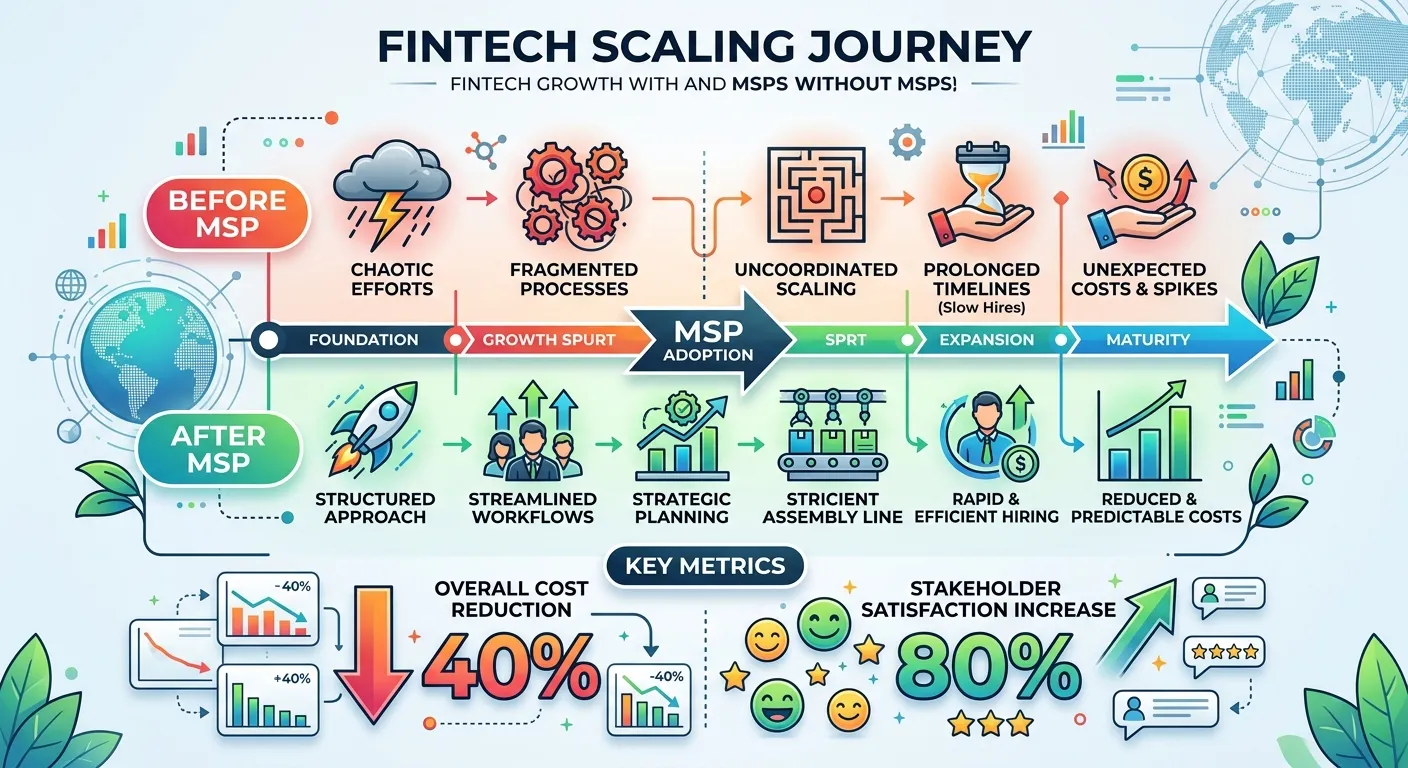
Case Study: Scaling a FinTech Startup with MSP Recruitment
To illustrate the practical impact of the MSP model, consider the journey of"NexusPay," a hypothetical but representative Series B FinTech startup. Facing a mandate to build a new cloud-native payments platform within nine months, NexusPay’s internal talent team was overwhelmed. They needed 15 specialized roles—from Kubernetes experts to blockchain security analysts—and were inundated by unqualified applicants from 12 different agencies. After six frustrating weeks, they had made only two hires.
Upon engaging an MSP, the transformation was rapid. The MSP first conducted a “Skills Gap Heatmap”, aligning the project’s technical milestones with precise talent requirements. They then activated their pre-vetted supplier panel and proprietary direct sourcing engine, which included passive candidates from competitor landscapes. Within 30 days, NexusPay had a shortlist of 45 fully-assessed candidates. They extended offers to 12, with 11 accepting. The MSP managed all onboarding logistics, including compliance checks for financial regulations. The project launched on time, and NexusPay reported a 40% reduction in cost-per-hire and an 80% improvement in hiring manager satisfaction scores.
"The MSP didn't just fill seats; they understood our project's critical path and delivered the exact human capital needed to hit each milestone. They became an extension of our product team," – CTO, NexusPay.
The Technology Stack: The Engine Behind Effective MSPs
A modern MSP’s effectiveness is powered by an integrated technology platform, often called a Vendor Management System (VMS) coupled with advanced Applicant Tracking Systems (ATS) and analytics tools. This stack is the central nervous system of the recruitment definition, enabling the promised visibility and control.
- Unified Requisition Portal: Hiring managers submit needs through a single, intelligent form that guides them to define roles by skill, project, and budget, not just job title.
- Automated Candidate Distribution & Supplier Management: The VMS automatically routes job requisitions to the most appropriate staffing suppliers based on historical performance data for that specific role type, ensuring healthy competition and optimal results.
- Centralized Candidate Evaluation Hub: All candidate profiles, test results, interview feedback, and ratings are stored in one place, creating a searchable talent warehouse for future needs.
- Real-Time Analytics Dashboards: Clients gain access to live dashboards showing metrics like spend versus budget, diversity hiring statistics, time-to-fill trends, and supplier performance scorecards.
This technology layer transforms subjective, anecdotal hiring processes into a data-driven, repeatable business operation. It's what allows an MSP to guarantee service level agreements (SLAs) on fill rates and quality.
Navigating Common MSP Implementation Pitfalls
While the benefits are clear, a successful MSP partnership requires avoiding several common missteps. Forewarned is forearmed.
Pitfall 1: Treating the MSP as a Commodity
The biggest error is viewing the MSP relationship as purely transactional, focused only on driving down bill rates. This leads to adversarial negotiations and undermines the strategic partnership. The focus should be on total value—quality, speed, risk reduction, and innovation—not just cost-per-unit.
Pitfall 2: Inadequate Change Management
Hiring managers accustomed to calling their"favorite recruiter" may resist the new centralized process. Without clear communication, training, and strong internal advocacy from leadership, rogue hiring can persist, eroding the MSP's visibility and savings. A phased rollout with champions in each department is critical.
Pitfall 3: Neglecting the Human Element
Over-reliance on technology can depersonalize the candidate experience. The best MSPs balance high-tech with high-touch, ensuring candidates feel engaged and valued throughout the process. A poor candidate experience damages your employer brand, regardless of how efficient the backend system is.
Pitfall 4: Static Supplier Panels
An MSP's curated supplier panel must be dynamic. Regular performance reviews are essential. Underperforming suppliers should be coached or replaced, and new, niche specialists should be onboarded to meet emerging skill demands (e.g., AI/ML talent). A stagnant panel loses its competitive edge.
The Ethical Dimension: Diversity, Equity, and Inclusion (DEI) in MSP Recruitment
A forward-thinking MSP recruitment definition explicitly incorporates DEI as a core deliverable, not an afterthought. By controlling the talent funnel, MSPs can implement systemic changes to promote equitable hiring.
Strategies include: mandating diverse candidate slates from suppliers; utilizing blind screening tools within their VMS to reduce unconscious bias; partnering with organizations that support underrepresented groups in tech; and providing detailed analytics on the diversity of the talent pipeline and hires. This structured approach moves DEI from well-intentioned goals to measurable outcomes, ensuring your workforce reflects the market you serve.
Conclusion: From Definition to Competitive Advantage
The Managed Service Provider Recruitment Definition ultimately transcends a mere description of a service. It represents a fundamental rethinking of talent as a dynamic, strategic supply chain to be managed with the same rigor as any other critical business resource. In an era defined by digital transformation and talent scarcity, the ability to efficiently, reliably, and intelligently source specialized skills is a direct determinant of market velocity and innovation capacity.
Businesses that embrace this model gain more than a streamlined process; they gain a strategic ally equipped with market intelligence, predictive analytics, and a proven playbook for talent acquisition. They shift from being reactive consumers in a fragmented labor market to being proactive architects of their own talent destiny. Whether navigating the complexities of global compliance for a remote tech team or securing the five AI researchers needed to launch a new product line, the MSP provides the framework, expertise, and executional certainty to turn hiring from a perennial challenge into a reproducible, scalable strength.
Ready to Operationalize Your Talent Strategy?
Move beyond definition to execution. Partner with a platform built on the principles of modern, managed recruitment.
Schedule a Consultation with Our Experts