
Mastering Machine Operator Recruitment: Your Ultimate Guide to Hire Staff Today
Discover proven strategies to attract, assess, and retain skilled machine operators. Overcome staffing challenges and drive production efficiency with expert insights.
Navigating the Recruitment Landscape
Use the tabs below to explore the critical facets of successful Machine Operator Recruitment.
Overcoming Modern Hiring Hurdles
Finding qualified machine operators in today's competitive market presents unique obstacles. The skills gap is widening, with experienced operators retiring and new technologies demanding updated competencies. Many employers struggle with lengthy time-to-hire metrics, which can stall production lines and cost thousands in lost output. Furthermore, passive candidates—those already employed but open to better opportunities—require targeted engagement strategies that go beyond standard job boards. Understanding these challenges is the first step towards building a resilient recruitment pipeline, a topic we explore in depth in our Ultimate Guide to Modern Talent Sourcing.
- Skill Mismatch: Candidates often lack specific CNC, lathe, or press brake experience.
- Geographic Limitations: Pool of local talent may be insufficient for specialized roles.
- Counter-Offers & Retention: Top candidates are frequently retained by their current employers with improved packages.
- Speed vs. Quality: The pressure to fill a role quickly can compromise vetting standards.
A Streamlined Hiring Blueprint
An efficient hiring process is non-negotiable. It begins with a precise job description that highlights not just duties but growth opportunities and company culture. Sourcing should be multi-channel: leveraging industry-specific job boards, social media like LinkedIn, and employee referrals. The screening phase must include technical assessments, such as practical tests on simulation software or reading technical drawings. Structured interviews with scenario-based questions are crucial. Finally, a compelling offer and a smooth onboarding experience seal the deal. For urgent needs, consider the model used for Urgent Maintenance Technician roles, which emphasizes speed without sacrificing quality.
Pro-Tip:
Implement a"try before you hire" model using temp-to-perm contracts facilitated by a staffing agency. This reduces risk and allows both parties to assess fit.
Leveraging a Specialized Mechanical Staffing Agency
Partnering with a specialized Mechanical Staffing Agency transforms recruitment from a reactive cost center into a strategic advantage. Agencies provide access to pre-vetted, qualified talent pools that are often invisible on public job markets. They manage the entire recruitment lifecycle—from advertising and initial screening to reference checks and payroll for temporary staff—freeing your HR team to focus on core business. This is particularly valuable for scaling operations quickly or covering unexpected absences. The cost-benefit analysis often favors agency use when factoring in the hidden expenses of prolonged vacancies, as detailed in our analysis on The Hidden Cost of Recruitment.
Why Optimized Recruitment is Critical
A strategic approach to Machine Operator Recruitment delivers tangible benefits across your operation.
Reduced Downtime & Cost Savings
Every day a machine sits idle due to operator shortage represents significant lost revenue. A streamlined hiring process, potentially supported by an agency for Looking For Staff, minimizes this gap. Faster placement means continuous production, protecting your bottom line and meeting client deadlines.
Improved Quality & Safety Compliance
Skilled operators produce fewer errors and waste less material. More importantly, they adhere strictly to safety protocols, reducing workplace accidents and associated liabilities. Thorough vetting by experts ensures candidates understand ISO standards, lockout/tagout procedures, and PPE requirements.
Access to Niche Talent Pools
Specialized roles like CNC programmers or multi-axis mill operators are scarce. Agencies maintain relationships with these passive professionals. They can also tap into broader networks, similar to how we connect candidates for Immediate Stock Replenisher Jobs, ensuring you get the right skills, not just any available candidate.
Scalability & Workforce Flexibility
Market demands fluctuate. The ability to scale your operator team up or down quickly is a competitive edge. Temporary or contract hires through an agency provide this flexibility, allowing you to manage seasonal peaks, large orders, or special projects without the long-term commitment of permanent hires.
Enhanced Employer Brand
A professional, respectful, and efficient recruitment process enhances your reputation in the job market. Candidates share their experiences online. A strong employer brand, showcased effectively on your Employer portal, attracts higher-quality applicants organically, reducing future recruitment costs.
Long-Term Retention Strategy
Effective recruitment is the first step in retention. By ensuring role fit, cultural alignment, and clear career progression from the outset, you significantly increase the likelihood of long-term employee satisfaction. This reduces costly turnover and preserves valuable institutional knowledge within your team.
Crafting a Winning Recruitment Strategy
A successful strategy for Machine Operator Recruitment is multi-faceted. It begins with a deep analysis of your actual needs. Are you looking for a general machine operative or a specialist for a specific make and model of equipment? Defining this precisely is paramount.
Next, develop compelling employer value propositions (EVPs). Beyond salary, highlight aspects like shift patterns, opportunities for upskilling (e.g., funding for CNC programming courses), modern facility conditions, and team culture. In a candidate-driven market, these factors are decisive.
Expert Insight:
"The most successful manufacturing firms treat recruitment with the same precision as their production lines. They have standardized, measurable processes for sourcing and assessing talent, which drastically improves hire quality and reduces time-to-fill." – HireNow Recruitment Director.
Leverage technology. Use Applicant Tracking Systems (ATS) to streamline communications and scheduling. Consider virtual reality (VR) assessments to test a candidate's reaction to simulated machine faults. Utilize data analytics to identify which sourcing channels yield the most qualified candidates for your specific sector.
How to Choose a Staffing Agency for a 24/7 Manufacturing Operation
Advanced Assessment & Interview Techniques
Practical Skills Evaluation
Move beyond the CV. For machine operators, hands-on assessment is non-negotiable. This can be conducted on-site with your equipment (under strict supervision) or via simulated software.
- Machine Setup Test: Provide materials and drawings; ask candidate to set up a machine for a specific operation.
- Fault Diagnosis: Introduce a controlled fault (e.g., a programmed error in a CNC machine) and evaluate their troubleshooting process.
- Quality Check: Give them a finished part with intentional defects and ask them to identify the issues and suggest corrective actions.
Behavioral & Scenario Interviews
Assess soft skills crucial for a safe, efficient workshop. Use the STAR (Situation, Task, Action, Result) method to structure questions.
- "Describe a time you noticed a potential safety hazard that others missed. What did you do?"
- "Tell me about an instance when you had to work under extreme pressure to meet a deadline. How did you manage quality?"
- "Give an example of how you handled a conflict with a team member on the shop floor."
For more interview frameworks, candidates often prepare using resources like our Find Jobs portal, which offers preparation tips.
Frequently Asked Questions
Get immediate answers to common questions about Machine Operator Recruitment.
What's the typical time-to-hire for a skilled machine operator?
The timeline varies dramatically based on specialization, location, and recruitment method. For common roles (e.g., press operator), a direct hire process might take 4-6 weeks from advert to offer. For niche CNC programmers, it can extend to 8-12 weeks. Partnering with a specialized Mechanical Staffing Agency can cut this by 50% or more, as they have active candidates ready for immediate placement. For urgent scenarios, explore models used for roles like Casual Labourer placements, which prioritize speed.
Should I hire permanent staff or use temporary agency operators?
This depends on your business needs. Permanent hires are ideal for stable, long-term roles where you want to invest in training and development. Temporary/Agency staff provide flexibility for seasonal peaks, specific projects, or covering long-term absences. A hybrid"temp-to-perm" approach is increasingly popular, allowing you to evaluate an operator's performance on the job before extending a permanent offer. This significantly reduces hiring risk. Our analysis on The Future of Flexible Staffing delves deeper into this trend.
How can I verify a candidate's practical skills if I don't have the machinery available for a test?
Several effective alternatives exist:
- Simulation Software: Many CAD/CAM and machine-specific software packages have simulation modes where candidates can demonstrate programming and setup logic.
- Portfolio Review: Ask for photos/videos of previous work, complex parts they've produced, or certificates from specific machine training courses.
- Detailed Scenario Questions: Pose complex, step-by-step problems."Walk me through how you would produce this part from this raw material, including tool selection, speeds/feeds, and quality checks."
- Partner with a Training Center: Rent time at a local technical college's workshop for a practical assessment.
What are the most common mistakes employers make during machine operator recruitment?
Key pitfalls to avoid include:
- Over-reliance on Paper Qualifications: Prioritizing certificates over demonstrable, hands-on experience.
- Vague Job Descriptions: Not specifying exact machine types (e.g.,"Haas VF-2" vs."CNC Mill"), which attracts mismatched applicants.
- Neglecting Safety Culture Fit: Failing to assess a candidate's inherent safety mindfulness, which is as critical as technical skill.
- Slow Feedback & Process: Top candidates accept other offers if your process is bureaucratic and slow. Streamline decision-making.
- Ignoring Onboarding: Assuming a skilled operator needs no introduction to your specific site protocols, which can lead to early mistakes or dissatisfaction.
Ready to Transform Your Machine Operator Recruitment?
Stop letting staffing shortages throttle your production. Whether you need one specialist or an entire team, the right strategy—and the right partner—makes all the difference.
Or speak to our specialist Mechanical Staffing Agency team for a consultation.
Looking for a machine operator role? Explore thousands of opportunities on our Looking For Work portal.
Future-Proofing Your Workforce: Emerging Trends
The manufacturing floor is evolving rapidly. Staying ahead requires understanding the forces shaping Machine Operator Recruitment for the next decade.
The Rise of Industry 4.0 & Hybrid Skills
Modern machines are no longer isolated units; they are nodes in a networked, data-driven ecosystem. This demands a new breed of operator. Beyond traditional mechanical aptitude, employers now seek foundational digital literacy. Can the candidate interpret data from a machine monitoring dashboard? Do they understand basic principles of predictive maintenance alerts? The ability to collaborate with data analysts and maintenance technicians is becoming as important as knowing how to change a tool bit.
Recruitment strategies must adapt. Job descriptions should explicitly mention interaction with MES (Manufacturing Execution Systems) or IoT platforms. Assessment criteria need to include simple data interpretation tests. Upskilling becomes a key part of your EVP: promising to train operators in these new technologies can attract forward-thinking candidates who are eager to grow and future-proof their own careers.
Case Study: Automotive Tier 1 Supplier
Facing high turnover on a new smart assembly line, a supplier revised its recruitment to target candidates with basic PLC awareness. They partnered with a local technical college to create a 2-week"Digital Foundations" bridge course for successful hires. Result: 40% reduction in ramp-up time and a 25% drop in line stoppages related to operator error within six months.
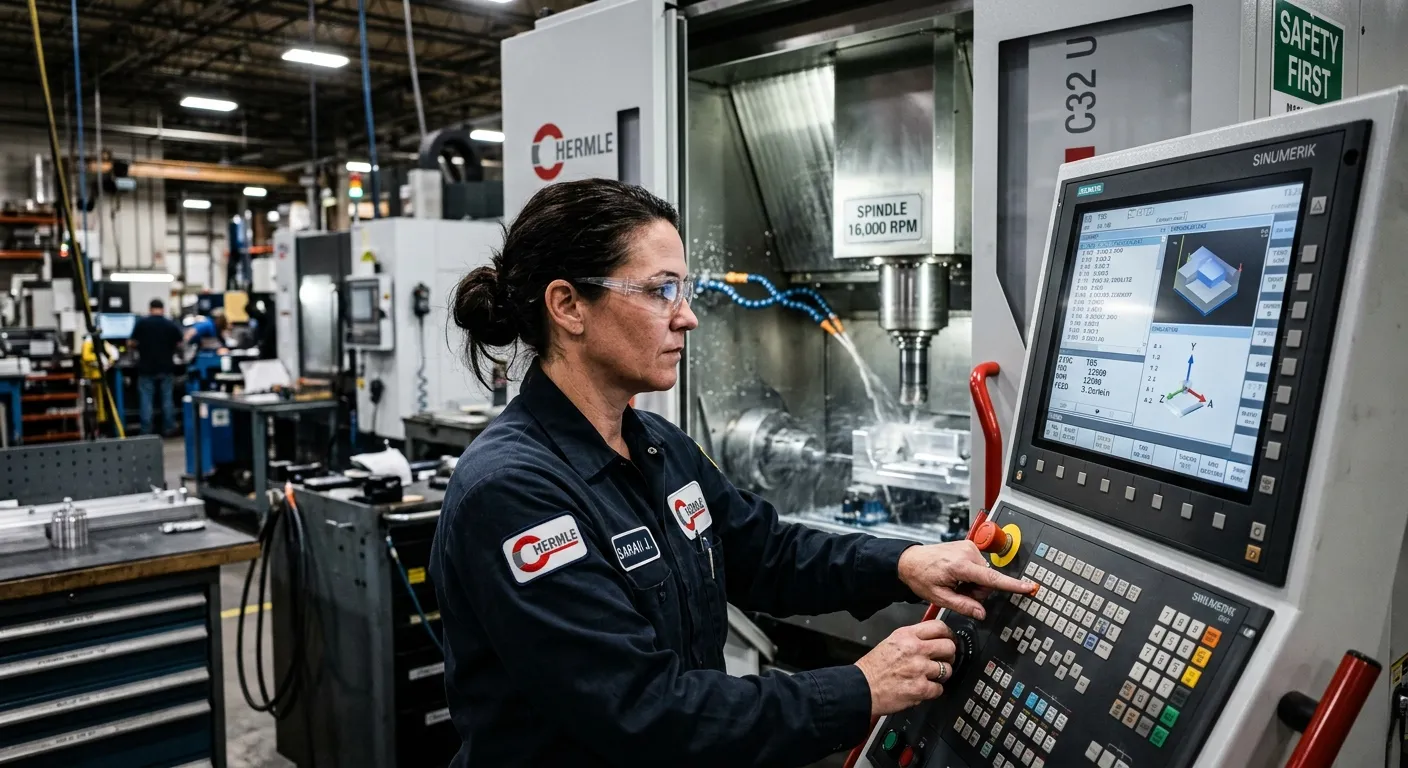
The shift from manual controls to integrated smart interfaces demands new operator competencies.
Tackling the Demographic Cliff & Building a Talent Pipeline
A significant portion of the most experienced machine operators are nearing retirement age. This exodus of tacit knowledge—the"feel" for a machine, the tricks for a stubborn fixture—poses a severe risk. Proactive companies are not just recruiting externally; they are building internal pipelines.
Apprenticeship & Earn-While-You-Learn Programs
Formal apprenticeships, often co-funded with government grants, create a direct pipeline. Pairing a retiree with 2-3 apprentices for their final year can transfer invaluable knowledge. Highlight these programs in recruitment to attract school leavers and career changers.
Cross-Training from Adjacent Roles
Look within. Skilled warehouse technicians, assemblers, or maintenance helpers often possess the mechanical reasoning and safety mindset to become excellent machine operators. A structured, paid cross-training program boosts morale, aids retention, and fills gaps faster than external hiring.
Strategic Partnerships with Schools & Colleges
Go beyond career fairs. Sponsor equipment for local technical colleges, offer plant tours for students, and provide curriculum advisors. This embeds your company name in the next generation's mindset, making you the employer of choice when they graduate.
These pipeline strategies require a long-term view and investment, but the payoff is a sustainable, loyal, and skilled workforce that reduces your dependency on the volatile external recruitment market.
Calculating the True Cost & ROI of Recruitment
To justify investment in a superior recruitment strategy—whether internal upgrades or agency partnership—you must move beyond the simple cost-per-hire metric. Here’s a framework for a holistic financial analysis.
| Cost Category | Direct Hiring (Internal) | Agency Partnership | Notes & Impact |
|---|---|---|---|
| Visible Acquisition Costs | Job board fees, advertising, background checks. | Agency fee (typically a % of salary). | Agency fee appears higher initially, but includes hidden costs listed below. |
| Internal Labour Cost | Significant. HR/Manager time for screening, interviewing, admin. | Minimal. Limited to final interview & onboarding. | Freeing up 40+ hours of managerial time per hire has substantial operational value. |
| Vacancy Cost (Lost Output) | High. Longer time-to-hire means more days of lost production. | Low to None. Agencies can often provide temp cover immediately, bridging the gap. | The largest hidden cost. A single idle CNC machine can cost £1000s per day. |
| Mis-Hire Risk & Cost | Borne entirely by the company. Includes re-hiring, training, potential scrap/waste. | Often mitigated by agency guarantees (free replacement periods). | Agency pre-vetting drastically reduces this risk, providing financial insurance. |
When modeled over a year and across multiple hires, the agency model often proves cost-neutral or even saves money when vacancy costs and mis-hire risks are fully accounted for. The strategic value, however, lies in agility and risk reduction. You convert fixed internal recruitment capacity into variable, on-demand expertise, allowing you to scale your hiring efforts precisely with business needs without growing your HR overhead.
A holistic cost analysis reveals the true value proposition of specialized recruitment partners.
Actionable Step: Conduct Your Own Mini-Audit
For your last machine operator hire, estimate:
- Hours spent by managers (salary cost of that time).
- Output value lost while the machine was underutilized or idle.
- Advertising spend across all platforms.
Compare this total figure to a typical agency fee (e.g., 15-20% of annual salary). This simple exercise often reveals the compelling economics of strategic outsourcing for critical, hard-to-fill roles.