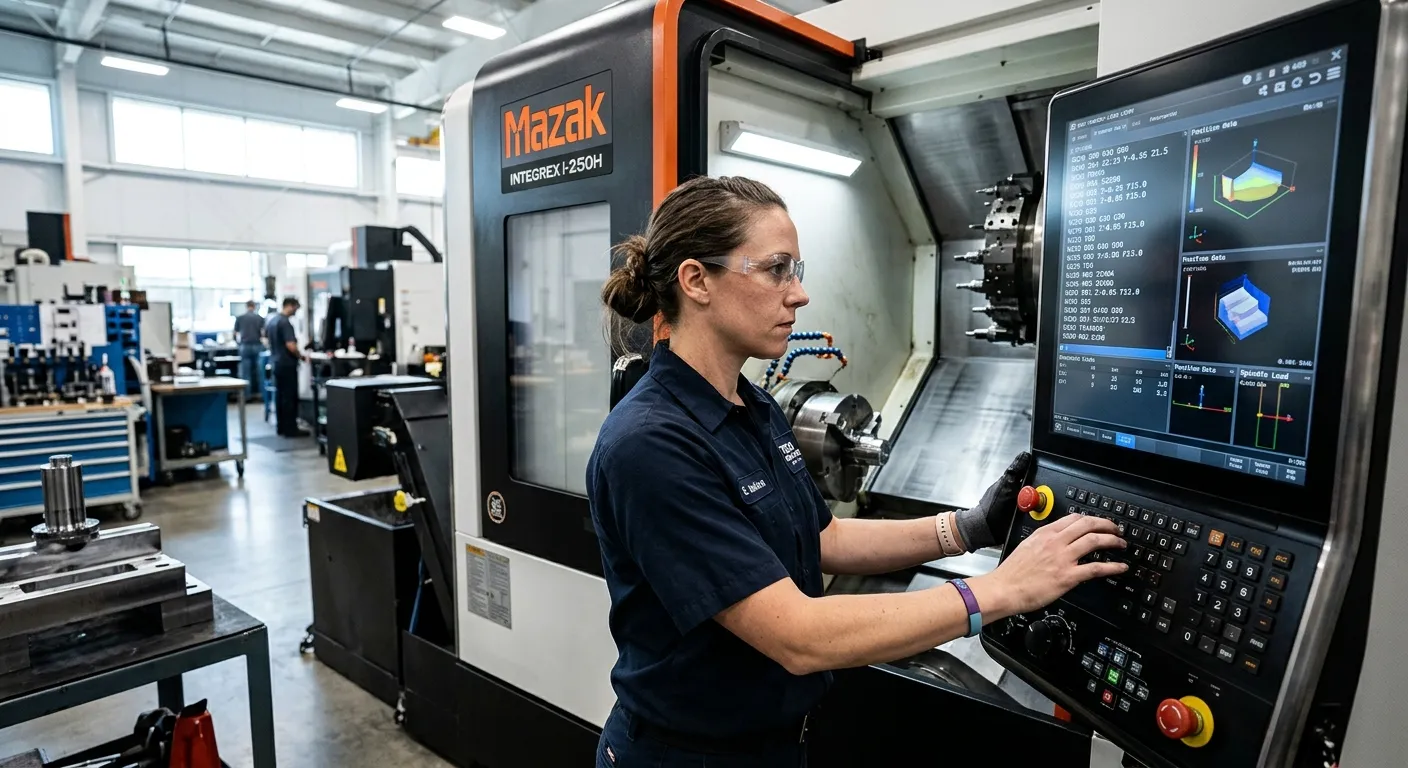
Mastering CNC Operator Recruitment: Your 2026 Blueprint for Hiring Elite Machining Talent
Navigate the competitive manufacturing landscape. Discover proven strategies, avoid costly hiring pitfalls, and build a reliable, skilled workforce that drives precision and productivity.
Post Your CNC Operator Job NowThe Strategic Hiring Hub
Critical Challenges in CNC Operator Recruitment
Finding and retaining skilled CNC operators is one of the most pressing issues in modern manufacturing. The skills gap is widening as experienced machinists retire and new technology demands a blend of traditional knowledge and digital fluency.
- The Digital Skills Gap: Modern CNC machines are sophisticated computers. Recruiting operators who can not only run but also program, troubleshoot, and perform basic maintenance on CNC, CAD/CAM, and DNC systems is exceptionally difficult.
- High Turnover & Competition: Poaching is rampant. A top-tier CNC operator with experience on 5-axis mills or Swiss-type lathes is a hot commodity, leading to bidding wars and instability, similar to challenges faced in specialized technical roles.
- Mismatched Expectations: Job postings often list unrealistic requirements, scaring off capable candidates. Conversely, candidates may overestimate their skills with specific controllers (e.g., Fanuc, Haas, Siemens).
- Geographic Limitations: Your ideal candidate might not be within a commutable distance, especially for facilities in industrial parks or rural areas, limiting your talent pool severely.
Actionable Recruitment Solutions
Overcoming these hurdles requires a proactive, multi-channel strategy that goes beyond traditional job boards. It's about building a talent pipeline and selling your workplace as the destination for machining careers.
- Skills-Based Hiring Over Credentials: Develop practical assessments. Instead of just requiring"5 years experience," test candidates on blueprint reading, GD&T interpretation, and setting up a virtual job on provided software.
- Leverage Specialized Agencies: Partner with industrial staffing experts who understand machining. They pre-vet candidates, check specific machine experience, and can provide managed services for a flexible, scalable workforce.
- Apprenticeship & Upskilling Programs: Grow your own talent. Partner with local technical colleges to create pathways from education to employment, securing loyal operators trained on your specific processes.
- Competitive & Transparent Packages: Beyond salary, highlight shift premiums, overtime policies, tool allowances, continuous training budgets, and clear career progression to CNC programmer or lead roles.
Future-Proof Trends for 2026 & Beyond
The factory floor is evolving. Your CNC operator recruitment strategy must anticipate these shifts to attract the next generation of manufacturing professionals.
- Hybrid Skills are King: The line between operator, programmer, and maintenance tech is blurring. Look for candidates comfortable with IoT sensors, data analytics from machine monitoring, and basic automation integration.
- Flexibility as a Standard: Explore flexible shift patterns, temp-to-perm models (as detailed in our guide on MSP hiring strategies), and even remote support roles for programming and diagnostics.
- Emphasis on Soft Skills: Problem-solving, communication, and continuous improvement (Kaizen) mindset are critical. An operator who can effectively communicate a machine issue saves hours of downtime.
- Gamification of Training: Using VR simulations for machine setup and fault-finding is becoming a powerful tool for both training and assessing candidate aptitude in a risk-free environment.
The Pillars of Successful CNC Hiring
Precision Vetting & Verification
Go beyond the CV. Our methodology includes practical skills assessments on metrology, blueprint comprehension, and machine safety protocols. We verify specific experience with machine brands and controllers, ensuring the candidate's claimed expertise translates directly to your shop floor. This rigorous approach is as crucial as it is for securing elite production leadership.
Flexible Staffing Models
Match your workforce to production demands. Utilize temporary CNC operators for peak seasons, special projects, or to cover absences. Implement temp-to-perm arrangements as a low-risk"try before you buy" strategy. This flexibility is key to managing volatility, much like the strategies used for reliable casual labour in project-based industries. Scale your team up or down without the long-term commitment or administrative burden.
Rapid Deployment & Onboarding
Minimize machine downtime. We maintain a pre-qualified network of CNC talent ready for immediate deployment. Our streamlined process includes coordinating all pre-employment checks and providing candidates with a clear brief on your company culture and safety standards before day one. This speed is essential, whether you're facing a sudden influx of orders or need to fill a critical vacancy to keep production lines moving, ensuring you're always looking for staff with maximum efficiency.
Crafting the Irresistible CNC Operator Job Description
Your job description is your first and most critical marketing tool. A generic post will attract generic candidates. To win the war for CNC talent, you must sell the role, the challenge, and the growth potential.
Pro-Tip: Quantify Everything
Instead of"operate CNC machines," write"Program and operate 3-5 axis Mazak Vertical Machining Centers to produce aerospace components with tolerances of +/- 0.0005"." Specifics attract qualified applicants and deter unqualified ones.
Highlight not just the technical requirements (which are vital), but also the working environment, team structure, and investment in employee development. Mention ongoing training opportunities, certification support, and clear paths to advanced roles like CNC Programmer or Production Supervisor.
Essential JD Components:
- Clear Title:"CNC Mill Operator (Night Shift)" not just"Machine Operator."
- Impact Statement: Describe how the role contributes to key projects or products.
- Machine & Software Specifics: List exact models (Haas VF-4, Doosan Puma) and software (Mastercam, SolidWorks).
- Compensation Transparency: Include salary range, shift differentials, and key benefits upfront.
The Modern Talent Pipeline
Building a sustainable source of CNC talent requires a strategic mix of direct hiring, agency partnership, and internal development. This video delves into the proven methods for creating a resilient workforce in a competitive market.
Learn how to integrate these strategies with broader modern talent sourcing principles to future-proof your entire manufacturing operation.
Mastering the Interview & Practical Assessment
The interview for a CNC operator must be a two-way street: you assess their technical capability and fit, while they assess your company as a place to build a career. Move beyond standard questions.
Technical & Scenario-Based Questions:
- "Walk me through the steps you take from receiving a blueprint and a piece of stock to producing the first good part."
- "A part you just measured is out of tolerance on one critical dimension. What is your immediate troubleshooting process?"
- "Describe your experience with preventative maintenance on a CNC machine. What checks do you perform daily/weekly?"
- "How do you ensure consistency when running a production batch of 500 pieces?"
The practical assessment is non-negotiable. This could be conducted on a shop floor machine (with full safety supervision) or via simulation software. Provide a simple blueprint, the necessary tools (calipers, mic), and a pre-set machine or simulator. Ask the candidate to explain their setup process, identify key features on the print, and verbally walk through the steps they would program. This reveals their practical knowledge and problem-solving approach far more effectively than any certificate.
Red Flags to Watch For
- Vague Answers: Inability to describe specific processes, machines, or materials worked with.
- No Safety Focus: Fails to mention PPE, lock-out/tag-out, or safe tool handling as a primary concern.
- Blame Culture: Consistently blames machines, materials, or programmers for past errors without taking ownership.
- No Curiosity: Shows no interest in learning about your specific machines, products, or training opportunities.
CNC Operator Recruitment: Frequently Asked Questions
The timeline varies significantly based on specialization and location. For a general CNC Mill/Lathe Operator, it can take 4-8 weeks from posting to offer acceptance. For highly specialized roles (e.g., 5-axis aerospace, Swiss lathe operators), it can extend to 3-6 months. Using a specialized agency can drastically reduce this time, as they tap into pre-existing networks. For urgent needs, exploring employer-focused rapid placement services is advisable to fill critical gaps while a permanent search continues.
Fundamentals are paramount. A skilled operator with deep knowledge of speeds/feeds, metallurgy, GD&T, and troubleshooting can typically cross-train to a new machine controller (e.g., from Fanuc to Haas) in a matter of weeks with proper support. A candidate who only knows one brand's interface but lacks fundamental knowledge is a greater long-term risk. For immediate productivity on a critical machine, specific experience is key. For building a resilient, adaptable team, prioritize strong fundamentals and a learning mindset.
Retention starts on day one. Key strategies include: 1) Clear Career Pathing: Show how they can progress to programming, lead, or supervisory roles. 2) Invest in Continuous Learning: Fund courses for advanced certifications (e.g., NIMS, CAM software). 3) Empower & Involve: Include operators in process improvement meetings and value their input on tooling or fixture design. 4) Competitive Total Compensation: Regularly benchmark wages, offer performance bonuses, and provide excellent benefits. 5) Positive Culture: Foster respect, recognize achievements, and maintain clean, safe, and well-organized workspaces. Engaged operators who see a future with your company are far less likely to look elsewhere, even for a slight pay increase.
Yes, when you factor in the total cost of a bad hire and the opportunity cost of machine downtime. Agency fees are an investment that covers sourcing, vetting, skills testing, payroll administration, and often a replacement guarantee. They save your internal team hundreds of hours. For temporary or temp-to-perm roles, it transfers employer liabilities and simplifies scaling. The key is selecting an agency with specific industrial and machining expertise, not a generalist firm. Ask potential partners detailed questions about their assessment process, as outlined in resources like our ultimate talent sourcing guide, to ensure they add genuine value.
To reach passive, skilled candidates, diversify your channels:
- Industry-Specific Platforms: LinkedIn groups for machinists, Practical Machinist forums, and trade association job boards (e.g., NTMA, AMT).
- Technical & Vocational Schools: Build relationships with local colleges offering CNC diplomas for graduate placement.
- Employee Referral Programs: Incentivize your best current operators to refer peers from their professional networks.
- Social Media Showcases: Use Instagram or Facebook to showcase your advanced equipment, clean facility, and team projects, tagging posts with #CNCJobs #ManufacturingCareers.
- Specialized Job Boards: Utilize platforms dedicated to skilled trades and manufacturing. Remember, many talented individuals are proactively looking for work on niche platforms that cater to their specific skills.
Stop Searching, Start Producing
Your next elite CNC operator is out there. With the right strategy, you can attract, assess, and secure the machining talent that will keep your precision at its peak and your production on schedule. The complexity of modern CNC operator recruitment demands a focused, professional approach.
Whether you need one specialist for a night shift or a full team to launch a new production line, taking the first step is simple. Leverage our platform designed specifically for connecting employers with vetted, skilled industrial talent.
Transform your hiring from a bottleneck into a competitive advantage. Your future workforce starts here.
